
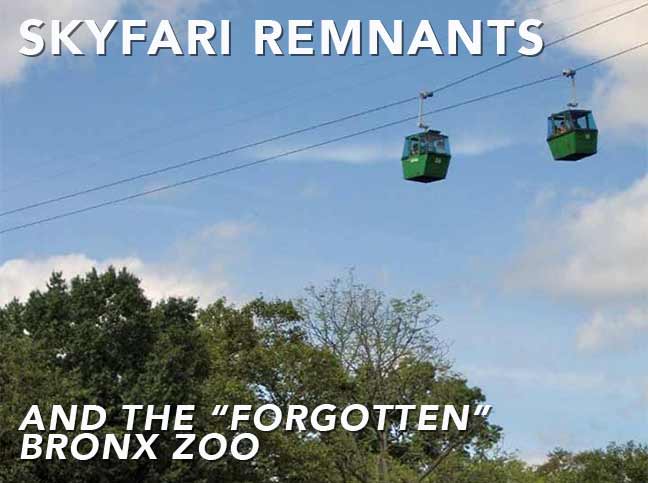


THE city’s many transportation options include bikes, boats, buses, subways, railroads, and the Roosevelt Island Tramway. The last item is the only aerial cable car in the city but not the first. The earliest example was at the 1964 New York World’s Fair in Flushing Meadows, which was a temporary installation. Then there was the Bronx Zoo Skyfari, which opened in 1973 and ended operations in 2009, as a result of high maintenance costs and lawsuit-inducing accidents that stranded people in these hanging gondolas.
Upon the closing of the ride, its pillars were dismantled and the gondolas consigned to the scrapyard. Considering the size of the Bronx Zoo, walking it from end to end isn’t easy, and it still has its Wild Asia Monorail and tractor-driven shuttle to get people across its grounds.
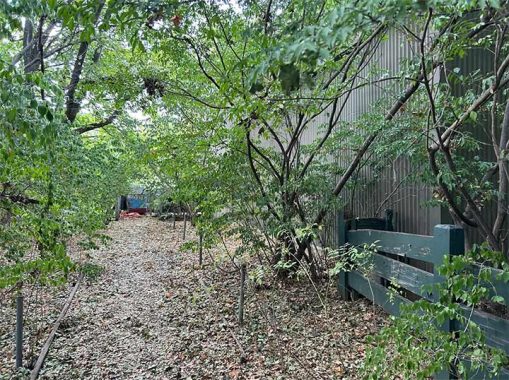
Like any former transit system in the city, it has remnants standing if one knows where to look. At its Skyfari East station near the Asia section, the building was reconstructed as a storage shed, unknown to passersby that it was once the third most popular attraction at the zoo.
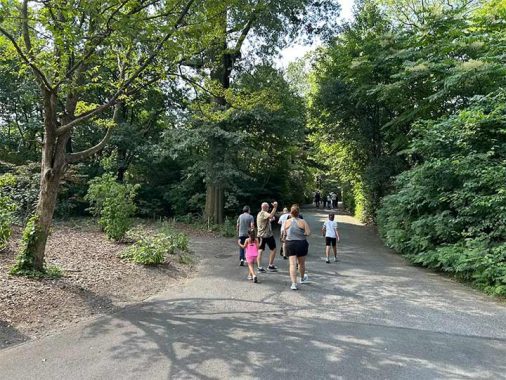
The entrance to this station appears as an overgrown path branching off a larger internal road. Corrugated metal covers the station’s exterior. Painted dark green, the buildings blends into the surrounding forest and it does not appear on any signage or official zoo maps. Considering the size of the Bronx Zoo, I am surprised that its network of internal roads and paths were not assigned names.
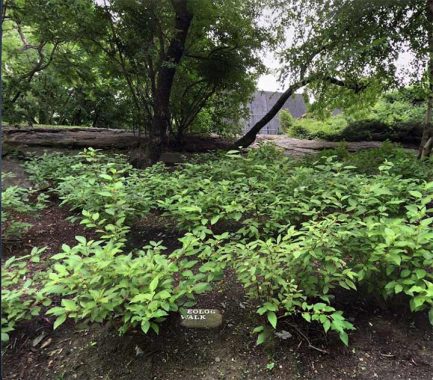
One path in the park has a rock marking its name, Geology Walk. Around 1969, the zoo designed a self-guided walk on this path with eight stops identifying granite, quartz, and schist. The primary element of a zoo are its animals, but when there are signs identifying plants, rocks, artworks, and architecture, the educational mission is expanded to cover additional interests.
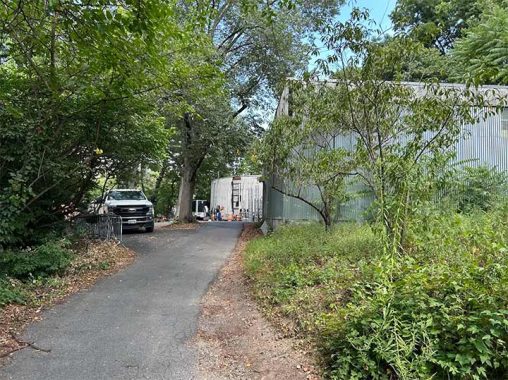
Skyfari West station is a bigger structure, located between its Children’s Zoo and Southern Boulevard Gate. It was also repurposed for utility use. It appears on the map without sharing its name, history, or purpose.
During its existence, critics debated whether it made the zoo feel like an amusement park, or enhanced the visitor experience by observing animals from above. To me, it felt surreal to see a savanna terrain with lions and zebras below, and in the distance, apartments and skyscrapers of the cityscape. Like any public attractions, zoos must reinvent themselves to keep the crowds coming back, with new exhibits and rides. Between 2017 and 2023, Bronx Zoo had a zipline across the Bronx River and Nature Trek allows visitors to walk on suspended walkways. In the early 20th century, the zoo had a boathouse on this stream. It was demolished around 1960.
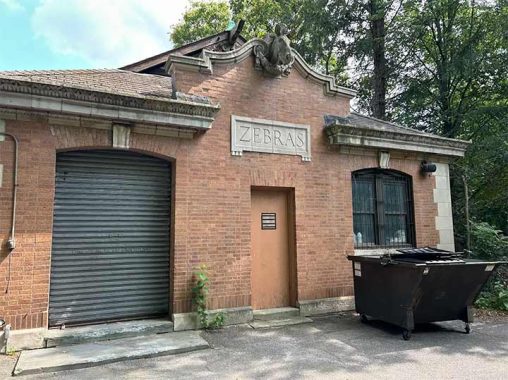
The zoo documents its history and animal collection in great detail. Its maps over the decades also tell the story of its evolution from cages to outdoor spaces for its large animals. Among the lesser known items in the zoo are its older buildings, which were built to host large African mammals. Today, the elephants, lions, and zebras have sizable outdoor spaces for roaming. The former Zebra House was built in 1911, with Heins & LaFarge as its designers, better known for their stations on the Lexington Avenue subway. It is today an office and storage space, located next to the Wildlife Health Center.
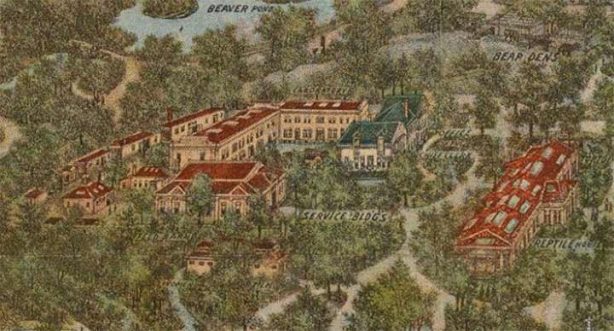
On the map of the zoo, its geographic center appears undeveloped, usually filled with a text box. A panoramic illustration of the zoo from 1913 shows a cluster of buildings here, marked as a laboratory, feed barn, service buildings, and chief clerk. These buildings are still there today, hidden in the woods behind the Reptile House, out of the public view.
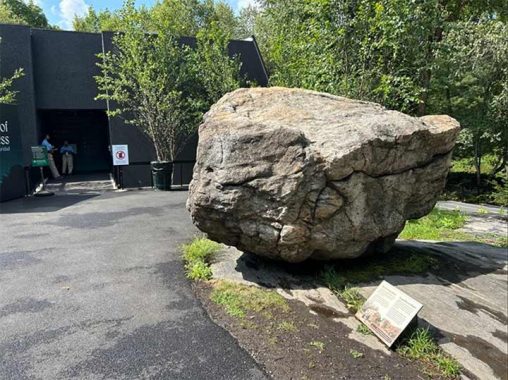
The geology of the Bronx is shaped by the last ice age and tectonic movements that occurred millions of years ago, resulting in ridges and valleys throughout the borough. On a hilltop next to the House of Darkness is The Rocking Stone, a freestanding glacial erratic. In the early years of the zoo, this rock was a popular attraction, with a seafood restaurant standing next to it.
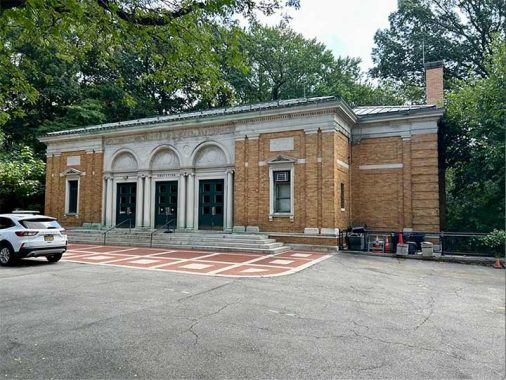
All of the Heins & LaFarge buildings around the zoo’s Astor Court are landmarked and documented in detail. For visitors to the zoo, the Forgotten-NY element are its original names appearing on the facade. The Education offices were built in 1922 by Henry Davis Whitfield in a style similar to Heins & LaFarge’s buildings at Astor Court. At the time, this was the National Collection of Heads and Horns. On its walls were hundreds of taxidermied fauna collected by the Boone & Crockett Club, whose members founded the zoo in 1895. By 1978, this collection of murdered animals was considered inappropriate for a zoo. The specimens were relocated to the Buffalo Bill Historical Center in Wyoming and later to the Wonders of Wildlife Museum and Aquarium in Missouri.
As Central Park Zoo has its eagle sculptures rescued from a demolished bridge in Brooklyn, the crouching eagle sculpture in front of the education building is also an architectural survivor. Prior to 1939, it stood atop the City Hall Post Office, where Broadway and Park Row merged. The landmarked Rockefeller Fountain at Rainey Gate was imported by its namesake from Lake Como, Italy.
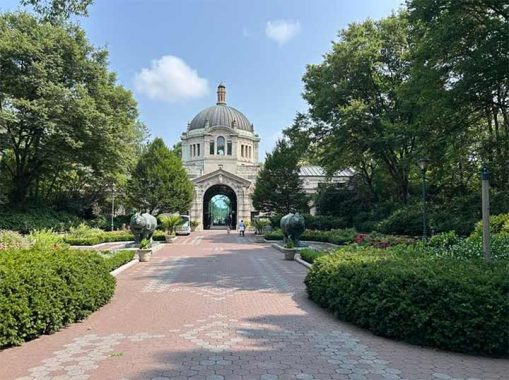
If the zoo were a “wildlife kingdom” then its capitol is the Zoo Center, a beaux arts dome with an interior that resembles a cathedral. Originally designed to host elephants, it has rhinos, Aldabra tortoises, and a komodo dragon as its present residents. Hard to believe that this zoo used to have horse, camel, and elephant rides, domestication that is inappropriate for an institution tasked with saving wildlife. Likewise, the robotic species of the Dinosaur Safari blurs the distinction between a zoo for living animals and a tourist attraction.
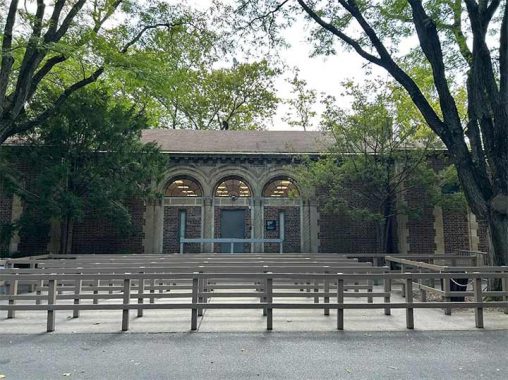
With more than two million annual visitors on its 265 acres, the Bronx Zoo has its own sub-precinct inside a historic office, which previously hosted a restaurant. A blue honorary street sign commemorates veteran officer Patrick “Paddy” McGovern, who died in 2019 from 9/11-related illnesses. His NYPD career was at the nearby 49th precinct and this zoo.
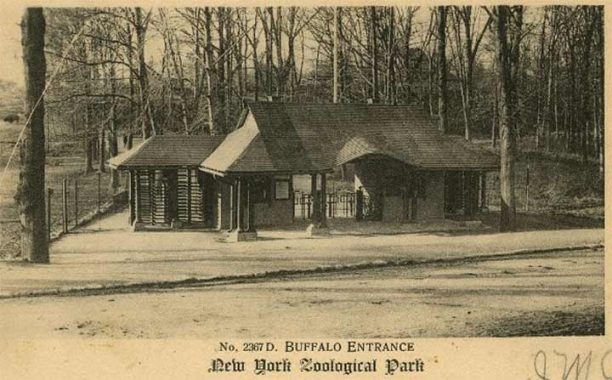
The sculptural Rainey Gate at the northern entrance to the zoo is landmarked by the city, contrasting with the less ornate Southern Boulevard, Asia, and Bronx River gates. Looking back, the zoo had rustic entrances such as the Buffalo Gate at the present-day Asia parking lot on Boston Road.
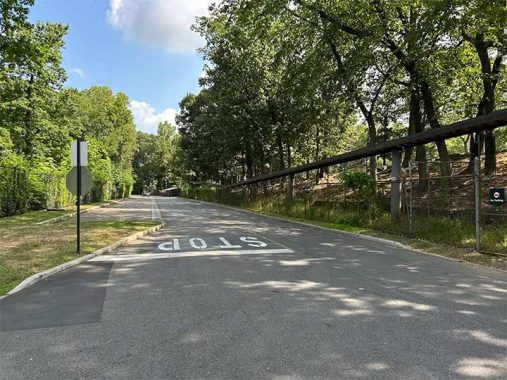
Boston Road appears in two segments in the Bronx: north of the zoo and to its south. The section running through the zoo was closed to the public in 1924, appearing on zoo maps as Jungle World Road, which leads to the Asia parking lot. It is one of the city’s most ancient paths, created during the colonial period as a postal route connecting New York to Boston. The northern segment of Boston Road is designated as part of U.S. Route 1, a series of connected roads between Maine and Florida.
{Note: the northernmost section of the Bronx’s Boston Road is indeed part of the post road to Boston first traveled in the 1600s by Europeans on a Native American trail, while the southern end, south of the Zoo, was developed at Gouverneur Morris’ initiative by surveyor John B. Coles in 1794.]
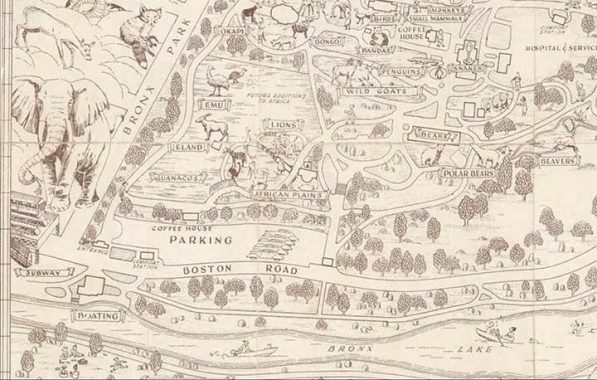
Another lost transit element at the zoo appears on an illustrated map from the late 1940s, showing an elevated train terminal at 180th Street and Boston Road. It was removed in 1951 for being too close to the next station on this line, West Farms Square, which is a five minute walk from the Asia Gate of the zoo.
You can learn more about the city’s zoos by reading my earlier essay on the Central Park Zoo and its historic arch. On my blog, I documented the hidden waterways of the Queens Zoo and Prospect Park Zoo. The Wildlife Conservation Society also has the New York Aquarium at Coney Island for marine wildlife. This leaves us with one last borough: the independently-operated Staten Island Zoo, which I hope to visit in the future.
Sergey Kadinsky is the author of Hidden Waters of New York City: A History and Guide to 101 Forgotten Lakes, Ponds, Creeks, and Streams in the Five Boroughs (2016, Countryman Press), adjunct history professor at Touro University and the webmaster of Hidden Waters Blog.
Check out the ForgottenBook, take a look at the gift shop. As always, “comment…as you see fit.” I earn a small payment when you click on any ad on the site.
8/24/25
6 comments
A bit earlier than the Fair, Freedomland had a cable car ride. I believe that one of its termini is still standing, repurposed and unrecognizable.
Very nice work and research Sergey! I was wondering if you were aware of the “Lydig Memorial Arch” in the wooded area to the East of the World of Darkness? From Rider’s New York City 1916 guide book:
“…designed by Heins and La Farge. The gateway consists of two massive pillars, surmounted by an arch of ornamental wrought-iron work. It was erected in memory of Philip Mesier Lydig and Catherine Suydam Lydig by their daughter, Florence Lydig Sturgis, in 1903. The inscription explains that ‘These lands became the home of the Lydig family A. D. 1802, and by them these forests were preserved and protected until acquired by the city, A. D. 1888.'”
Thanks! There’s so much hidden history at Bronx Zoo.
With the Lydig gateposts, I now have another reason to return to this zoo.
Monkey Island was one of my favorites
As kids, a ride in the Skyfari or on a camel was a rare treat during one of our occasional trips to the Zoo!
I worked on the skyfari in the early 1970s after school and in the summer. Working in the Bronx Zoo
was a memorable experience for this former Bronx kid.