
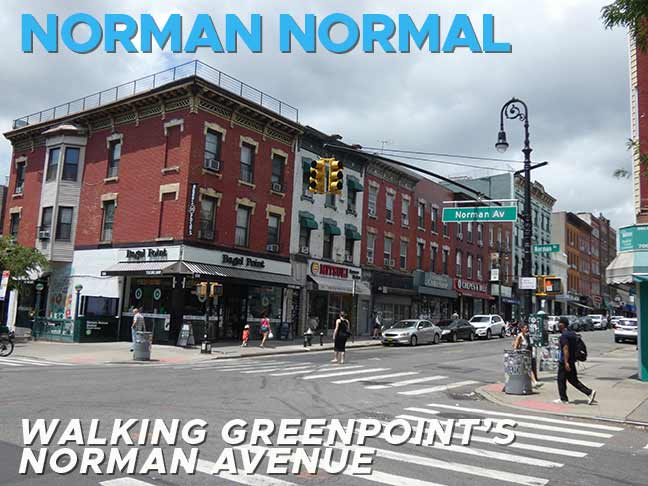

THE plan was simple on this July afternoon. For an invigorating but not too taxing outing I would walk Norman Avenue as far east as comfortable, then head back west on Meserole. The former is just a bit longer, so I’ll rely on some theft from Google Street View on Norman Avenue’s eastern end. I hadn’t been to Greenpoint in some time and it occurred that I hadn’t done a “deep dive” on either avenue yet.
You might assume Norman Avenue was named for a bloke named Norman. Instead, it’s named for a guy named Dirck: Dirck Volckertsen, who was nicknamed “The Norman” (the Northman) due to his Scandinavian origins. He was a ship’s carpenter from Bergen, Norway; while Scandinavian immigrants later concentrated in southern Brooklyn in areas like Sunset Park and Bay Ridge, this first Norwegian came to what became Greenpoint in the time period of 1626-1628. Volckertsen arrived with the assistance of Peter Minuit, New Netherland’s first director-General, who wanted to encourage industries like shipbuilding. As a carpenter, he would also be instrumental in erecting the area’s first permanent wood-frame homes; Greenpoint used to be heavily wooded, hence the name.
Most streets in Greenpoint have had different names in the past: Norman Avenue has been 3rd Street and Union Street; when Brooklyn became a city incorporating various Kings County towns in the 1890s, both those names were redundant.

My travels began a block south of Norman, at Nassau Avenue and McCarren Park and the unusual X-shaped meeting of North 15th and Banker Streets.
In September — in 2025, September 20th to be exact — North 15th becomes the motorcycle capital of Brooklyn if not NYC, when Indian Larry Motorcycles sponsors its annual block party and choppers from all over town converge. If you’re into choppers, check it out.
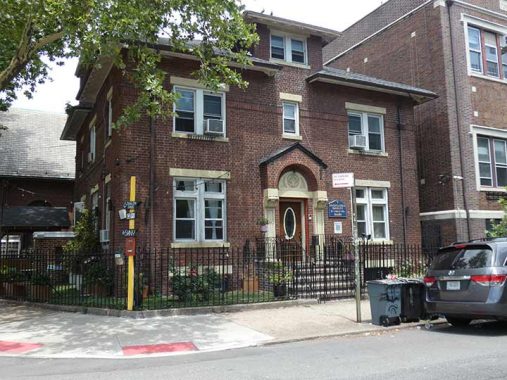
The unusually-named Shalom Catholic Community is an international missionary organization founded in Brazil and recognized by the Vatican. Its seat in Greenpoint is at the former parish house of the San Damiano Mission, formerly Holy Family Church, at Nassau Avenue and North 15th Street.
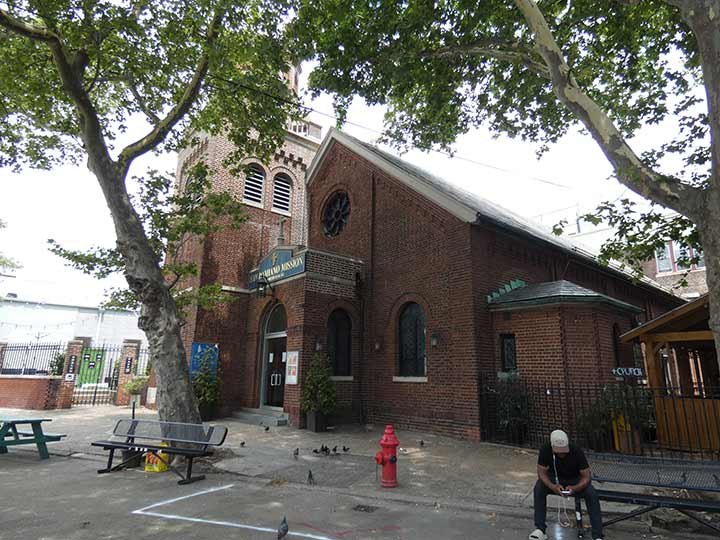
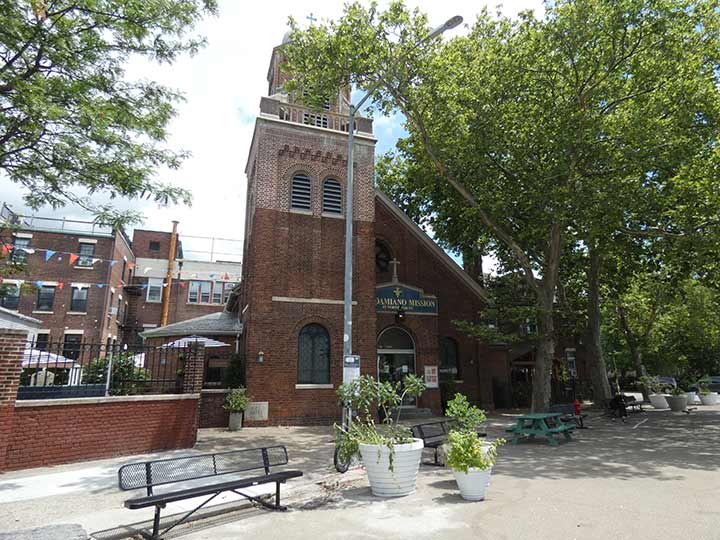
According to the New York City Chapter of The American Guild of Organists, a site instrumental in locating information about church buildings that the church’s own websites often do not provide:
| The original occupants of the building, Holy Family Church, was founded in 1903 to serve the Slovakian population in Greenpoint, Brooklyn. Services were held in the Church of St. Vincent de Paul until September 4, 1911, when a temporary church, a brick structure costing $30,000, was opened. The rectory was built at the same time. In 2011, Holy Family merged with the parish of St. Anthony of Padua, which earlier had absorbed the parish of St. Alphonsus. | |||||||
In 2015, another change occurred when the name was changed from Church of the Holy Family to San Damiano Mission. The San Damiano Church, outside Assisi, Italy, is according to Church tradition the place where St. Francis, one of the most famed and renowned saints, received a call from God to rebuild the church.
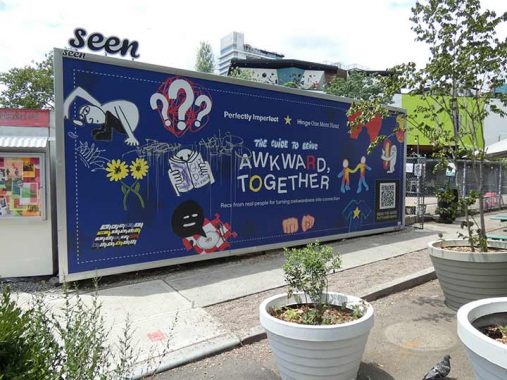
This rather confusing billboard, to me at least, was on the pedestrian-only section of North 15th between Nassau Avenue and Banker Street. As it turns out, it’s part of an advertising campaign for Bumble, the mobile dating app. Since it’s so confusing, I’d swipe it left.
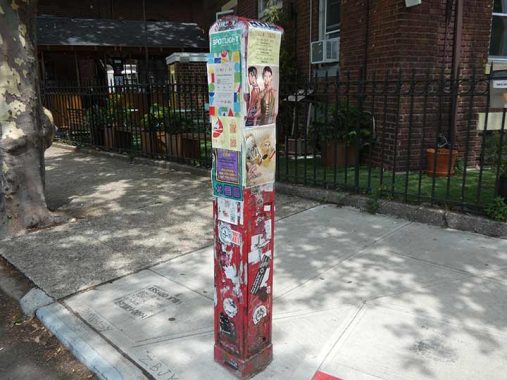
In certain parts of town, “street furniture” such as fire alarms get completely covered by flyers advertising products, services, meetups, protests, car services and other items.
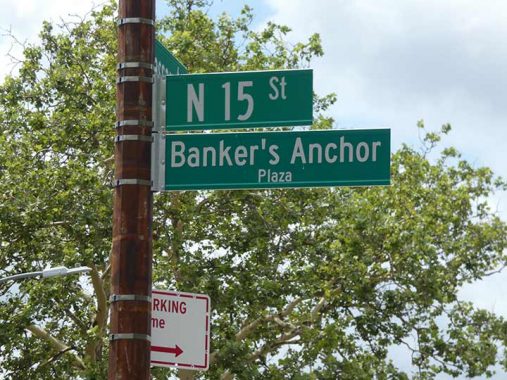
When the southernmost block of North 15th became pedestrian-only in 2022, the Department of Transportation (rather odd for eliminating transportation on the block) installed a street sign naming it “Banker’s Anchor” for the intersecting street.
The street is not named for banks in the area. Rather, it honors Edward Banker of the ship chandlering company Schermerhorn, Banker and Co. serving the numerous then-active East River docks in Greenpoint. Ship chandlers are, or were, responsible for furnishing seagoing vessels with ropes, canvas, gaslighting, etc. for what in many cases were lengthy voyages. His son James Banker entered a profession more appropriate for his name as he was vice president of the Bank of New York. James Banker co-established numerous railroads with a close friend, Commodore Cornelius Vanderbilt. Info: Brooklyn By Name, Benardo and Weiss
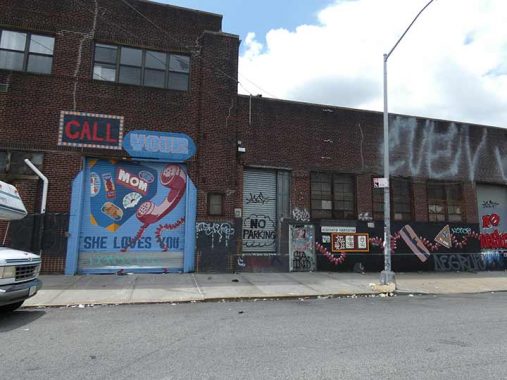
“Associated Fabrication is a full-service digital fabrication and architectural millwork company serving architects, contractors, furniture makers, artists and students in New York City.
Founded in 2005 by graduates of the Columbia University Graduate School of Architecture, Associated Fabrication is expert at bringing your designs — from CNC milled parts to complex installations –to life in the physical world.”
I like the nondescript brick factory building it’s located in, and the scrawled graffiti they seem to be tolerant about. The “Call Your Mom She Loves You” art has been there a few years now; it seems to be unsigned.
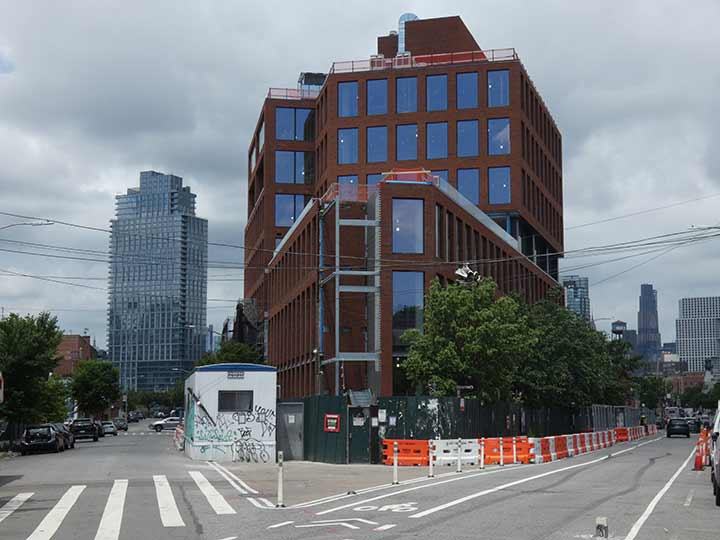
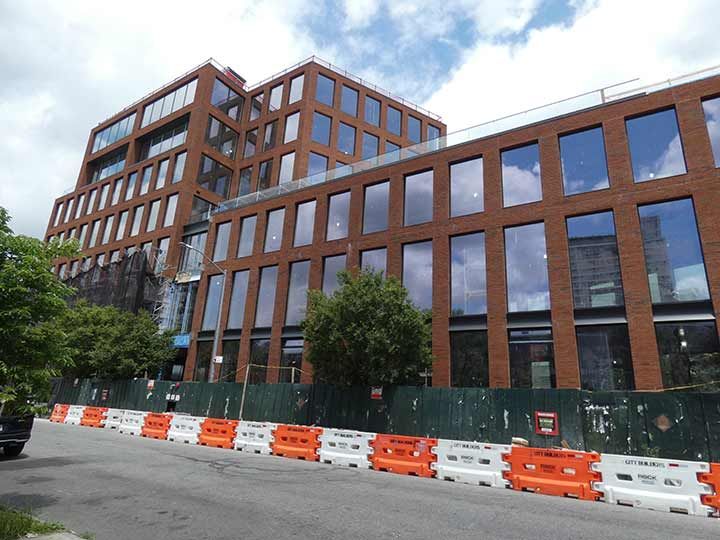
I don’t know the name or address of this new residential building in the upper part of the Banker/North 15th “X” — it’s so new — but I do like the exterior brickface and the very large picture windows. I do hope they make blinds that big.
New York NIMBY has the answer, see Comments.
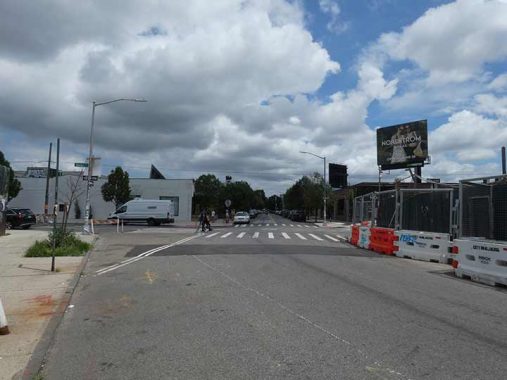
There are numerous junctions in Greenpoint, where street layouts meet. Here, Wythe Avenue meets its end at North 15th. Westbound Norman Avenue traffic can proceed on Wythe, which makes a southerly and then southeasterly turn through Williamsburg, turning into Franklin Avenue at Wallabout Street. I find NYC street patterns endlessly fascinating and have pored over them on maps since my age was in the single digits, and I am now 68.
On the undefended Williamsburg-Greenpoint border, Kent Avenue becomes Franklin Street, Berry Street becomes Nassau Avenue, Driggs Avenue shares both neighborhoods. South of that, McCarren Park saves the two neighborhoods over jockeying for street grid superiority.
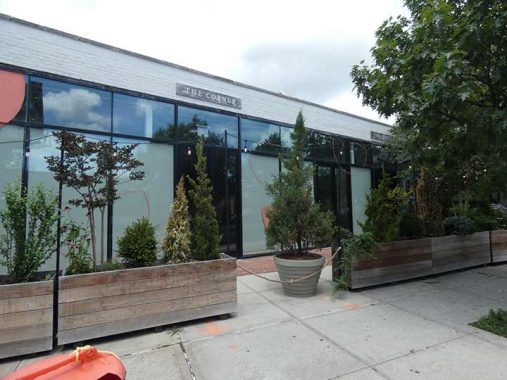
Years ago when I first encountered this low rise building at the NW corner of Norman Avenue and Banker, it was a brickfaced wholesale bakery. The bricks are still under there somewhere, but it’s now an event space called The Corner Bar at Rule of Thirds. It’s complicated, the “Rule of Thirds” proper is a Japanese restaurant in the building. Perhaps the owners were photography or art majors: the term refers to a composing method for paintings, photographs and films.
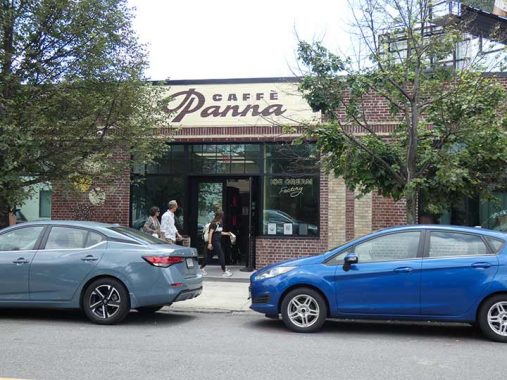
I am attracted to attractive, finely crafted sidewalk signs like this one for Caffé Panna, a Greenpoint branch of the “gelateria”:” serving Italian ice cream, coffee and espresso that originated in the Union Square region of Manhattan on Irving Place. It’s well reviewed and can boast an outdoor line during the warm months.
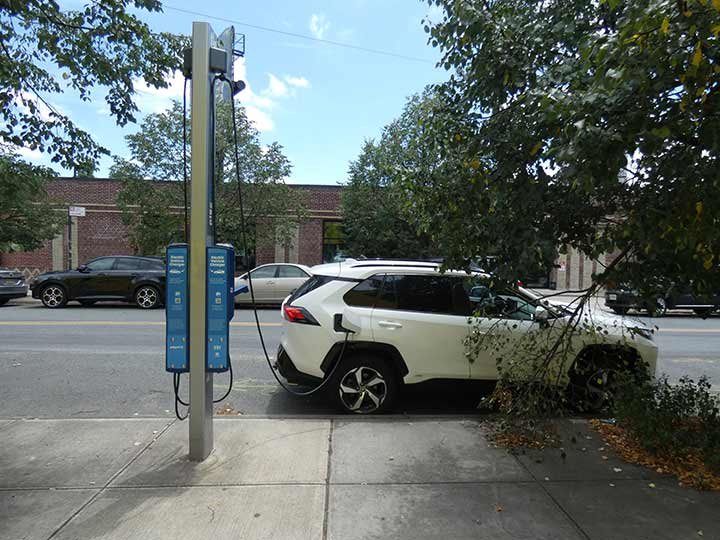
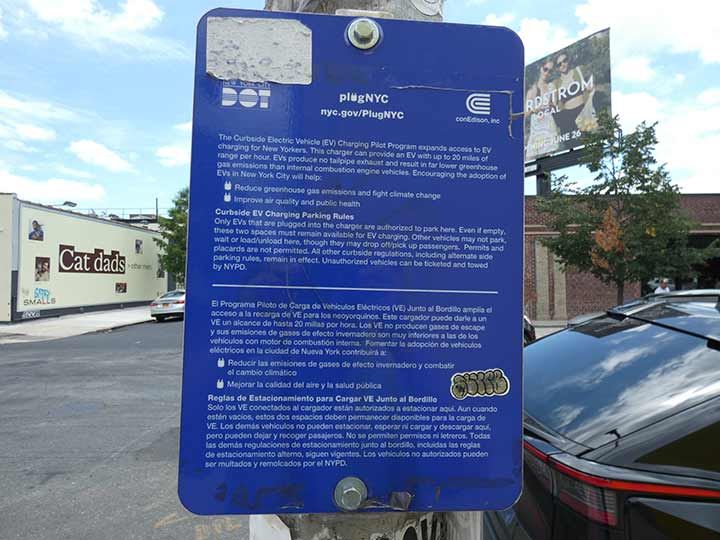
Charge! If electric-powered cars continue to gain in popularity you’ll see more of these curbside charging terminals popping up. I already found one on 36th Avenue and 33rd Street in Astoria. As the sign says this one is operated by PlugNYC.
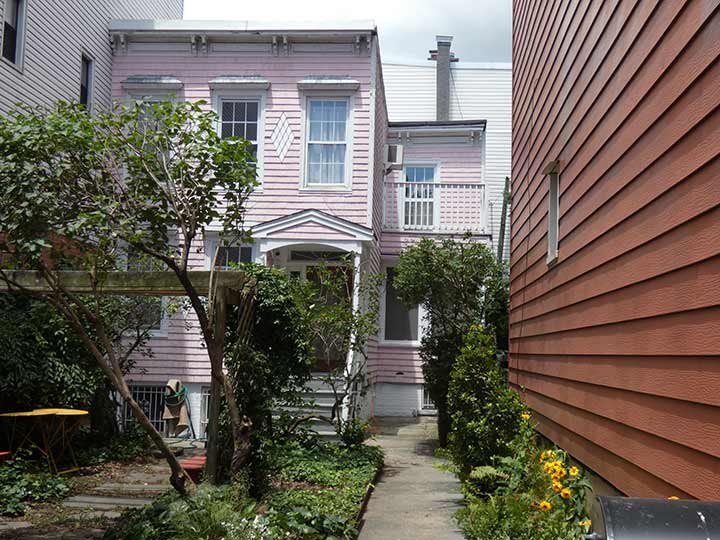
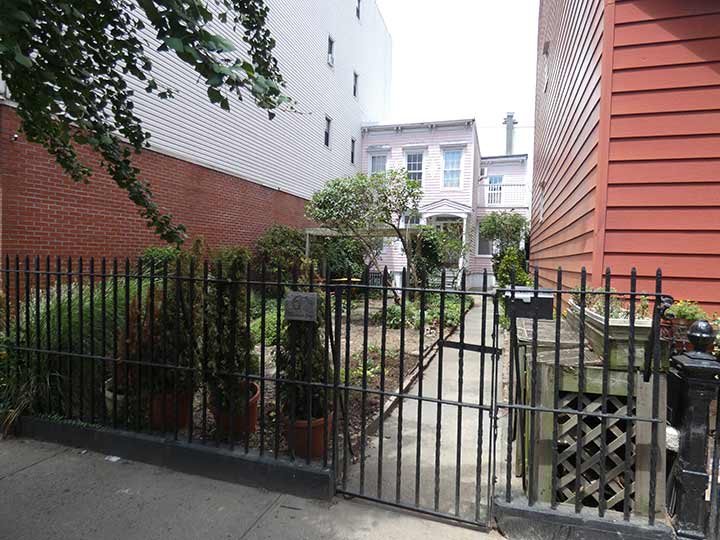
I occasionally find small houses that are set way back from the street, with an especially large front lawn. #61 Norman Avenue, east of Guernsey, is one of these buildings. I wonder what the explanation is. Perhaps an underground stream makes building near the street unstable? It’s a neat little Victorian-era jewelbox house.
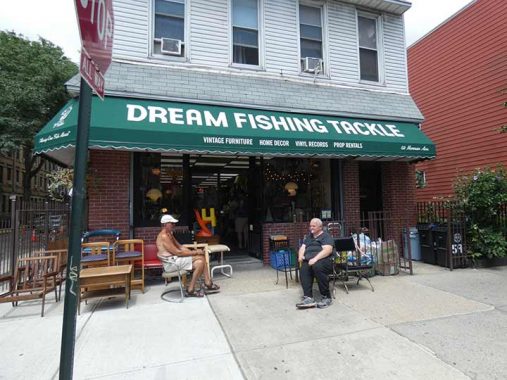
Dream Fishing Tackle, #59 Norman Avenue at Guernsey. Yes, it sells fishing supplies but it’s also something of a grab bag with home furnishings, home decor and long playing records. Yelp review:
A hidden gem in Greenpoint, Brooklyn with the most eclectic stules of furniture and some of the best vinyl record selection one can dream of! A very cool vibe and with a great atmosphere and great music playing on the background. Also, they have fishing gear in the back. Super interesting and an odd mixture of all! If you want to step outside of reality for a bit and get distracted by the overwhelming site of a collage of furniture art and fishing decor and gear and a gazzillion records ranging from vintage to new then take a walk into Dream Fishing Tackle!
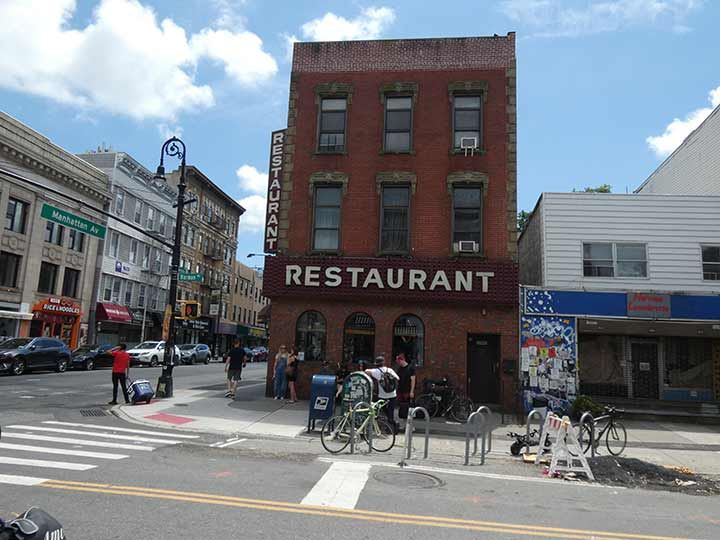
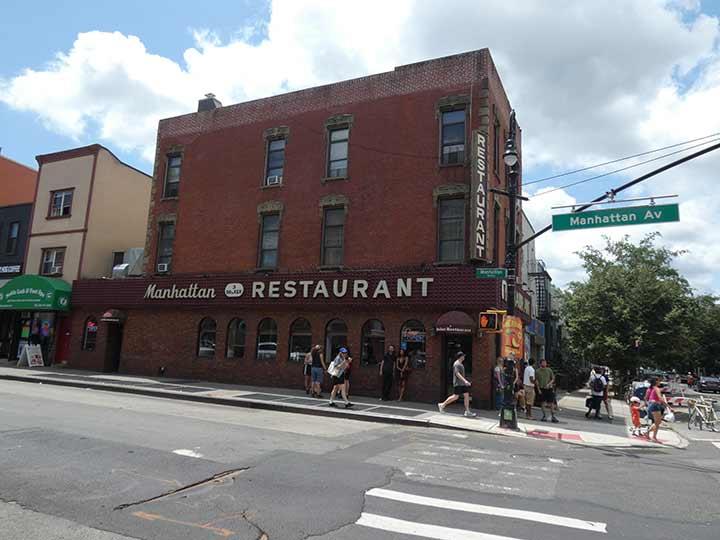
I have been in what locals call the Three Decker diner twice: in late December 1992, when I had what I termed at the time the best open hot turkey sandwich I ever had, and a couple of days before these photos were taken. The diner signage has it as Manhattan 3 Decker Restaurant, as it’s on the corner of Manhattan Avenue. My intel says it has been open since 1928, though on my recent visit it had been recently refurbished. The tax photo from 1940, however, shows a dry goods store called Aron’s in the space.
I was there with some college pals to see off one of them who was moving to Sarasota, FL. After over 25 years in Long Island, he and the Mrs. had had enough and were heading to Florida, where his mother and other family members resided. A number of friends have decamped to Florida: but I couldn’t do it, with the hurricanes, humidity, alligators and large insects. And you need a car.
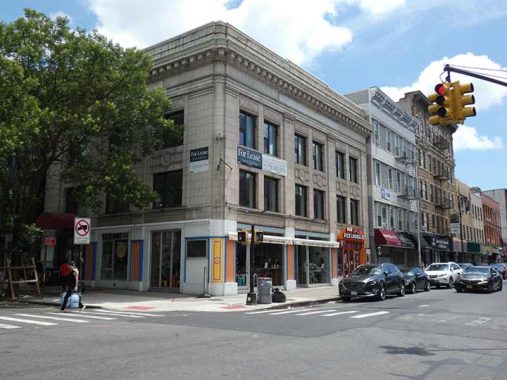
This building with beige terra cotta on the SW corner of Manhattan and Norman appears to be a former bank building (a 1929 Belcher Hyde atlas tabs it “Home Savings Bank.”) However, I remember it as the former home of Dunne’s Polemost Liquors and the restaurant Krolewskie Jadlo, both emblematic of the neighborhood’s Polish population. The restaurant closed in 2021, a victim of the pandemic. The Polish term means “royal food” and two metal knights stood at the entrance.
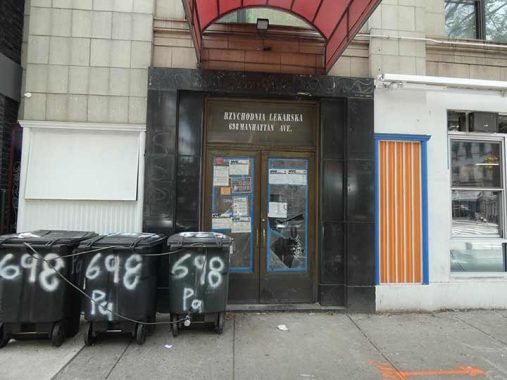
More Polish: the inscription above the side entrance means “medical clinic” and this may have been an urgent care walk-in center.

More Polish: “kwiaciarnia” is the possessive of “florist.”
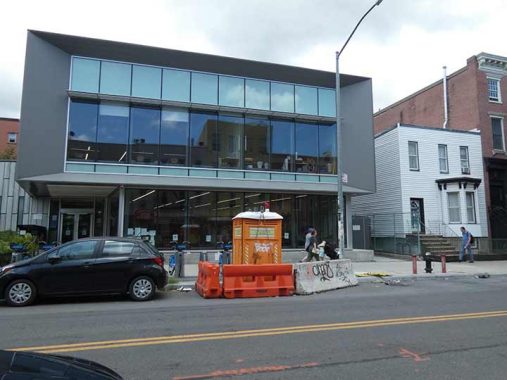
To my regret I did not get a full view of the Greenpoint Library and Environmental Education Center, #107 Norman at Leonard Street, but you can see it at Google Street View. The building opened in 2020.
At 15,000 square feet, the branch offers significant indoor and outdoor spaces for activities related to the exploration of the environment as well as everyday library use. Greenpoint Library features elements that interact with the natural world, including a gardened reading deck, windows that act as sun dials, and a cistern to collect rainwater for the rooftop demonstration garden. Inside, the library has distinct adult, young adult and children’s reading rooms and collection spaces, and community spaces for regular library programming as well as those supporting environmental education. Lab spaces for interactive projects, a large community event space (which divides into two of the lab spaces), lounge seating, small meeting rooms and staff spaces are distributed on the two main floors. Greenpoint Library
This is the third library building on site. The first was a Beaux Arts Carnegie library opened in the early 20th Century, seen on this 1940 tax photo. The second was a humdrum, no-nonsense utilitarian structure, and now the GLEEC, which is a handsome addition, one of the newest buildings on Norman Avenue.

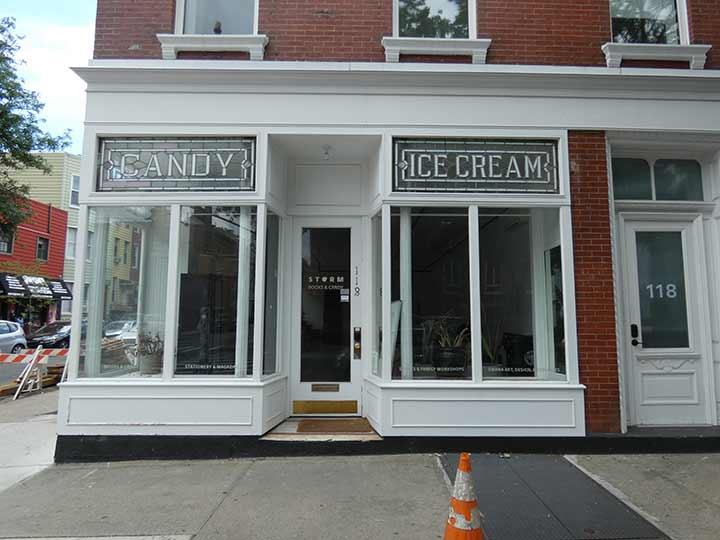
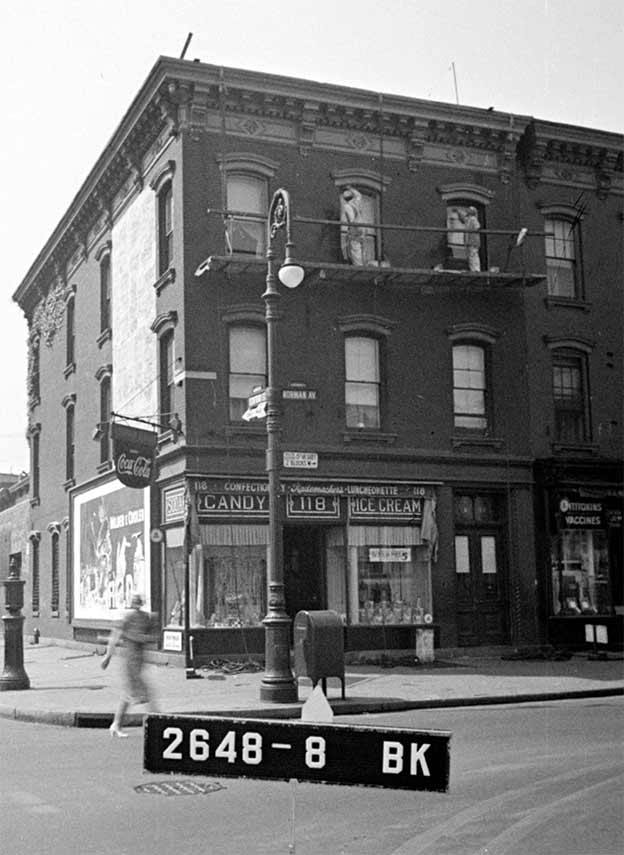
Until just a couple of years ago, these exquisite etched glass “candy” and “ice cream” signs were hidden beneath an awning sign for a travel agency. When the space was renovated for the new Storm Books and Candy store, the signs were uncovered. You can see they were made for a mid-20th Century candy store, Rademacher’s, on the corner of Norman Avenue and Eckford street. The bookstore closed in June 2025, but its sign preservation legacy lives on.
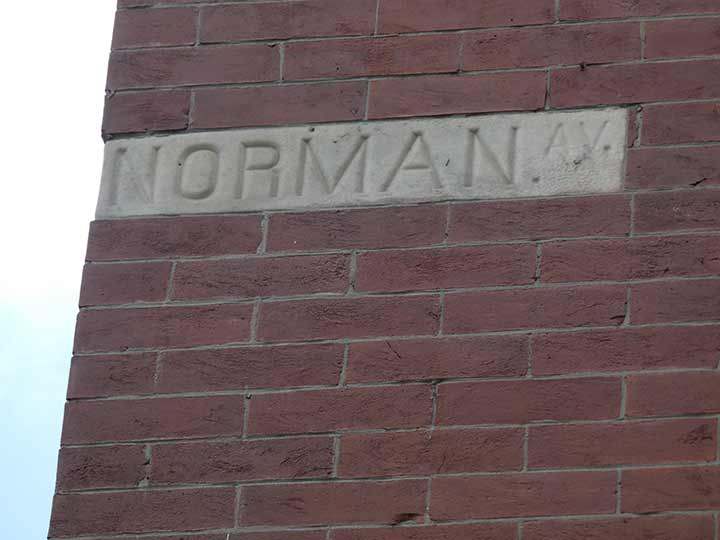
More legacy signage: the chiseled Norman Avenue and Eckford St. signs on the building corner. Before street signs were hung on lampposts and other poles, building signage like this identified streets. This practice is still current in London, UK.
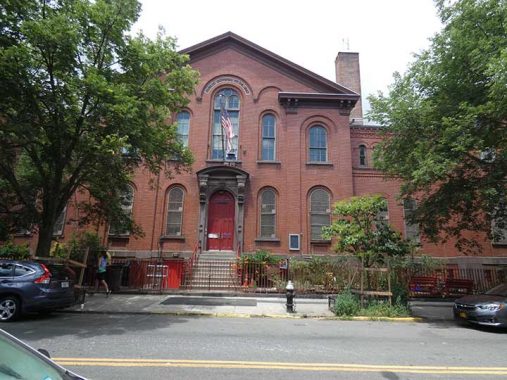
In 2025, the venerable PS 34, at Norman Avenue at McGuinness Boulevard, sits amid a woody thicket and you’re better off getting a good photo in the colder months. Still, I persisted. According to Urban Archive, it’s the longest continuously serving school building in the city, having opened in 1867 (therefore rumors of it being a Civil War hospital are false). PS34 was designed by Superintendent of School Buildings Samuel Leonard. The school is named for War of 1812 naval leader Oliver H. Perry (1785-1819), remembered for his quotes, “don’t give up the ship!” and “we have met the enemy and they are ours.” In 2015, PS 34 began to offer bilingual Polish language classes.
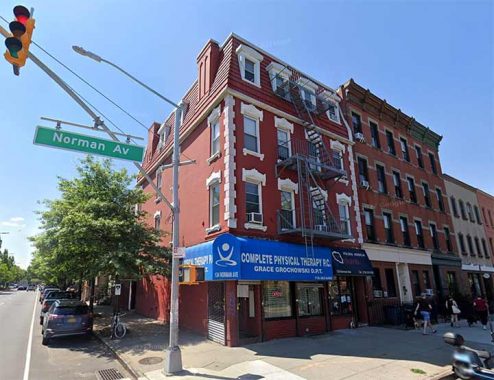
The west side of McGuinness Boulevard preserves many structures from when it was still narrow Oakland Street, like this example of what I call the “casual elegance” of late 1800s-early 1900s architecture. In 1964, Oakland street was widened as a traffic conduit connecting the Pulaski Bridge and the Brooklyn-Queens Expressway; advocates have been trying to make the pedal-to-the -metal route safer by adding bicycle lanes. It was renamed for long-time Greenpoint Democratic alderman and ward boss Peter McGuinness:
Perhaps the funniest and most lovable lawmaker in New York City history, McGuinness’ humor and joie de vivre endeared him to the city… — Geoffrey Cobb in “The King of Greenpoint Peter McGuinness: The Amazing Story of Greenpoint’s Most Colorful Character”
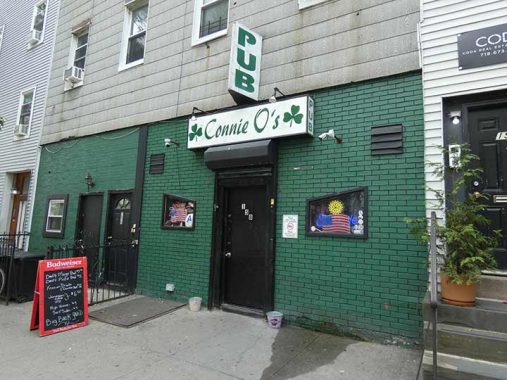
There are pockets of Irishness in Greenpoint, such as Connie O’s Pub, a hole in the wall at #158 Norman just east of Newel Street. Unfortunately, some of the online reviews aren’t good.
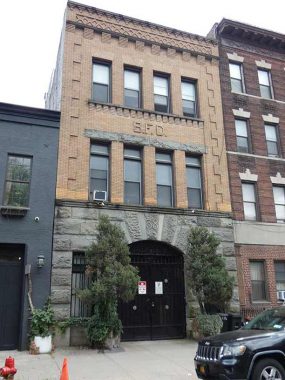
#176 Norman Avenue, between Diamond and Jewel Streets, is the former FDNY Engine 238 and before that, the Brooklyn Fire Department Engine 38, recognizable by the “38” above the entrance and “BFD” above the second floor. Before joining Greater New York in 1898, Brooklyn was a separate city on its own, incorporating in the early 1800s and gradually annexing all the other Kings County towns established by the British in the late 17th Century.
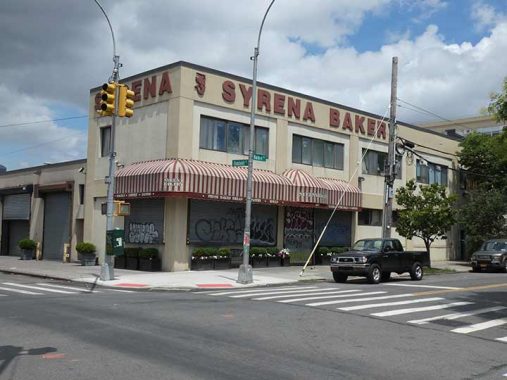
The symbol of Warsaw, Poland, is a mermaid wielding a sword and a shield. As early as the late 1300s, surviving paintings of coats of arms show a a creature with a human head, arms and torso, a dragon’s tail, wings and bird legs (this corresponded to what the old Greek sirens looked like). Over time, the image was streamlined and amended to show a mermaid. The story goes that when some fishermen found a mermaid trapped in a net, they took pity and set her free and in thanks, the mermaid took up arms and has defended Warsaw ever since. There are representations of the mermaid, big and small, in sculpture and paintings, all over the city.
The name is reflected in delis and bakeries around Greenpoint and its partner across Newtown Creek, Maspeth, including Syrena Bakery at Norman Avenue and Humboldt Street.
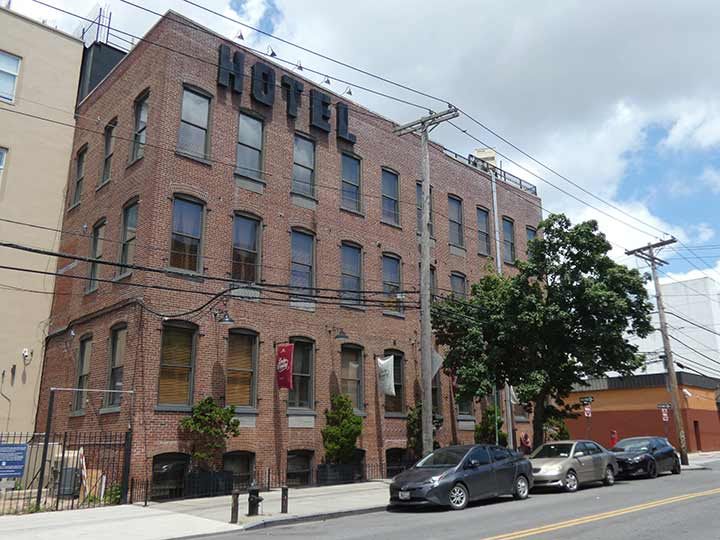
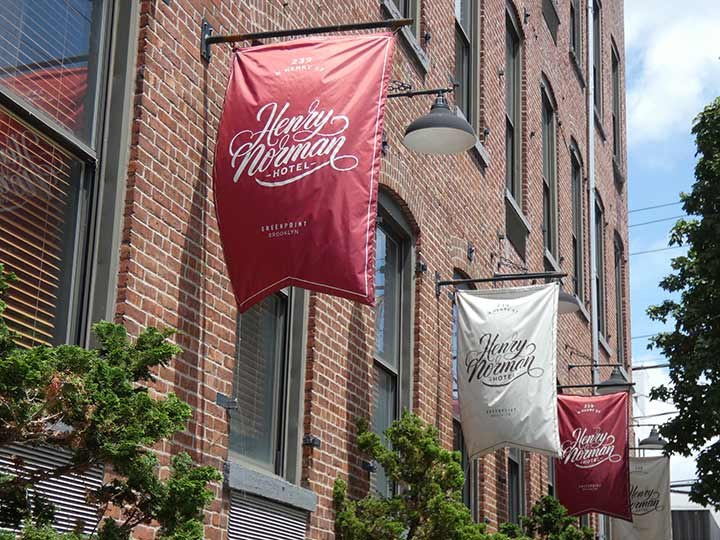
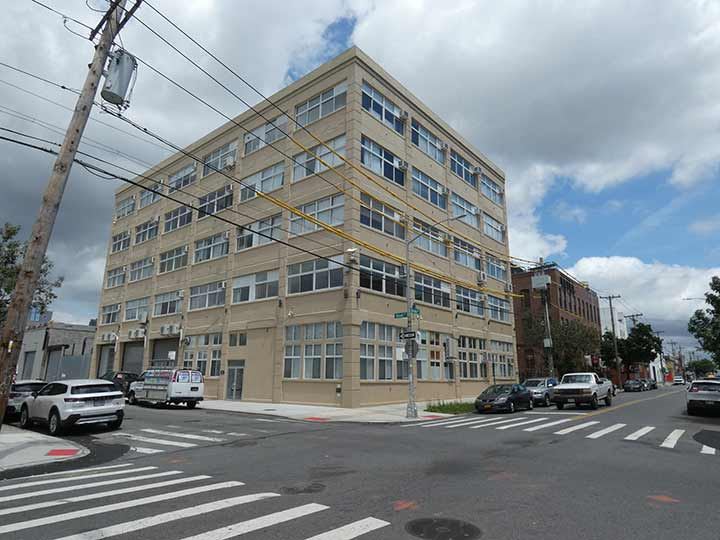
On Norman Avenue between Russell and North Henry Streets we find two buildings once associated with Colonial Paint Works, the older of which has been converted into the Henry Norman Hotel, named for its intersecting streets.
Born from the name of the two streets at the intersection in which it is located, the corner of North Henry Street and Norman Avenue, this former 19th century warehouse has been converted into a 52-room boutique hotel. The Henry Norman Hotel has been conceived and developed by the owners, management, and art director of the renowned The Box House Hotel, est. 2012. TripAdvisor
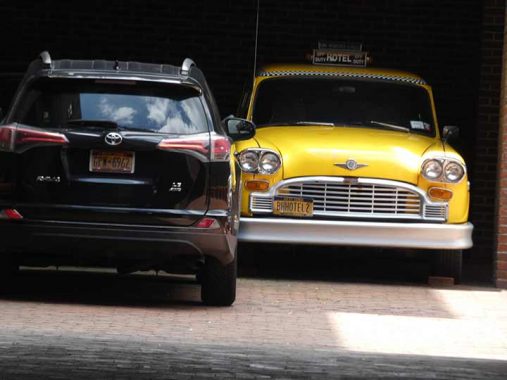
The Box Hotel uses Checker cabs to pick up guests and the Henry Norman, under same management, does too.
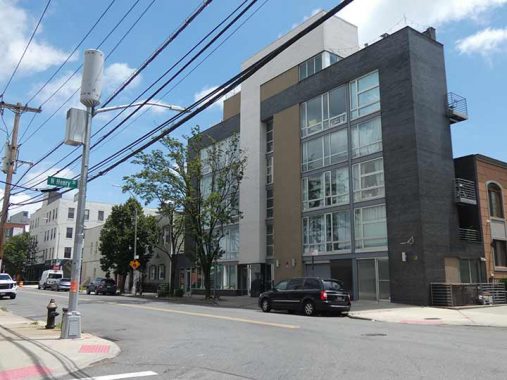
Oddly, North Henry must have been considered a more desirable address, as #240 North Henry fronts on Nassau Avenue. It features the trend for large picture windows. That large object on the lamppost routes 5G cell phone calls.
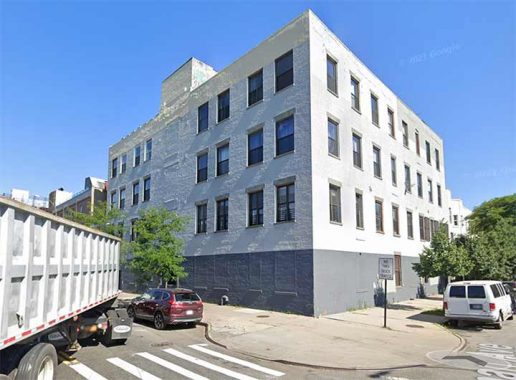
This stolid brick building at the SE corner of Norman Avenue and Monitor Street is the former Mayerson Fur Dyers, according to the 1929 Belcher Hyde Desk Atlas. It was likely a warehouse as the firm was located in Manhattan’s Garment District.
Monitor Street was named for the ironclad Civil War vessel that battled the Confederacy’s “Merrimac” to a draw during the Civil War. All subsequent battleships are their descendants. The Monitor was built in a Greenpoint shipyard on Quay Street.
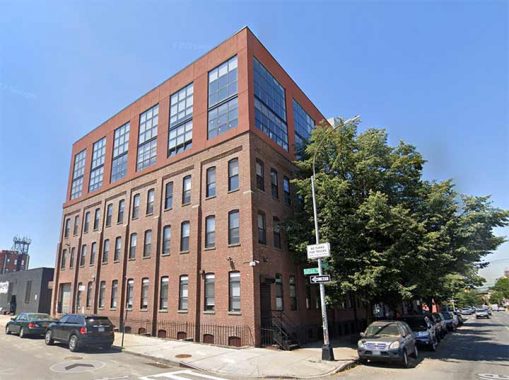
If you have been reading Forgotten NY for awhile you know I like simple, brick factory or warehouse buildings; in many cases, they have been converted to residential. The Hyde atlas shows this example at Norman Avenue and Sutton Street as the American Rattan Reed Co. The upper two floors were added in 2017-2018.
History of rattan and wicker furniture in America [American Rattan]
Norman Avenue ends rather abruptly at Apollo Street. There are no other streets named for Greek gods in the area, so “Apollo” may have been a local shipyard. Norman Avenue continues southeast as Bridgewater Street, possibly named for the original Newtown Creek crossing, Penny Bridge, which took Meeker Avenue traffic to Calvary Cemetery before the first Kosciuszko Bridge opened in 1939.
Check out the ForgottenBook, take a look at the gift shop. As always, “comment…as you see fit.” I earn a small payment when you click on any ad on the site.
9/6/25
11 comments
I taught at PS31K on Meserole Ave for two years back in
the early- mid 1970s, across from the Police Station.
I loved the neighborhood!!
Manhattan Three Decker definitely wasn’t open in 1928. The first listing for Manhattan Three Decker at 695 Manhattan Avenue was in the 1938 Winter/Spring Brooklyn
Classified Telephone Directory. It was originally called Manhattan Three Decker Sandwich Shop, Telephone Number EVergreen 4-7629.. Interesting to note that, at the time, the EVergreen 4 exchange was used in this section of Greenpoint.
Ship supply companies are no longer called chandlers just
like there are no more cobblers
I assumed most people would be aware of this, but, to satisfy you, I have amended it to are or were.
I remember going to see Stevie Ray Vaughan at the Concerts on the Pier in 1984, and on the north side of 42nd between 11th and 12th Avenues they still had a store called Marine Supplies. Chandler would have been better.
So that’s who “McGuinness Boulevard” was named after. And there I was, thinking it was named after Ethelbert “Muggs” McGuinness.
It is not a good thing when a Catholic church becomes a mission. This renaming usually (always?) means that the church no longer has enough parishioners to merit a full-time priest or regular services. Instead, a priest from another parish will come by as needed for wedding and funerals, possibly to hold services on a less than weekly basis.
You should stop by PS 34 on the morning of Flag Day, June 14th. This past one was their 76th year, making it the oldest, annual NYC school tradition. And the current principal always gives a great speech. It’s truly a gem of a Greenpoint institution.
Greenpoint is one of my favorite neighborhoods to visit and stroll around. The Fishing Tackle store is very interesting and not what you would expect. I was there about a week ago looking through the vinyl records and found it amusing that the owner was fiddling around with a rod & reel at the front counter.
Until the last decade, Greenpoint was pretty much preserved and seeing some of those new buildings does show how much it has changed in the last decade.
The Banker/North 15th “X” building will be a commercial building. Brooklyn Brewery will relocate there, as well as other local businesses (ACME Smoked Fish- offices, for instance). Address is 1 Wythe Avenue.
https://newyorkyimby.com/2025/08/construction-nearing-completion-at-1-wythe-avenue-in-greenpoint-brooklyn.html