


THE only zoo in the city that is not operated by the Wildlife Conservation Society is on Staten Island, at 614 Broadway near Clove Lakes Park in West Brighton, in an eight acre park developed in the 1930s. As the snake on its logo suggests, reptiles are the speciality here, along with features seen in the zoos of the other boroughs: fish tank, children’s zoo, and livestock.
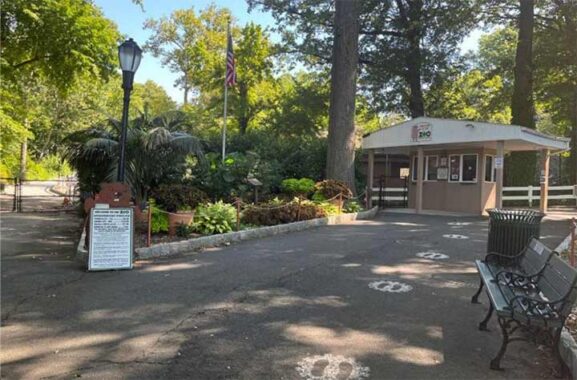
The entrance to the zoo is a wooden shack where tickets are purchased, in contrast to the ornate gates of the city’s other zoos, although there are plans to update the gate for a truly grand entrance and better visibility on the street.
On city maps, the zoo is hosted by Barrett Park, formerly the property of Col. Edward Harden whose relative Julia Harden donated this land with the stipulation that it honor Clarence T. Barrett, her brother-in-law. The Civil War veteran is also honored with a monument near Borough Hall. The Barrett family made its wealth in the New-York Dyeing and Printing factory at Broadway and Richmond Terrace. This industry was powered by Factory Pond, which was later filled in and redeveloped as a park.
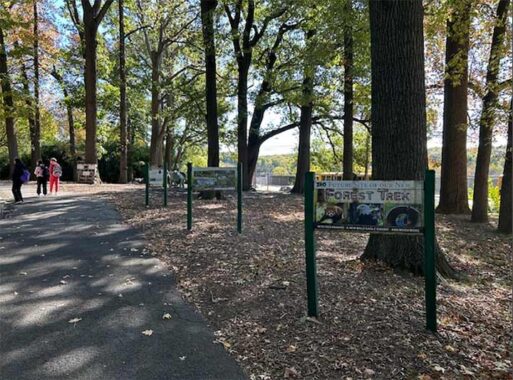
Like Queens Zoo in Flushing Meadows, the layout of the path is circular, starting and ending at the entrance. Where statues of dinosaurs presently stand, the zoo is planning a redesign for the Forest Trek section.
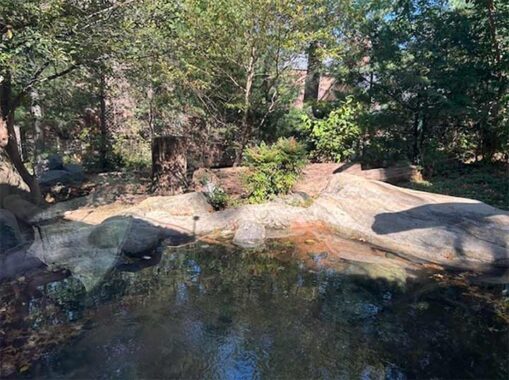
The other four borough zoos have their constructed waterways that look like natural ponds and creeks. The landscape of Staten Island Zoo doesn’t have such features, save for a small pool for the Amur leopard, which is native to the region where Russia, China, and Korea meet.
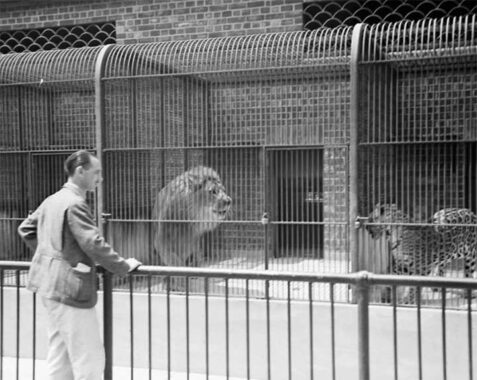
Concerning large mammals, there’s not enough room for them to have a sizable compound at this zoo. Looking back to when it was acceptable to keep wild animals in cages, this zoo had a resident lion.
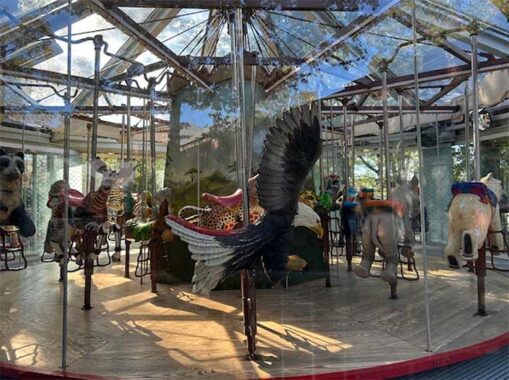
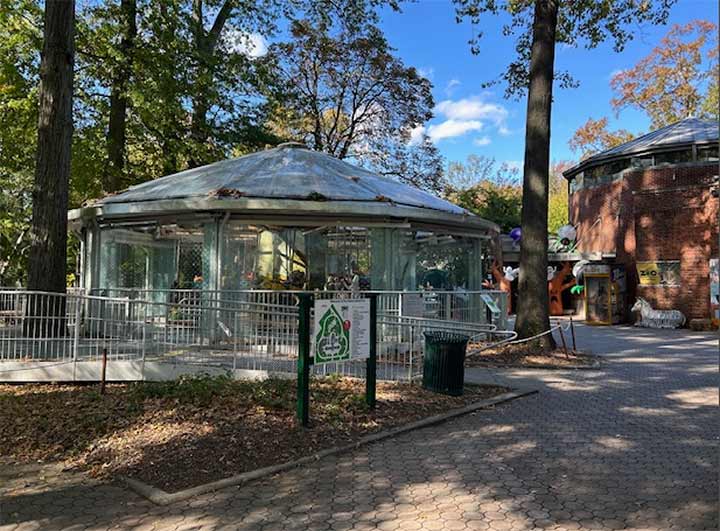
Bronx Zoo has a carousel on its grounds, and the zoos of Queens, Prospect Park, and Central Park have them nearby. At Staten Island Zoo, the circular ride has a variety of rare animals inside a glass canopy.
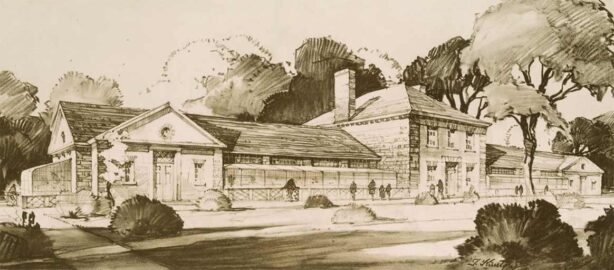
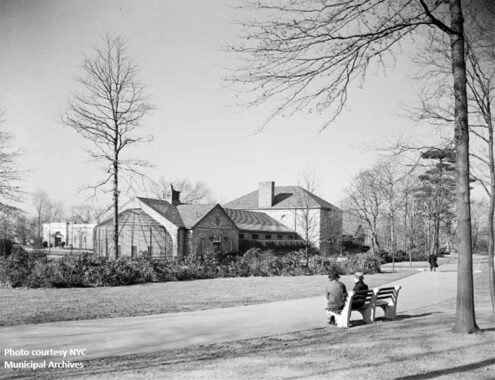
The main exhibition building was constructed as a New Deal project, the city in partnership with the federal government. Same red brick appearance as Central Park Zoo and Prospect Park Zoo, but without any ornamentation. Architect Aymar Embury II was their designer; his city portfolio also includes the rec centers at Sunset Park, Red Hook Park, McCarren Park, and Crotona Park, among others.
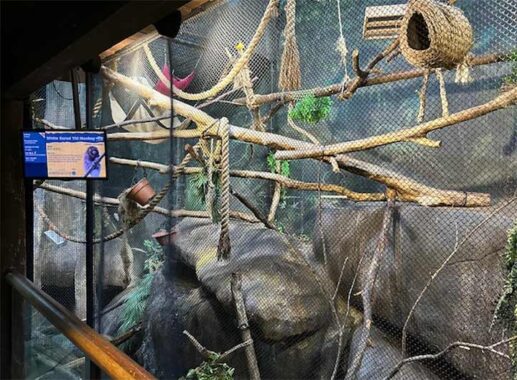
Some of the animals inside this building have relatively spartan quarters, with more concrete than vegetation, and others such as the white eared titi monkey, have vegetation, tree branches, and rocks for their physical stimulation. This primate is native to Bolivia and Brazil. The building faces Staten Island’s Broadway, which Kevin documented in 2009.
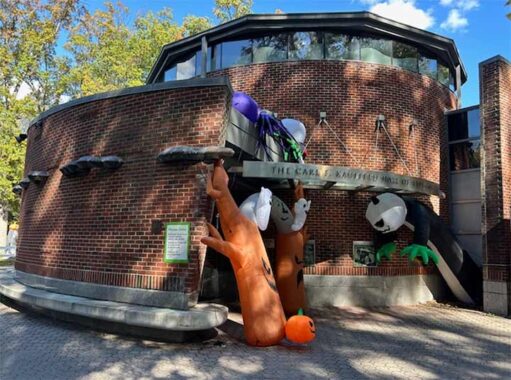
In 2005, the zoo completed its most recent building, the Carl F. Kauffeld Hall of Reptiles, which connects to the main building. On my visit, the zoo was decorated for Halloween, but there’s also a permanent artwork on the wall, a bronze python by Steve Foust. The hall’s namesake was a respected authority on snakes at the Staten Island Zoological Society, which operates the zoo.
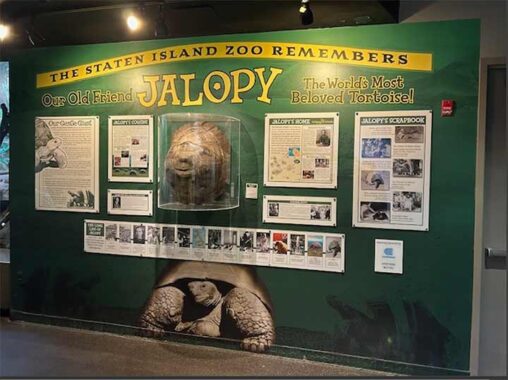
Among the displays inside this hall is a memorial wall for Jalopy, the Galapagos tortoise donated to the zoo in 1937 by Vincent Astor. The beloved zoo resident lived to age 77. Another famous donor to this zoo was Rafael Trujillo, the generalissimo of the Dominican Republic, who donated a pair of solenodons to this zoo in that year. The best-known headliner at the zoo these days is Staten Island Chuck, the city’s winter-to-spring prognosticator. [Mayor Bill deBlasio mishandled and dropped a previous Chuck early in his mayoralty, killing the rodent. Will Zohran Mamdani make a similar misstep?–Ed].
[77 is dying young for these tortoises. –Ed.]
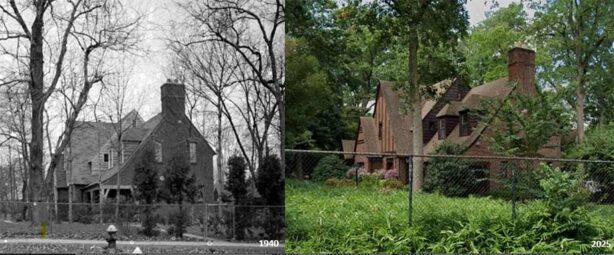
The only building at Staten Island Zoo that is older than the zoo is the Harden house on the northern edge of the zoo. The family’s house stands on the north side of the zoo, used as offices and by the scout troop that works with the animals here.
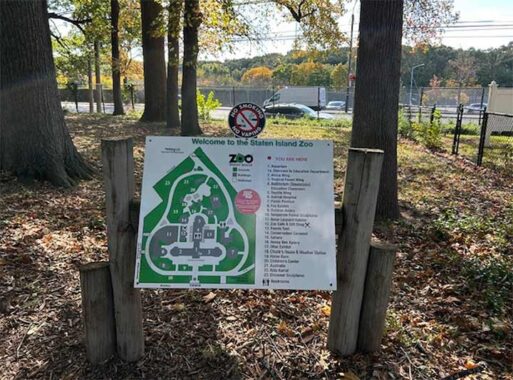
As the zoo updates its entrance and forest trail, perhaps it could consider a pond for its animals in the future.
In the history of Forgotten-NY, we’ve visited the Bronx Zoo and Central Park Zoo. On my Hidden Waters Blog, I’ve discussed the history of Prospect Park Zoo and Queens Zoo.
Sergey Kadinsky is the author of Hidden Waters of New York City: A History and Guide to 101 Forgotten Lakes, Ponds, Creeks, and Streams in the Five Boroughs (2016, Countryman Press), adjunct history professor at Touro University and the webmaster of Hidden Waters Blog.
Check out the ForgottenBook, take a look at the gift shop. As always, “comment…as you see fit.” I earn a small payment when you click on any ad on the site.
11/4/25
2 comments
Good god,the lion and leopard only had that to move around in?
They must have went nuts.Like people in solitary confinement go nuts.
I guess the zoo feels they dont have the intellectual capacity to go nuts.
So much nicer than trips as a kid during the 50’s and 60’s. There was a pit for alligators so small that they were piled on top of each other (or that how a five-year old remembered it.)