
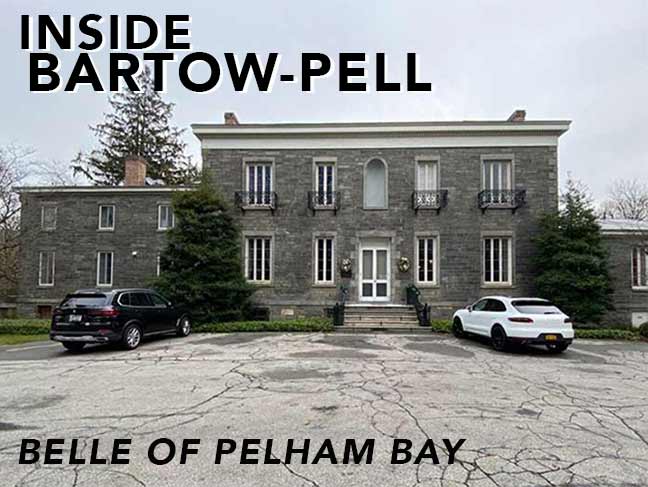


In the northeast corner of the Bronx, Pelham Bay Park takes up nearly 2776 acres, the city’s largest park. Its namesake is the Pell family, which had a colonial period manor here. The original mansion on the site of the park was destroyed during the American Revolution. In 1836, Pell descendant Robert Bartow purchased the ancestral property and built the mansion carrying his name.
As a designated landmark, the mansion is safe from demolition. It was acquired by the city in 1888 as part of what became Pelham Bay Park. It stood empty until the International Garden Club became its caretaker in 1914. Since then, it has hosted events, schools, and summer camps to learn about its storied past.

In the entrance lobby, a family tree of the Pell family shows names extending back to the time of William the Conqueror and the Crusades. Their name comes with centuries-old heraldry. During the Revolution, most family members were Loyalist, fleeing to Canada and later returning after hostilities abated.
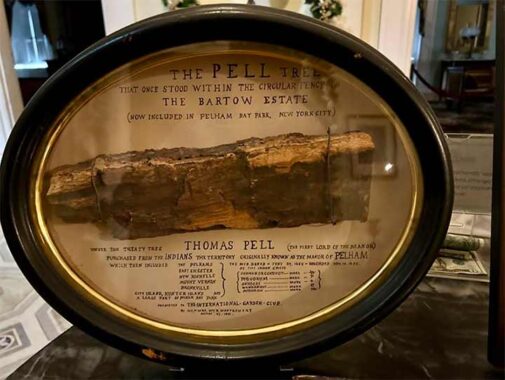
The transfer of the future parkland from local Natives to Thomas Pell took place in 1654 under a great white oak tree on this property. In 1906 the tree associated with the treaty burned down and a fragment was preserved and installed in the mansion lobby. Pell’s “purchase” conflicted with Dutch claims to this area, as was also the case with English settlers in Flushing, Newtown, and on Long Island. By 1664, New Netherlands became New York and Gov. Richard Nicholls declared Pell as the first lord of the Pell manor.
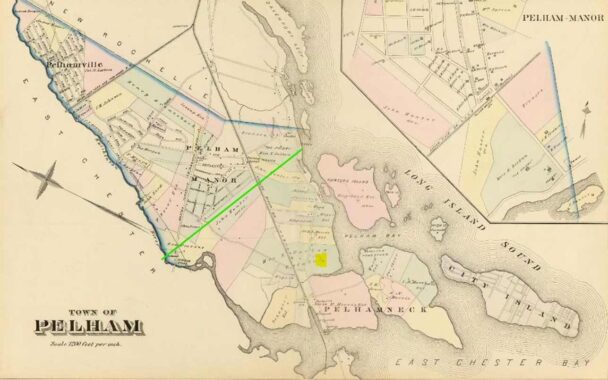
A map from 1881 shows the Town of Pelham that succeeded the manor. In 1895, the portion south of the green line was annexed by New York City, becoming part of the Bronx. The arrival of the New York, New Haven and Hartford Railroad in the 1850s spurred the development of the manor into a suburban community. This railroad is presently used by the Amtrak Northeast Corridor and will soon run Metro-North trains to Penn Station.
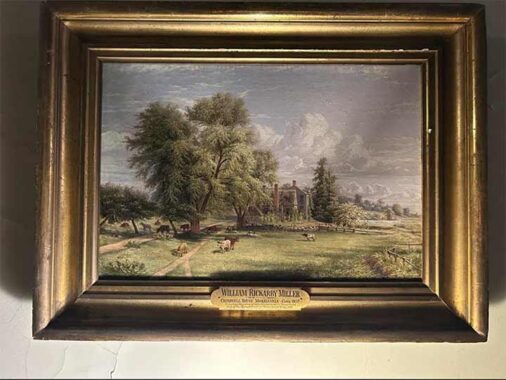
In similar fashion, the Morris family had their manor in Morrisania. A painting by William Rickaby Miller from 1859 depicts the Cromwell house in Morrisania. Its owner was a relative of Oliver Cromwell, who led a brief non-monarchical government in England in the 1650s. This house stood near the corner of Jerome Avenue and 163rd Street. Traces of its presence include Cromwell Avenue, and the buried Cromwell Creek. As for the artist, he was better known for his landscape paintings as part of the Hudson River School.
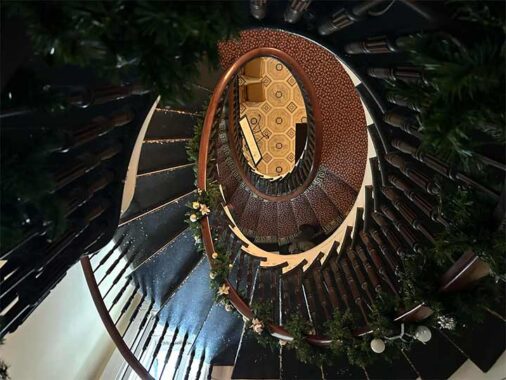
From the first floor to the attic, the oval spiral staircase is a key feature of the Bartow-Pell Mansion.
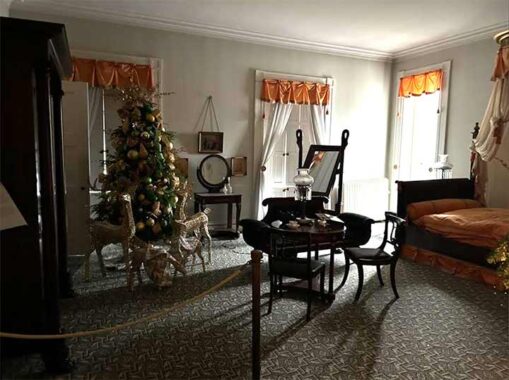
On my visit, the rooms had their shades drawn which I didn’t mind as it presented how the Bartow family lived before electric lights were installed.
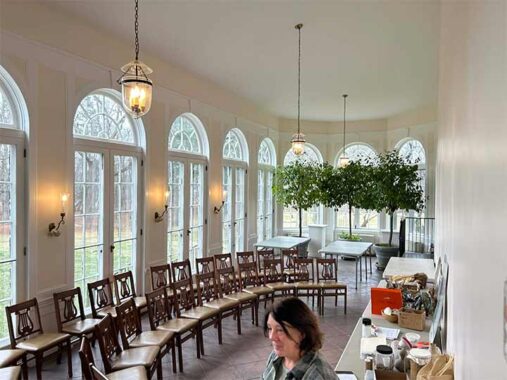
The brightest interior space at the mansion is the Sun Room where the owners kept plants during the cold months. From the windows, visitors can see the terrace garden and Pelham Bay beyond it.
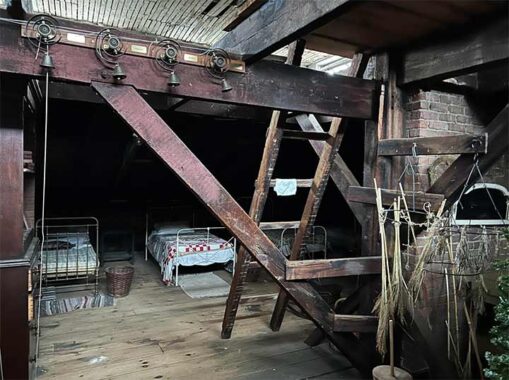
In contrast to the Van Cortlandt Mansion on the opposite side of the Bronx, Bartow-Pell is not tarnished by slavery, which was abolished in New York in 1827. But in a similar design, the servants lived in a dim attic that contrasts with the aristocratic interior of the mansion. Labor here was performed by Irish immigrant women who fled the famine of the 1840s. When their services were needed, the Bartows pulled ropes that rang bells corresponding to rooms in the mansion.
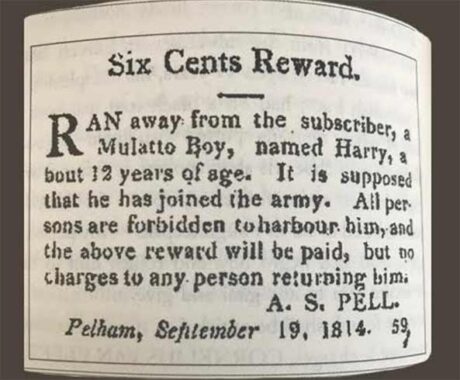
The present mansion was built and staffed by paid workers, but preceding mansions on the manor had a long history of slavery. Pelham’s Hometown History Project Director Alice Radosh found many documents on the purchase and sale of Pell’s slaves, including newspaper ads requesting the capture of runaways as late as 1814.
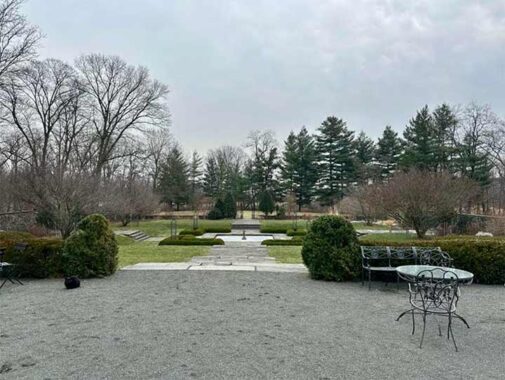
The terrace garden behind the mansion was commissioned by the International Garden Club in 1915. At the time, Pelham Bay Park had other mansions from the 19th century but the city did not wish to preserve all of them and in the end only the Bartow-Pell Mansion had a future. Two such examples are the Hunter Island mansion that was demolished in 1937, and the Lorillard house on the site of the park’s landfill.
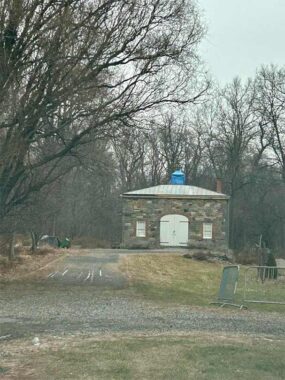
North of the mansion, a smaller unheated structure is the carriage house, which functioned as a garage for the horses, sleighs, and carriages used by the Bartow family. The feeling here is that a countryside mansion is not so different from the suburban tract house of the 20th century.
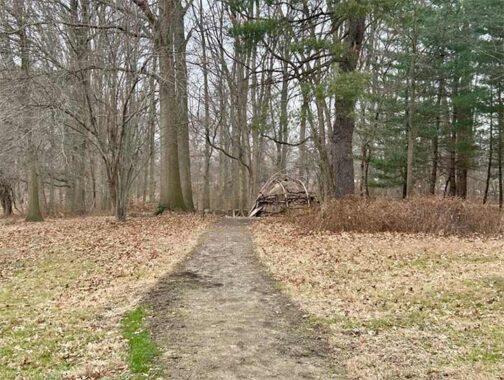
Across the driveway from the carriage house is a wigwam that survived many seasons of rain, snow, and wind, its durability testifying to the skills of the Lenape people who lived here for centuries before the Pells and Bartows arrived. I was told that its designer is a Native man who specializes in reconstructing Native structures for local museums using the same materials as the Natives of time immemorial. The architect is Jeff Kalin and Primitive Technologies is his firm.
Like the Van Cortlandt Mansion, this manor has a small family cemetery tucked in the woods of the park where descendants occasionally gather to remember ancestors who were the lords of this manor.
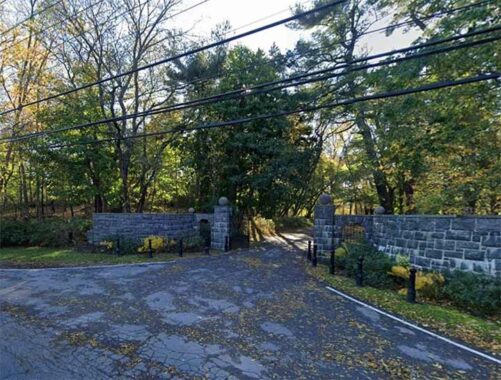
The entrance to the mansion is accessible by public transportation, exclusively the Bee Line buses that serve Westchester communities. Line 45 runs from the subway terminal at Pelham Bay Park through New Rochelle to Eastchester.


Editor’s note: I haven’t visited Bartow-Pell since 2001(!) but acquired some photos of its small cemetery that year. I do cover the mansion in Forgotten-NY the Book. The Pell family’s ancient burial grounds contain charmingly etched stones of Joseph and Isec Pell and the professionally stonecut graves of Phoebe Pell and other family members; some of the stones go back to the earliest days of the Pell settlement here. The Pell Mansion welcomes the public: call (718) 885-1461 for directions and hours.
Sergey Kadinsky is the author of Hidden Waters of New York City: A History and Guide to 101 Forgotten Lakes, Ponds, Creeks, and Streams in the Five Boroughs (2016, Countryman Press), adjunct history professor at Touro University and the webmaster of Hidden Waters Blog.
Check out the ForgottenBook, take a look at the gift shop. As always, “comment…as you see fit.” I earn a small payment when you click on any ad on the site.
1 comment
The alcove over the front door once had a statue of Bartholomew but it
blew down in the storm of ’44