
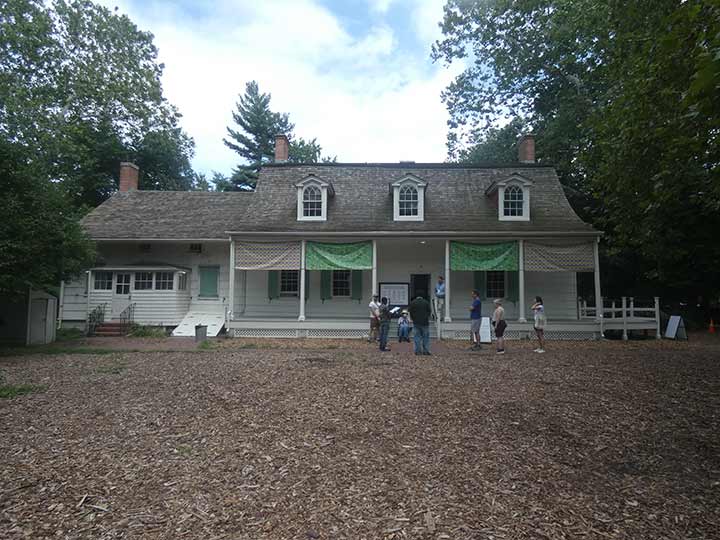

THE colonial-era Lefferts family is remembered in Kings and Queens Counties, from the Lefferts Gardens neighborhood east of Prospect Park to Lefferts Avenue in Propect Heights to Lefferts Boulevard in Richmond Hill and South Jamica. The most tangible remnant of the family is in the south end of Prospect Park, near where Flatbush Avenue meets Ocean Avenue and Empire Boulevard. Lefferts Homestead was built by the Lefferts family in an area east of the park along the Old Flatbush Road at about where Flatbush Avenue and Maple Street are now. Peter Lefferts had arrived in New Netherland in 1660 and had purchased a farm in this area in about 1675, and passed the property on to his son John. Since 2021, the Prospect Park Alliance has purposed the house to commemorate local Native American tribes and the Africans enslaved by the Lefferts family.
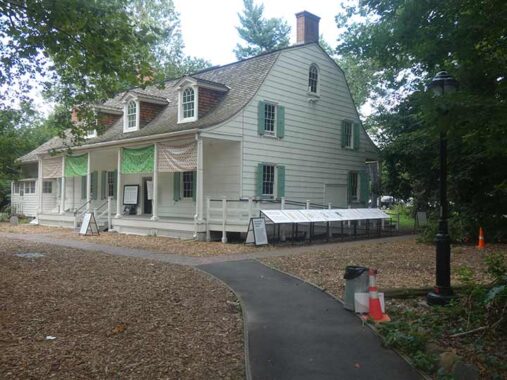
On August 23, 1776, British forces engaged American rebels in the area near the farm. Rather than allow the British to occupy the house, the rebels burned it to the ground (the family had already left town to escape the anticipated British invasion). John Lefferts died a couple of months after that, and his family set to the task of rebuilding the farmhouse. By 1777, John’s son Peter had produced this gabled, shingle-roofed building featuring a 6-columned porch and dormer windows.
The Lefferts family continued to occupy it until 1918, when the City took it over and moved it to its present location. The building also features a rather eclectic library: on one visit, I found a long-out-of-print book produced by the Bay Ridge Historical Society, “Bay Ridge Chronicles,” detailing the history of my own home neighborhood.
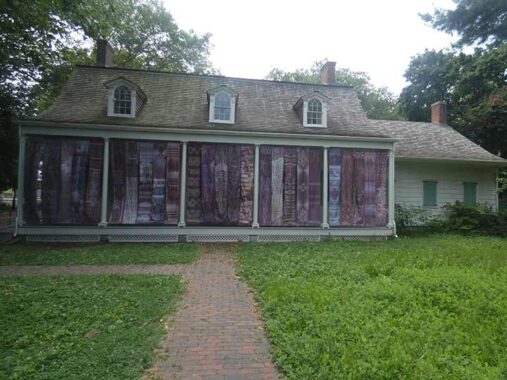
In the summer and fall of 2026 (until November 2026) the house is hosting the pop-up exhibit “Black People and the Battle of Brooklyn” which, according to the Alliance, explores how Black individuals served as soldiers and spies on both sides, built American fortifications, built American fortifications, and maintained British ships during the August 1776 conflict. Additionally, it highlights how enslaved Africans used the chaos of the Revolutionary War to seek and secure their own liberty and examines the experiences of Africans enslaved by the Lefferts family and their neighbors in Flatbush and Brooklyn.
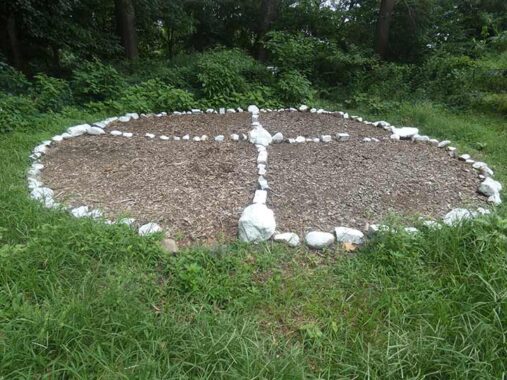
Nearby is a representation of a dikenga, a cosmogram and calendar used by people in what is now the Democratic Republic of the Congo. Other engaging exhibits are found on the mansion grounds.
Check out the ForgottenBook (HarperCollins, 2006), as well as Forgotten Queens (Arcadia, 2013). I also have a chapter in the anthology “New York Calling: From Blackout to Bloomberg” (Reaktion, 2007). As always, “comment…as you see fit.” I earn a small payment when you click on any ad on the site.
10/7/26