
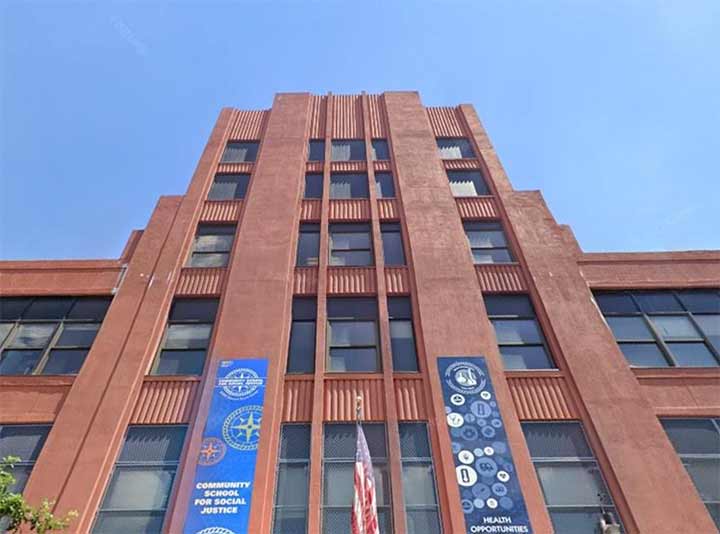


TRAVELING north on the Major Deegan Expressway, the H. W. Wilson lighthouse has been documented by many urban historians. In this century, new residential towers rose along the highway in Mott Haven and by the Bronx Terminal Market. At E. 144th Street and Gerard Avenue is a coral pink painted tower hosting Health Opportunities High School, and Community School for Social Justice.
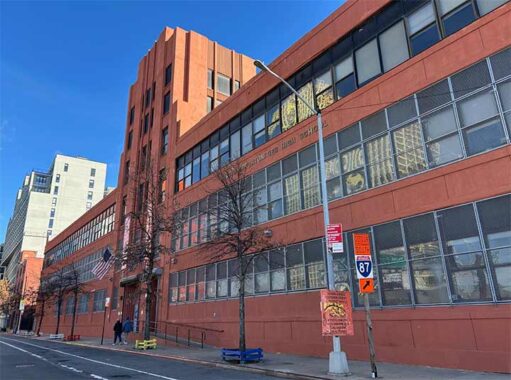
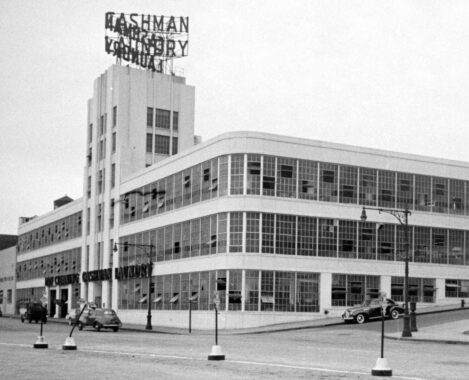
Prior to hosting high school students, this building was a commercial laundry, built by brothers Sol and Simon Cashman in 1932, with an Art Deco design by architects Walter and Russell Cory. At the time, its walls were painted bright white to evoke the cleanliness of its business. Its appearance was notable enough to appear in The New Yorker. In his review of the building, Lewis Mumford was not pleased with its tower. “One does not improve the treatment of a laundry by treating it as if it were a town hall.”
|
|
|
|
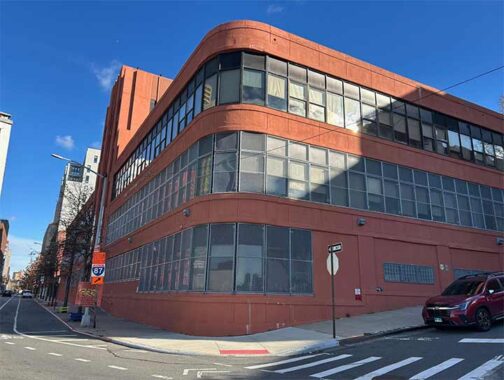
The wraparound windows were reminiscent of the better-known Starrett-Lehigh Building by the Hudson River in Manhattan. That landmarked building was also designed by the Cory brothers. The report for that building describes such windows as “the practical functionalism of American industrial architecture with the influence of the horizontal aesthetic of European modernism of the 1920s. Cashman’s building functioned as a laundry into the 1970s.
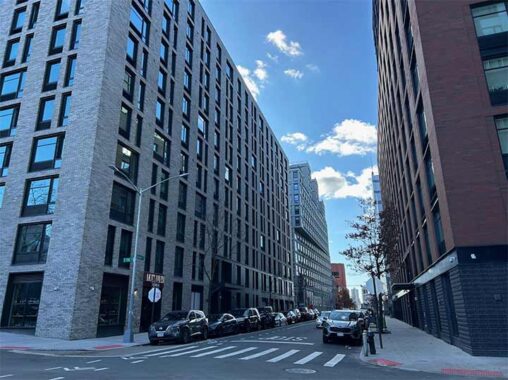
The stretch of Gerard Avenue north of Cashman’s tower experienced dramatic changes to its streetscape after the city rezoned the Lower Concourse district from manufacturing to residential, with high-rise towers replacing small factories and workshops. It is a story similar to Mott Haven, Long Island City, Greenpoint, and other waterfront neighborhoods that are across the river from Manhattan. These buildings offer luxury and affordable lottery units with amenities such as a rooftop terrace, common living room, garage, and gym.
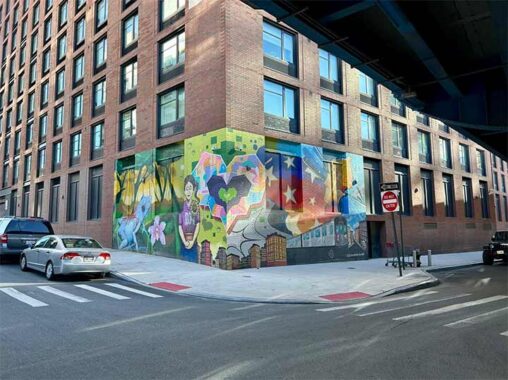
At the Estela Bronx Apartments, the indoor gym and basketball courts have murals by members of the Bronx-based Tats Cru. For graffiti aficionados who cannot gain access inside this building, the group painted an outdoor mural at the corner of Exterior Street and E. 146th Street. Rather than depicting the good old Redbird subway cars, this mural speaks of the 21st century with an R142 model used on the 2, 4, and 5 lines.
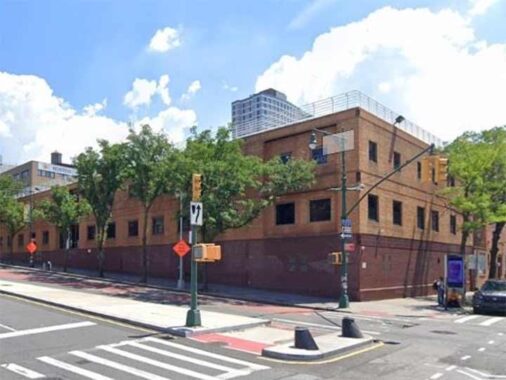
I previously visited the Lower Concourse in 2024, documenting Hostos Community College, but I did not write about Building D at 120 E. 149th Street at Gerard Avenue. Older Bronxites call it the Savoy Manor as it hosted a nightclub by this name prior to its acquisition by CUNY. This was where Mixmaster Mike straddled the musical genres between disco and early hip-hop. The orange bricks give it a nondescript appearance that hides its long history.
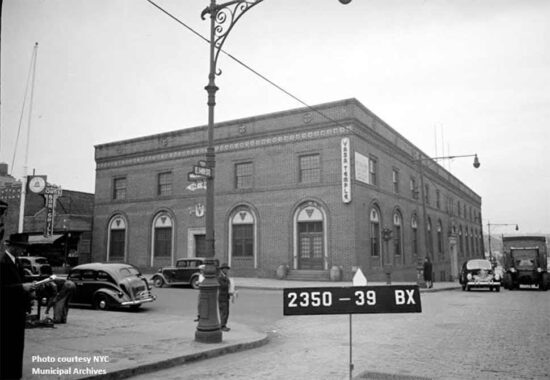
It was built as a Knights of Pythias lodge, and later passed to St. Erik #338 lodge of the Vasa Order of America. It represented a Swedish-American fraternal organization. The lodge’s namesake was a medieval king who reigned during the kingdom’s transition from paganism to Christianity, while the House of Vasa later ruled Sweden during its independence from the Kalmar Union and its adoption of Lutheranism. On this note, the first European colonist and borough namesake Jonas Bronck, was a Swede.
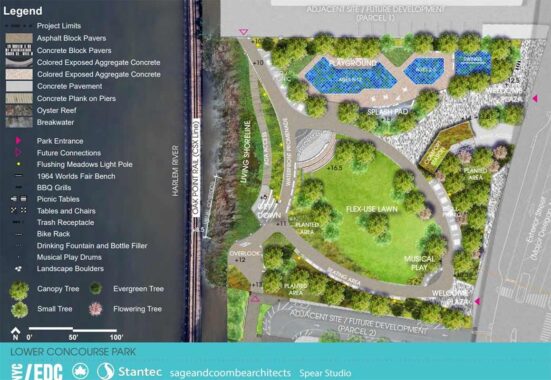
As this new residential neighborhood has its high schools inside Cashman’s tower, it also needs parks and the city obliged by demolishing the wholesalers and parking lots on the Harlem River in favor of Lower Concourse Park. Its design offers a raised hilltop lawn, playground, and barbecue area. It is similar to nearby Mill Pond Park, which also shares its shoreline block with mixed income high-rises.
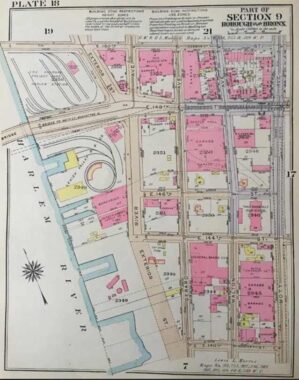
Looking back at a map of the neighborhood from 1928, Savoy Manor appears as “Castle Hall,” Mott Avenue was the predecessor of the Grand Concourse, Lehigh Valley Railroad had a dock and roundhouse of the site of Lower Concourse Park, New York Evening Journal had its printing press on the site of Hostos College, and General Baking Company made Bond Bread on Gerard Avenue. Cashman’s laundry was not yet built next to it.
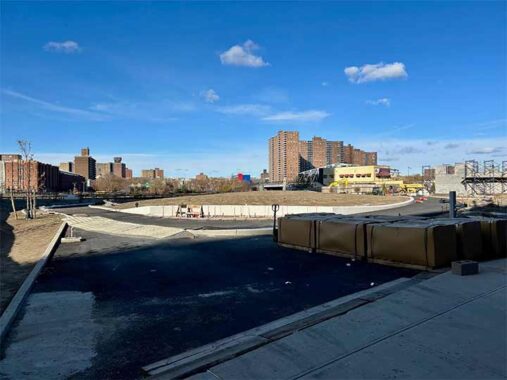
Lower Concourse Park was under construction during my visit, and future generations will walk on its lawn with disbelief that this neighborhood used to have coal yards, a commercial laundry, and manufacturing. The park is part of a series of green spaces on the Bronx side of the Harlem River, envisioned as a continuous greenway from Mott Haven to Van Cortlandt Park.
Sergey Kadinsky is the author of Hidden Waters of New York City: A History and Guide to 101 Forgotten Lakes, Ponds, Creeks, and Streams in the Five Boroughs (2016, Countryman Press), adjunct history professor at Touro University and the webmaster of Hidden Waters Blog.
Check out the ForgottenBook, take a look at the gift shop. As always, “comment…as you see fit.” I earn a small payment when you click on any ad on the site.
12/1/25
5 comments
Lewis Mumford’s comment was unfortunate. We all are raised up when a piece of architecture improves a community. What is a waste disposal plant supposed to look like? Does it need to look like sewage? In the case of the Cashman Building, that it was treated “as if it were a town hall” allows for today’s students at Health Opportunities High School and Community School for Social Justice to enter a building that does not look like a laundry (whatever that is supposed to look like), but an attractive Art Deco place of learning..
Surprised the Bronx County Jail was not mentioned here. I really miss seeing it from the Metro North train. It had a beautiful central tower like the building featured here. Demolished to make way for some mall stores, which is a slightly better purpose, I’ll grant.
The new county jail under construction is also an architectural beauty.
Excavation work has begun and completion is scheduled for April 2031. As I’ve noted before, the Tesla Gigafactory in Austin, one of the world’s largest buildings with a stupendous 10 million square feet of production space, went from an empty field to the start of production in less than two years.
The Tesla place has since run afoul of a few environmental regulations, sometimes it pays to be a little patient.