
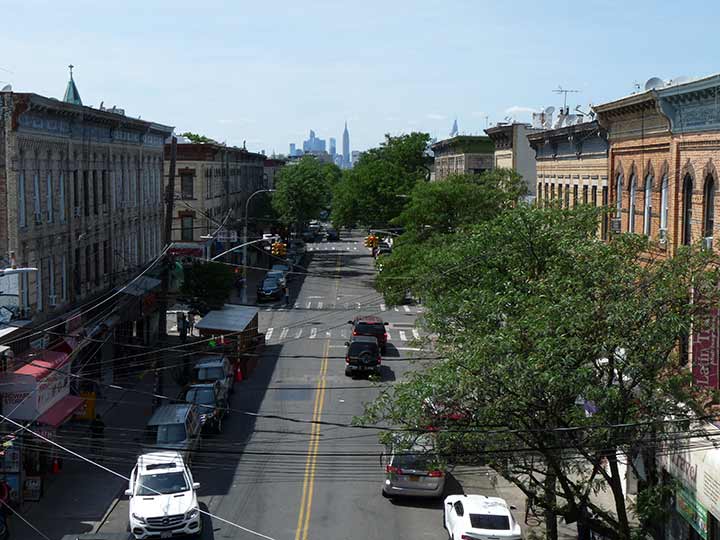

QUEENS’ Seneca Avenue is noteworthy as its name can be said to come from two different languages. The official version is that the street was named for one of the six Native American nations that made up the Iroquois Confederacy, a democratic system of government that helped serve as a model for the United States’ own system. The indigenous name was Onandowaga, which may have been Anglicized to Seneca. The Seneca were the westernmost nation in the Confederacy, and the nation was known as “Keeper of the Western Door,” occupying large areas in western New York state and parts of Ontario, Canada.
Seneca was also the name of a Roman philosopher, statesman, and dramatist, Lucius Annaeus Seneca the Younger (4 BC-65 AD), a contemporary of Jesus Christ. He became a noted tragedian and political advisor to Nero.
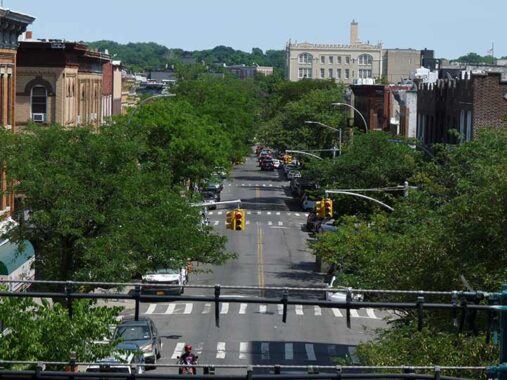
Despite the name’s connection to the Iroquois and the Romans, for much of its existence Seneca Avenue and Ridgweood itself has been a strong German enclave for much of the 20th Century; only recently has it seen influx from other neighborhoods. Seneca Avenue is located just north of the Brooklyn-Queens-line, except for an isolated one-block section in which the line runs in the street between Randolph Street and Flushing Avenue, putting the southern half in Brooklyn.
Check out the ForgottenBook. As always, “comment…as you see fit.” I earn a small payment when you click on any ad on the site.
8/4/26
2 comments
Seneca Avenue as originally planned referred only to the section north of Flushing Avenue and ran in several sections east of and parallel to Scott Avenue close to Newtown Creek.
The section south of Flushing Avenue was originally known as Covert Avenue, named after William Covert, through whose land it was laid out. Prior to the adjustment to the Brooklyn – Queens border, more of it was in Brooklyn. Renamed Leopold Place by the Common Council on May 28, 1894, effective June 13, 1894. Renamed Purdy Place by the Common Council on May 20, 1895, effective June 4, 1895. This section was later renamed Seneca Avenue; the Queens section was probably renamed at about the same time.
I always felt Ridgewood could be Brooklyn. It looks like it.