
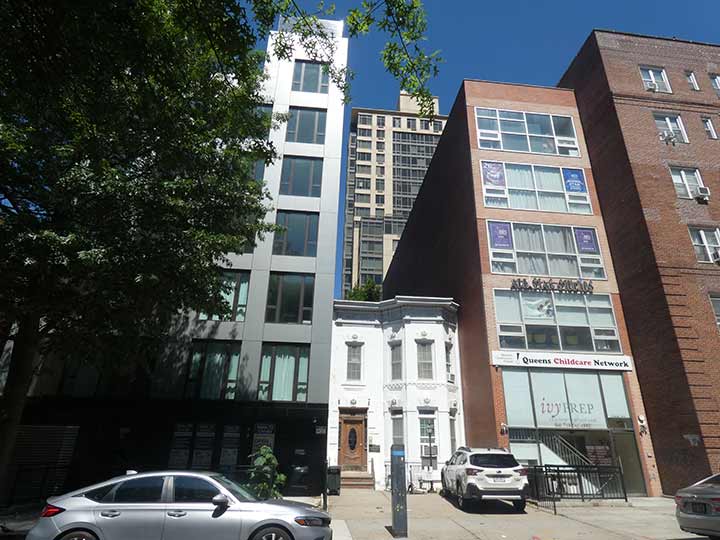

FORGOTTEN New York has been put together during four separate decades and is now been produced for 27 years plus, as of September 2026. As such, it spans the decades. In June 2026 I did some extensive walking all over town (indeed, from April to September, ongoing) and it included walking the complete length of Austin Street, which runs from Rego Park to Kew Gardens. During that trip I revisited 72nd Avenue, to see how the remaining Cord Meyer houses, the first buildings constructed when Forest Hills was being built up in the early 1900s, were doing. The result was disappointing.
From FNY’s first page on the Cord Meyer buildings, in 2007:
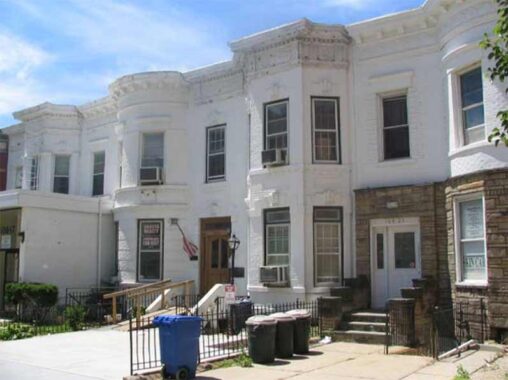
“According to the Central Queens Historical Association these rowhouses were built in 1906 (when 72nd Avenue was called Roman Avenue) for the area’s first plumber, electrician and carpenter. A plaque commemorates the two houses’ 100th anniversary. It reads: “Built in 1906, they were the beginnings of this historic, beautiful community.” The central two properties, shown above, have been placed on the market for $4 million, with air rights advertised that would allow future developers to raze them and erect offices … This is not an unfounded fear as in recent years, similar rowhouses across the avenue have been bulldozed.
The NYC Landmarks Preservation Commission rejected landmark status for these buildings, as it seems to do in many Queens instances, claiming they did not evidence ‘a special historical or aesthetic interest or value as part of the development, heritage, or cultural characteristics of the city.’ As you can see the rowhouses’ fellows on either side have been shamefully compromised (as anyone with even a pedestrian sense of taste can see, with ponderous additions and fake stonework, as well as an unfortunate whitewashing).”


In 2026, just two of these rowhouses remain. One retains is original brick front, while the other is part of a row that had been painted white in an earlier decade. This page will give you a good idea of their original appearance.
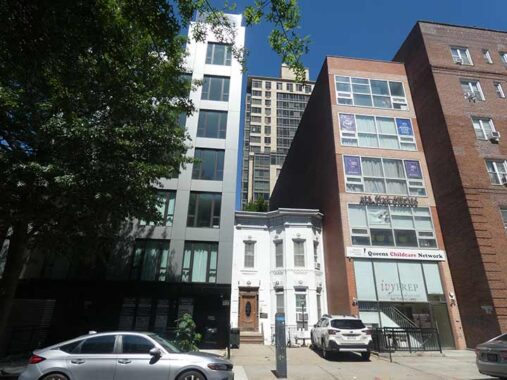
Other buildings in the row have been eliminated in favor of new, taller buildings; this is in line with NYC’s push for higher density fitting more people per square foot.
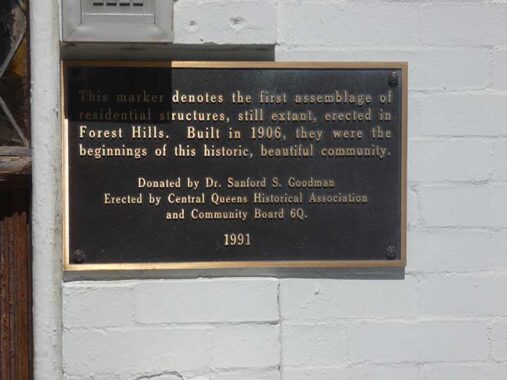
This plaque was placed when the row was still intact, in 1991.
Among the survivors on the block is the Cottage Bar Restaurant (a.k.a. the Irish Cottage) which I have patronized numerous occasions including before I took in a concert by The Who (or should we call them The Two) at Forest Hills Stadium in 2015. The restaurant weathered the pandemic nicely.
Check out the ForgottenBook (HarperCollins, 2006), as well as Forgotten Queens (Arcadia, 2013). I also have a chapter in the anthology “New York Calling: From Blackout to Bloomberg” (Reaktion, 2007). As always, “comment…as you see fit.” I earn a small payment when you click on any ad on the site.
9/28/26