
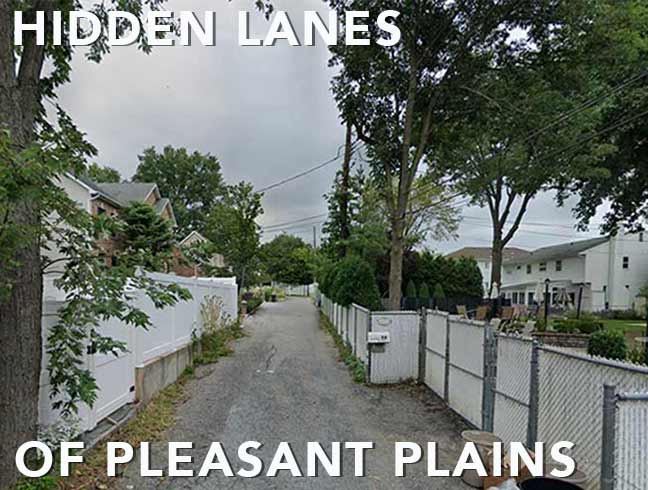


On his recent visit to Pleasant Plains on Staten Island, Kevin went into great detail on the neighborhood’s hidden history. On its northern edge, there’s a property worthy of its own essay on account of its religious history and private street.
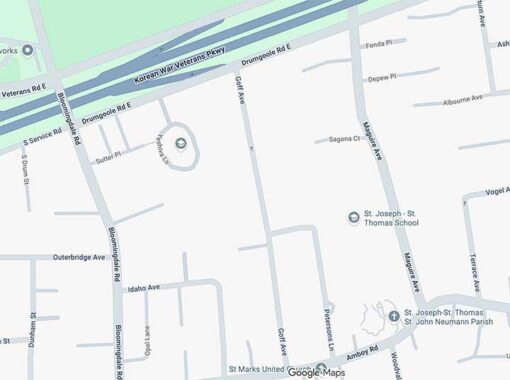
Please refer to this area map to reference most of the lanes discussed in this piece
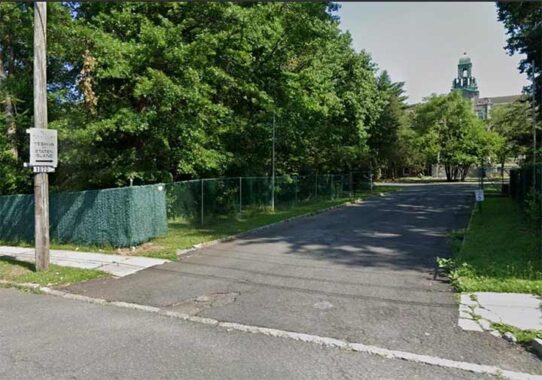
Branching off Drumgoole Road East, the service road to the Korean War Veterans Parkway, a private driveway (called Yeshiva Way on Google Maps) leads to a circle in front of a sizable building surrounded by thick foliage. In the 1930s, this corner of the city was the countryside, where religious institutions such as the nearby Mount Loretto, prized the solitude and distance from crowds. That was when the Sisters Marianites of the Holy Cross purchased 12 acres and opened the girls-only St. Louis Academy, relocating from a smaller site in Tottenville.
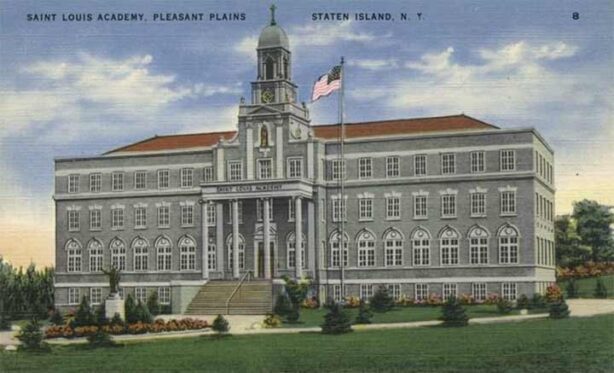
Declining enrollment resulted in this school’s closing in 1971 and the site was then purchased by Mesivta Tiferes Jerusalem, an Orthodox Jewish boys school based on the Lower East Side. The crucifix atop the cupola was removed and Hebrew lettering was installed above the entrance but otherwise not much else has changed on the building’s exterior. In its early years, Rabbi Moshe Feinstein spent summers here, studying Jewish texts outdoors, responding to letters from everywhere on questions pertaining to religion and American life, such as the use of appliances on the Sabbath.
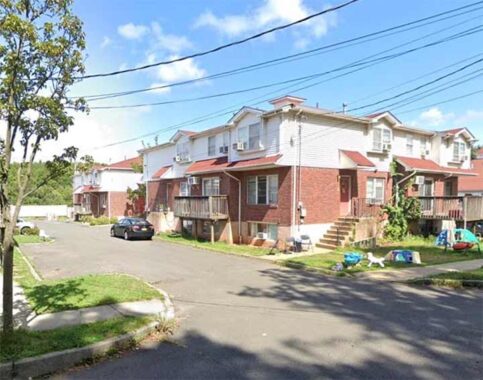
As this yeshiva grew, a portion of the campus was developed in the 1990s with a set of homes for families affiliated with this yeshiva. Three private streets were built: Sutter Place, Yeshiva Lane Lane, and Igros Court. The last one translates as “letters,” in honor of Rabbi Feinstein’s lifetime of religious response letters, compiled in a book titled Igros Moshe.
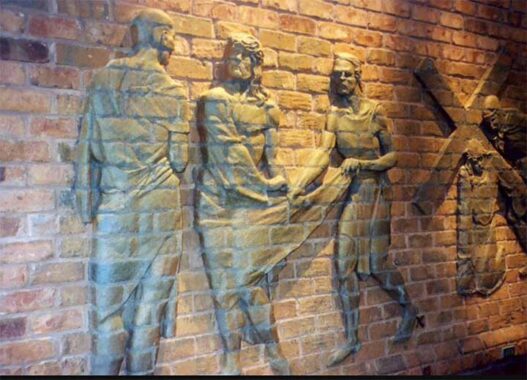
Although St. Louis Academy is in the past, Roman Catholicism remains very visible across Staten Island. On Amboy Road, the church of St. Thomas the Apostle stands on a hill with a sizable campus that includes a high school. This church has the modernist look as it was built in 1983 after a fire consumed the older version. Kevin spoke about the exterior of the church and if you go inside, look for the Stations of the Cross sculptures by Texas-based artist Donna Dobberfuhl that pop out of the brick wall.
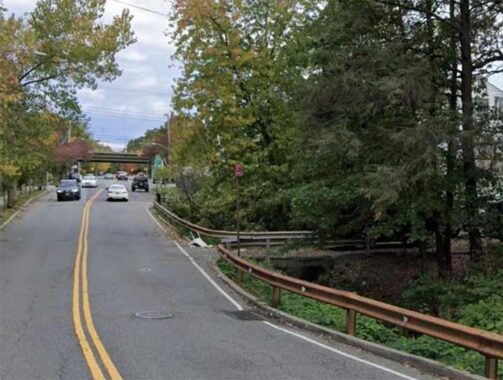
Between the two institutions, the Lemon Creek bluebelt flows, collecting runoff from the streets as it breaks up the suburban tract house monotony. The stream originates in Rossville, near the historic Sandy Ground community, then enters the thick forest of Bloomingdale Park, flows underneath the Korean War Veterans Parkway, and then reemerges as a bluebelt property flowing between homes on forested lots preserved by the city.
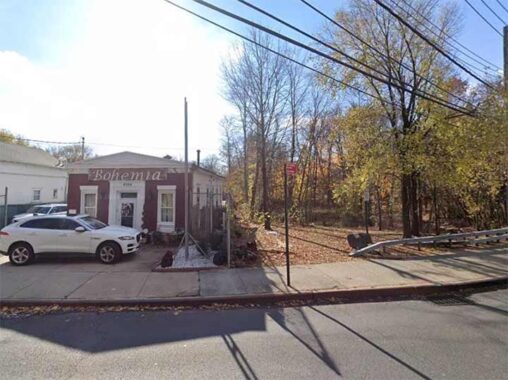
At Amboy Road’s crossing Lemon Creek is a hair salon. Looking back to 1923, prolific city photographer Percy Loomis Sperr was here, documenting this address as the Citizens Engine Company, which also served as the NYPL branch for Prince’s Bay. This volunteer company disbanded in 1937 when the FDNY built a firehouse a few blocks away staffed by paid firefighters.
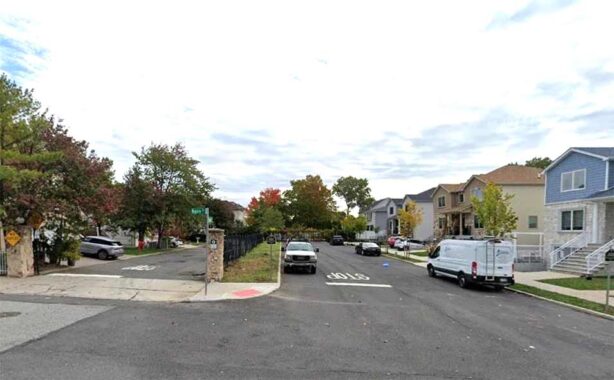
Goff Avenue and Maguire Avenue run across this creek. Typical of Staten Island are numerous private streets built by developers on which the public can drive but not park. The dead-end Fonda Place, on Maguire south of Korean War Veterans Parkway, has two branches: one that looks like a public street with sidewalks, and parallel to it, a driveway delineated by the sidewalk. The name brings to mind the family of actors whose ancestors arrived in New Netherlands in 1642, making them among the earliest Italian-Americans.
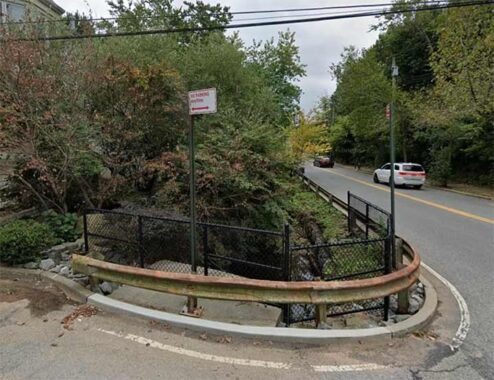
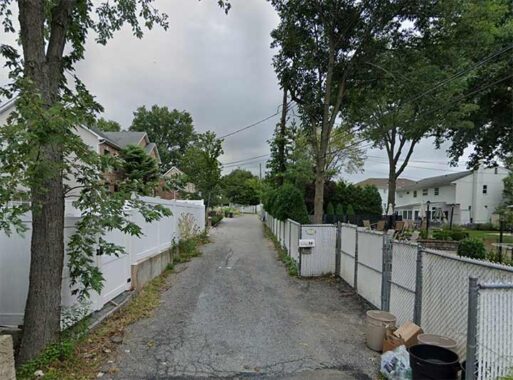
Depew Place is public with its own curiosities. Lemon Creek appears at its intersection with Maguire Avenue and it becomes narrower towards its dead-end. I can’t imagine the difficulty that delivery vans and garbage trucks have reaching homes on this street. Its name brings to mind Manhattan’s little-known Depew Place. Its namesake was a partner of railroad tycoon Cornlius Vanderbilt, whose family has roots on Staten Island.
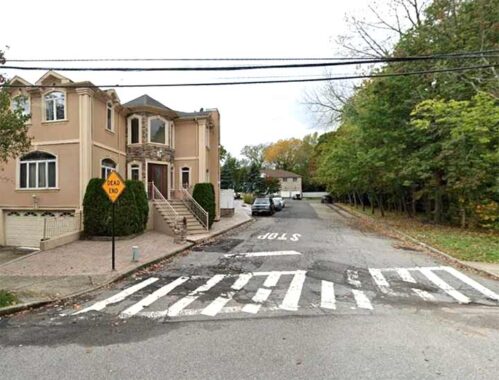
Sagona Court is a rare private dead-end named for a family that is still living on it. At the end of the last century, they developed the property by building additional homes on it, reducing their parcel while retaining their name on this street. Some of the nearby homes had their lawns and driveways landscaped by this family.
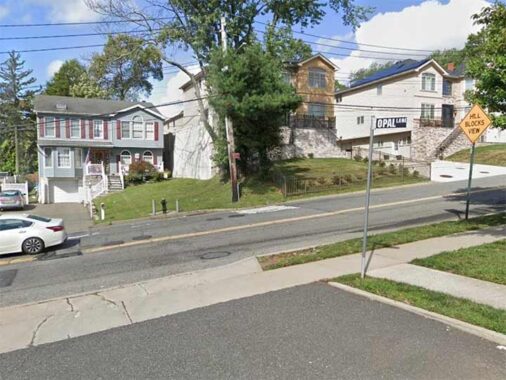
Opal Lane is another example of a private street, evident by the sidewalk, unique lampposts, and street signs. Older New Yorkers may remember black letters on white signs as the standard in Brooklyn. Staten Island had black letters on yellow signs. In the 1980, all street signs had to be green with white letters, although there are exceptions. For a city of its size, New York doesn’t have so many gated communities or private streets. Most of them are recent, dating to the late 20th century and this millennium. On Staten Island, the largest one is The Tides at Charleston, with 190 homes built in 2006 for seniors. Why should homeowners pay to maintain their streets when it’s easier to have the city do it? On the other hand, when a street is private, the owners can park there without having to move for alternate side days.
For other examples of hidden streets in Pleasant Plains, see Kevin’s essay which includes Petersons Lane and Idaho Avenue.
Pleasant Plains appears as a typical mid-20th century suburb but if one knows where to look, there are examples of history hidden among the single family houses.
Sergey Kadinsky is the author of Hidden Waters of New York City: A History and Guide to 101 Forgotten Lakes, Ponds, Creeks, and Streams in the Five Boroughs (2016, Countryman Press), adjunct history professor at Touro University and the webmaster of Hidden Waters Blog.
Check out the ForgottenBook (HarperCollins, 2006), as well as Forgotten Queens (Arcadia, 2013). I also have a chapter in the anthology “New York Calling: From Blackout to Bloomberg” (Reaktion, 2007). As always, “comment…as you see fit.” I earn a small payment when you click on any ad on the site.
9/27/26