
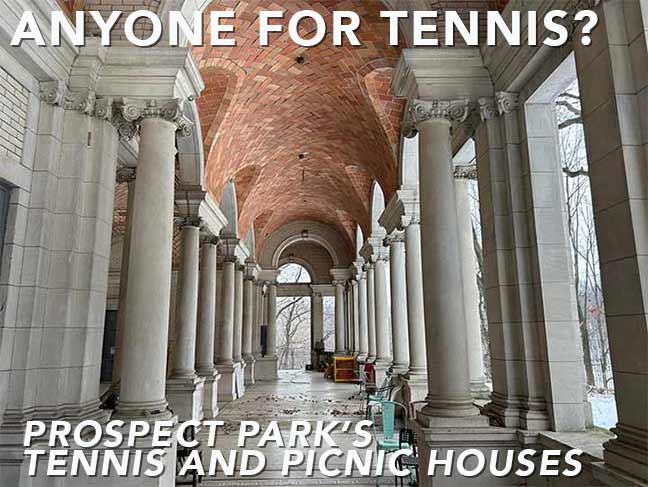


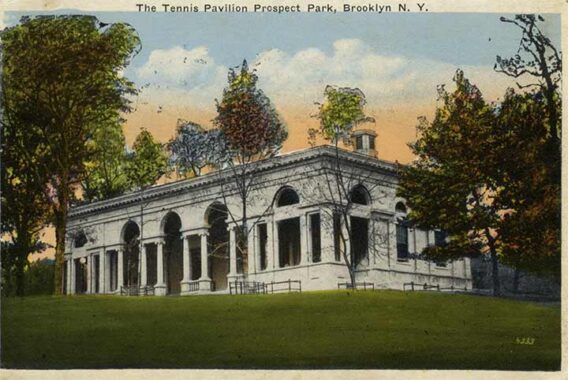
Facing the Long Meadow in Prospect Park are two historic buildings, unique in their design but diverging in their history with the Picnic House open to the public for events, while the Tennis House is fenced-off as a storage space.
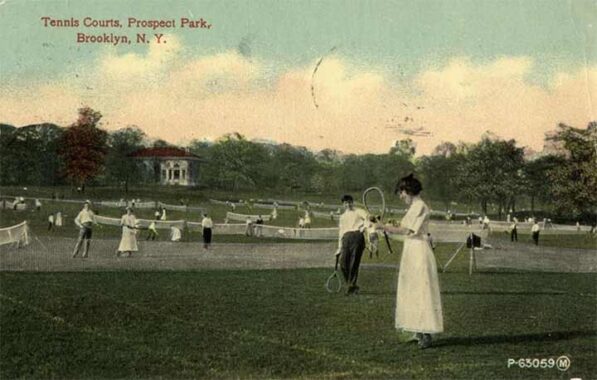
Considering its name, the Tennis House can be confused for the Tennis Center in the Parade Grounds section of Prospect Park where the sport is played today. Back in 1906, architects Helmle and Huberty submitted a design for a Beaux Arts tennis house overlooking the meadow. In the early 20th century, the Parks Department also built tennis houses in Crotona Park, Kissena Park, Silver Lake Park, and Central Park. Only the last one is used for its stated purpose today. The others became offices and equipment storage.
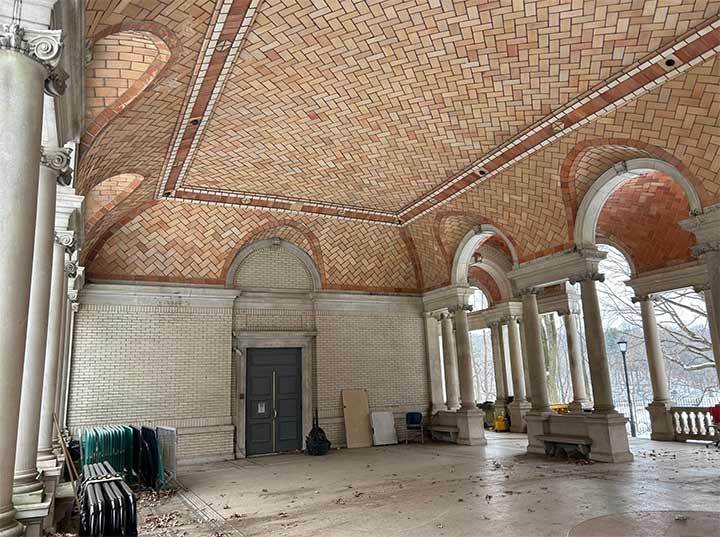
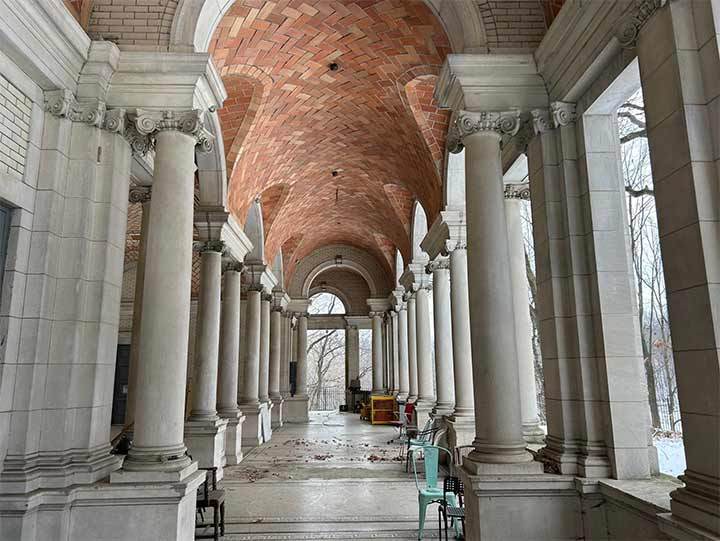
The ceiling of the loggia at the Tennis House has interlocking tiles by Rafael Guastavino, whose works can also be seen at the Great Hall at Ellis Island, underneath the Queensboro Bridge, and the Elephant House at Bronx Zoo, among other locations. I don’t believe that this space was ever used for a tennis game. Urban Archive has a map of his tile installations, but forgot to include this one.
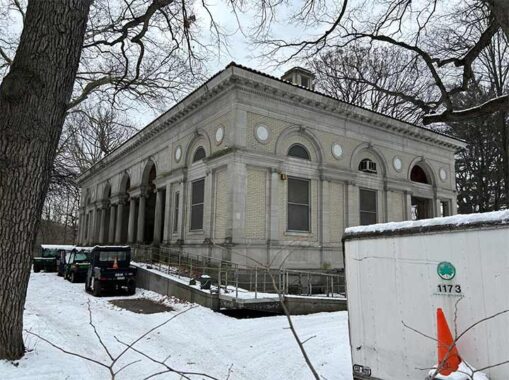
Perhaps with some imagination, this space can be used for weddings and other catered events, but at the same time, Parks needs space to store rakes and shovels. In 2019, the city proposed restoring the Tennis House as a public amenity, but somehow this plan failed to pick up momentum. For now, it stands all but forgotten on a forested knoll overlooking Long Meadow.
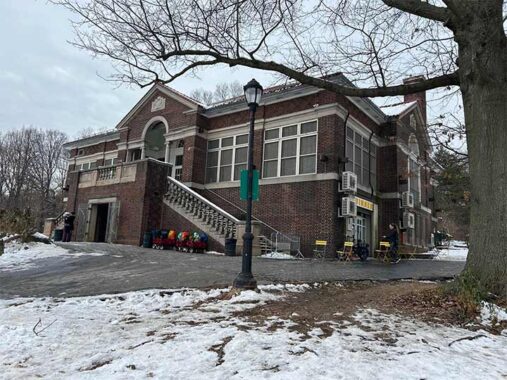
A short distance to the north is the Picnic House, where the Prospect Park Alliance has its office in the basement while managing its great hall as a wedding venue. On the south side of the Picnic House, chef Daniel Eddy was given space to open a concession, Winner, which offers sandwiches, pastries, and coffee.
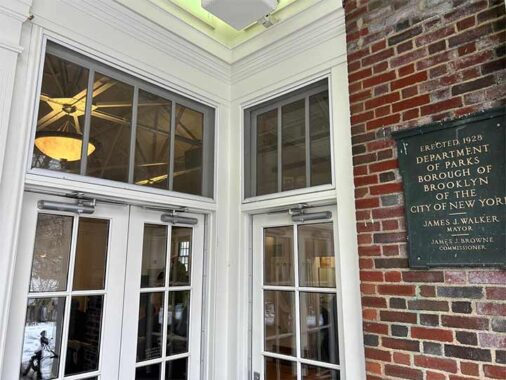
In contrast to the classicism of the Tennis House, bricks cover the Picnic House, which was built in 1928 during the mayoralty of James Walker, a party-loving pol who was also a songwriter. Comparable in his manner to Eric Adams, he left office amid a corruption scandal.
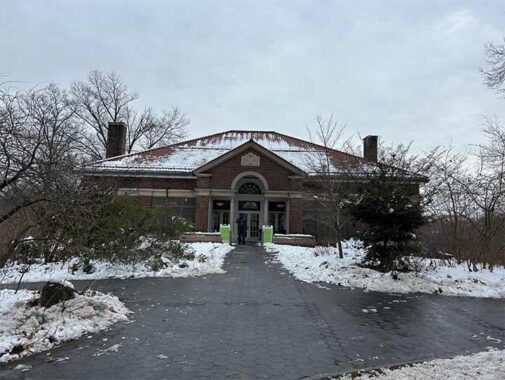
Both buildings are included within the scenic landmark designation that covers all of Prospect Park, preserving their architecture for future generations.
Other historic spots in Prospect Park documented here include the Boathouse, bridges, Parade Ground, Camperdown Elm, hidden arch, Music Grove, Music Pagoda, Friends Cemetery, Lefferts Homestead, Litchfield Villa, the internal roads and paths, Von Weber monument, Maryland monument, subway station, and much more!
Sergey Kadinsky is the author of Hidden Waters of New York City: A History and Guide to 101 Forgotten Lakes, Ponds, Creeks, and Streams in the Five Boroughs (2016, Countryman Press), adjunct history professor at Touro University and the webmaster of Hidden Waters Blog.
Check out the ForgottenBook, take a look at the gift shop. As always, “comment…as you see fit.” I earn a small payment when you click on any ad on the site.
12/20/25