

Can it be over 20 years since I traveled the length of the Long Island Motor Parkway in Glen Oaks? When I bicycled in Queens I used it all the time and produced this piece during Forgotten New York’s early days. Clearly, some aspects I had missed or was unaware of have popped up. FNY contributor Patrick O’Connor partly makes up for this oversight with this piece on a “forgotten” burial ground. I hope to walk the LIMP again soon.
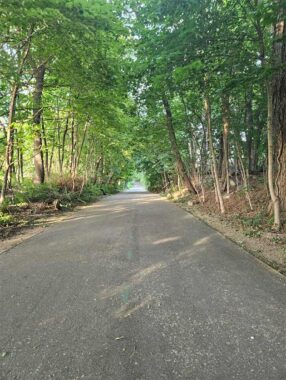
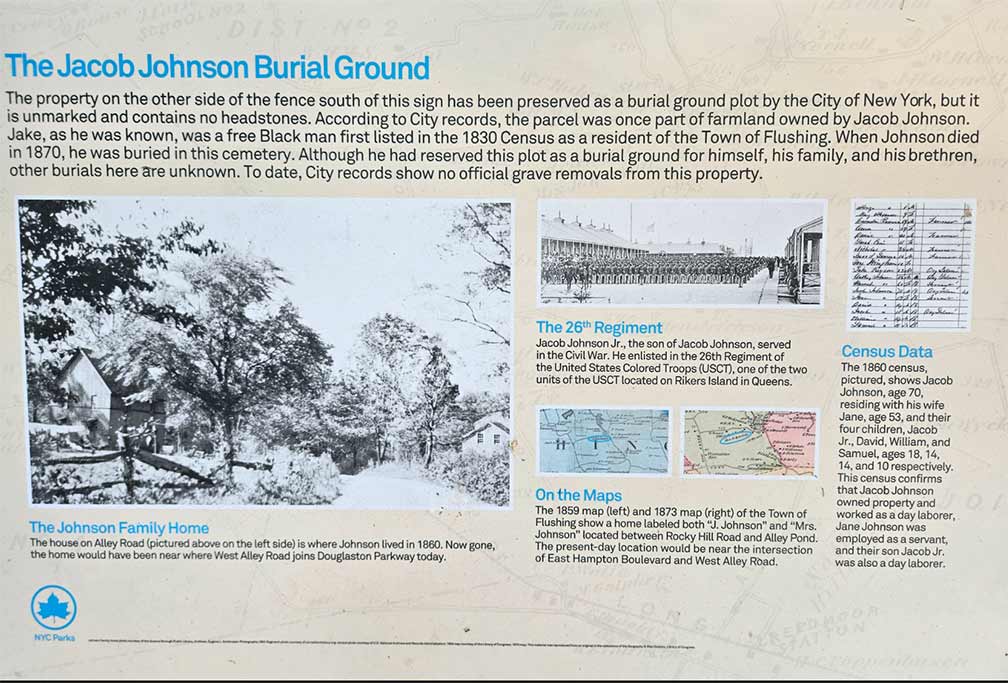
Long Island Motor Parkway (aka Vanderbilt Motor Parkway) was constructed in 1908 by Kissam Vanderbilt II, auto racer and descendant of Cornelius Vanderbilt. Today, The Motor Parkway in Queens exists as part of the Brooklyn-Queens Greenway for pedestrian and bicycle access. History was chronicled by Kevin (see link above). Several historical plaques are posted commemorating the Parkway. One of the plaques near Springfield Boulevard, unrelated to the Parkway, is dedicated to highlighting the life of Jacob Johnson and his family burial ground.
Jacob Johnson (1790-1870) was a free Black man who owned a large plot of farmland that extended across much of what is now Alley Pond Park. Johnson and his wife Jane, 17 years his younger, had four sons, Jacob Jr., David, William and Samuel. Jacob Jr. enlisted as a soldier in the 26th Regiment of the United States Colored Troops and served in the Civil War.
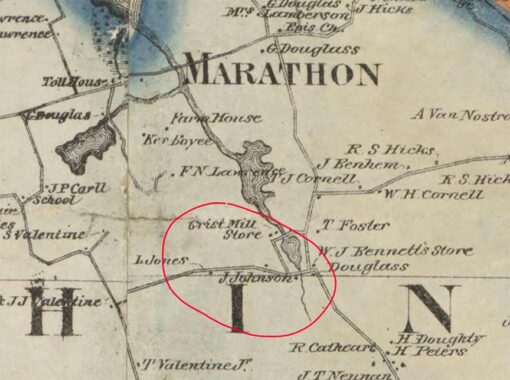
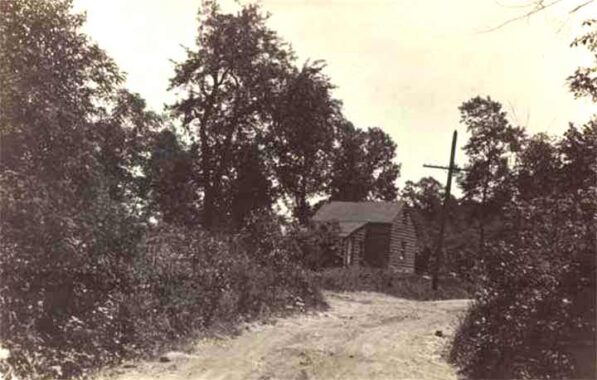
The description included in the plaque reference (see above) his farmhouse being near West Alley Road and Douglaston Parkway. The 1859 topographical map of Queens marks the property and the NYPL Old Photos of NYC of Douglaston Parkway and West Alley Road from 1927 shows the farmhouse.
|
|
|
|
|
|
|
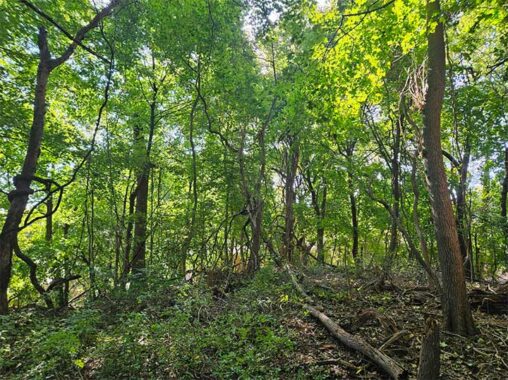
In 1855, Johnson sold off a portion of his property to one James Valentine Jr. Sale of the property did not include a plot at what was known as Rocky Hill and was kept by Johnson for use as a burial ground. This land is now adjacent to The Alley Pond Owners Corp. apartments and is just south of the Motor Parkway trail and east of Springfield Boulevard. My photo is a shot looking south from a small hill adjacent to the Motor Parkway.
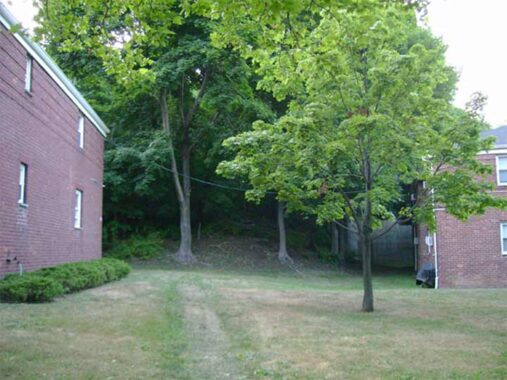
According to the New York City Cemetery Project article the property is described as: “a quarter acre, 14.39 feet south of the Long Island Motor Parkway, with a depth of 149 feet and frontage of 72 feet”. It is unknown who, or how many family members are buried there as there are no grave markers. Today, the site is preserved by Parks Department. The photo included with the article is looking north from the Co-op property.
The Flushing Journal Newspaper dated November 12, 1870, featured a loving obituary and a brief account of a fund raiser that occurred shortly before his passing and funeral. Here are some excerpts.
“A few weeks ago, some of the friends and neighbors of Jake, observing the declining health of the veteran-colored resident of the Alley, united in a ‘Harvest House Festival’ for his benefit, which realised [sic.] enough to furnish him with coal and other necessaries for the coming winter, making the old man’s heart glad with the substantial assurance that he was cared for in his increasing infirmities.
Jake departed this life on Saturday evening October 1st, and the funeral took place from his Alley Homestead on Tuesday at one o’clock P.M., attended by hundreds of his neighbors and friends from far and near, who assembled to pay a last tribute of respect to one who had fought the battle of life without faltering, and laid down to rest after four score years of honest effort and unremitting daily toil. An aged colored preacher and well to do farmer from Westbury spoke a fervent prayer at the house, and remains were moved to the Alley Baptist Church on the hill, where an impressive funeral service was held by the Rev. Likum Levi, who preached an eloquent and impressive sermon, taking for his text the 14th verse of the 14th chapter of Job: ‘If a man dies, shall he live again? All the days of my appointed time will I wait until my change comes.’
The remains were interred in the colored burying ground near Rocky Hill, which Jake had reserved for the use of his brethren when disposing of a piece of property he owned in that vicinity. Jacob Johnson had lived full ninety years, enjoying fair health, and ability to work for the support of himself and family until within a few days of his decease. He leaves a large number of direct descendants-children, grand-children and great grand-children and an aged and estimable widow to mourn the loss of a devoted husband and parent.”
Patrick O’Connor is a lifelong resident of Queens, retired with 40 years of service for City of New York Department of Environmental Protection and is a licensed sightseeing guide in New York City.
Check out the ForgottenBook (HarperCollins, 2006), as well as Forgotten Queens (Arcadia, 2013). I also have a chapter in the anthology “New York Calling: From Blackout to Bloomberg” (Reaktion, 2007). As always, “comment…as you see fit.” I earn a small payment when you click on any ad on the site.
10/16/26