
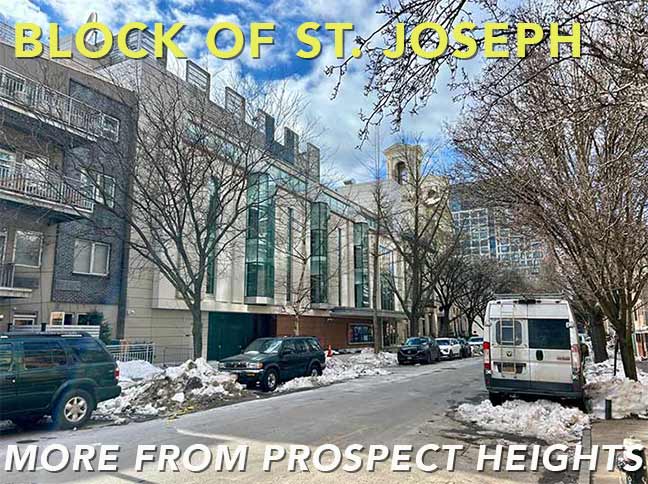


AMONG the buildings which I forgot to describe in my recent essay on Pacific Park in Brooklyn is the Co-Cathedral of Saint Joseph on Pacific Street (previously seen on this FNY page), which stands out on this low-rise block and speaks of the Roman Catholic Church’s adaptability amid shrinking pews, declining school enrollment, rising maintenance costs, and lawsuits. The church is not landmarked, but its status as a co-cathedral makes it the most important sanctuary for Roman Catholics in Brooklyn. Looking at the interlocking tiles above the entrance, could they be a Guastavino design? His works can be seen all over the city.
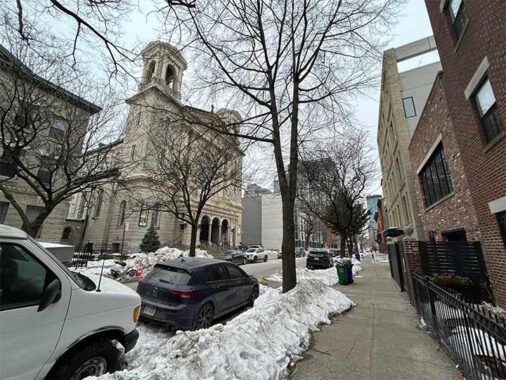
This cathedral building is the third at this location, expanding each time. The first was a small wooden church in 1851, at the time the outskirts of the city of Brooklyn. The second church was built during the Civil War, with the present building completed in 1912, designed by Francis J. Berlenbach.
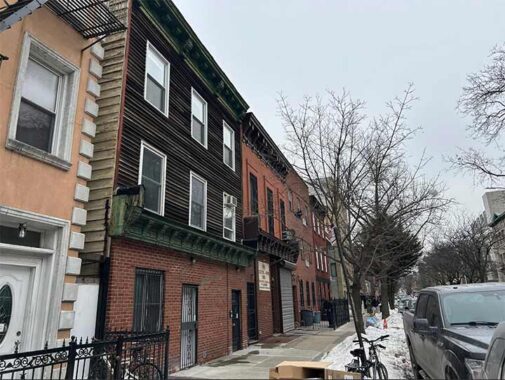
Across the street from the church, a pair of walk-ups has two sets of Italianate cornices, unusual for this common 19th century building feature. Such cornices appear all over the city, atop tenements, brownstones, and townhouses.
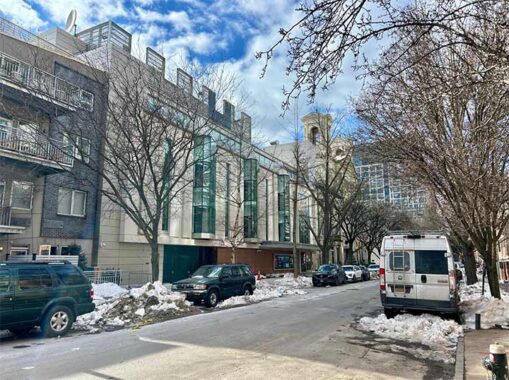
The church developed the green spaces next to it with a row of condos on one side and a Catholic media center on the other. DeSales Media Group is the voice of the Brooklyn Diocese, publishing The Tablet newspaper in English, Nuestra Voz in Spanish, NET TV, and social media. If you can’t come to the church, then the church can appear in your mailbox and on your screens. The media group’s namesake is Saint Francis De Sales, the Bishop of Geneva in the early 17th century, who is the patron saint of journalists.
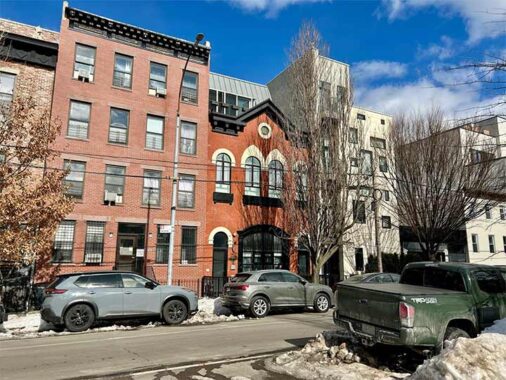
The back of St. Joseph’s faces Dean Street, which was named for Revolutionary War diplomat and spy Silas Deane and appeared on the subway map as a shuttle station prior to its closing in 1997. On this block, 735 Dean Street stands out as an example of city infrastructure that was sold on the market in 2002. It functioned as a firehouse starting in 1880 when Brooklyn was an independent city, continuing through 1977, when FDNY Engine 219 received a new firehouse two blocks to the west at 494 Dean Street.
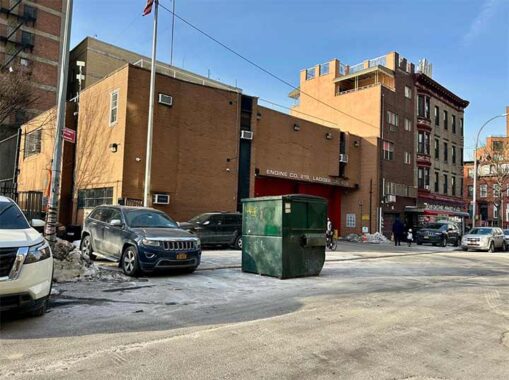
The new firehouse offers more space but no architectural distinction, having been built during the city’s austerity period at the same time as arsonists destroyed many neighborhoods hurt by crime and disinvestment. Behind it is the architectural opposite, the very ornate 78th precinct, which Kevin recently noted on his walk down Bergen Street.
Returning to the original Engine 219, it became a Sanitation Department office after the firefighters left. In its transformation into a condominium, two floors were added and its back side was extended. But the “No Standing” signs in front of this building remained for another couple of years, generating revenue from unwitting drivers who thought that this was just another apartment building.
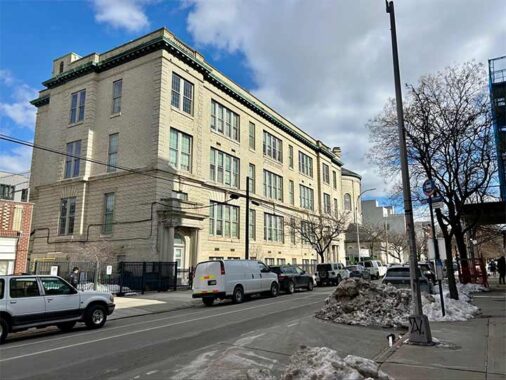
Into the 1980s, St. Joseph’s had its own elementary school next to the church. In an ongoing trend, attendance declined as neighborhood demographics did not favor Roman Catholics. The church redeveloped the school into the Bishop Thomas V. Daily Residence, senior housing named for Brooklyn’s Bishop who served from 1990 to 2003.
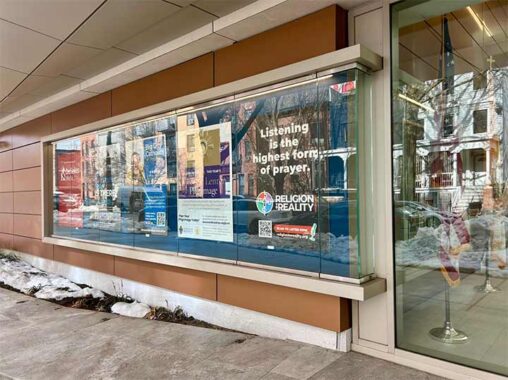
Sitting on valuable real estate in a gentrified neighborhood, St.Joseph’s exemplifies Brooklyn’s longstanding image as the Borough of Churches. Redeveloping its land to serve seniors and its followers through a media center, the church lives on this in millennium.
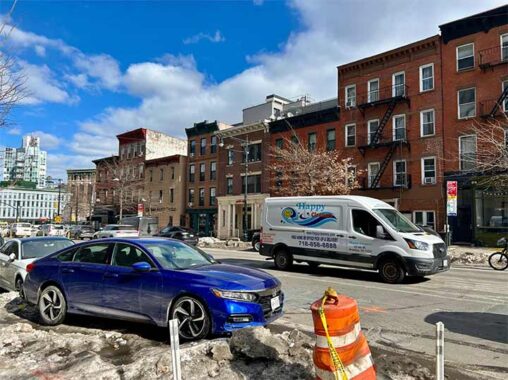
There is one side to this block which will likely remain unchanged, the row of walkups on Vanderbilt Avenue that was drawn into the Prospect Heights Historic District. The smallest of them at 563 Vanderbilt Avenue, hosts Chabad of Prospect Heights, the local outpost of the global hasidic movement whose main office is in nearby Crown Heights.
Returning back to the city agency office at the corner of Vanderbilt and Atlantic Avenues, I had a feeling that a building of this size and at this location had an industrial past. Brownstoner offers the details on A. Schrader’s Son Inc, a manufacturer of tire valves, diving equipment, and other specialized materials. For Catholic and Jewish staffers working here, their closest sanctuaries are across the street for a quick prayer before work, or during the lunch break.
Sergey Kadinsky is the author of Hidden Waters of New York City: A History and Guide to 101 Forgotten Lakes, Ponds, Creeks, and Streams in the Five Boroughs (2016, Countryman Press), adjunct history professor at Touro University and the webmaster of Hidden Waters Blog.
Check out the ForgottenBook, take a look at the gift shop. As always, “comment…as you see fit.” I earn a small payment when you click on any ad on the site.
3/1/26
2 comments
Wow besty lived not far from here from 2023-spring 2025. I was in this area a lot, n walked past this!
Kevin as a Cathedral grad recalls that our graduation Mass was held at St. Joseph’s every June. And that the grounds featured a garden with a grotto that is now gone.