
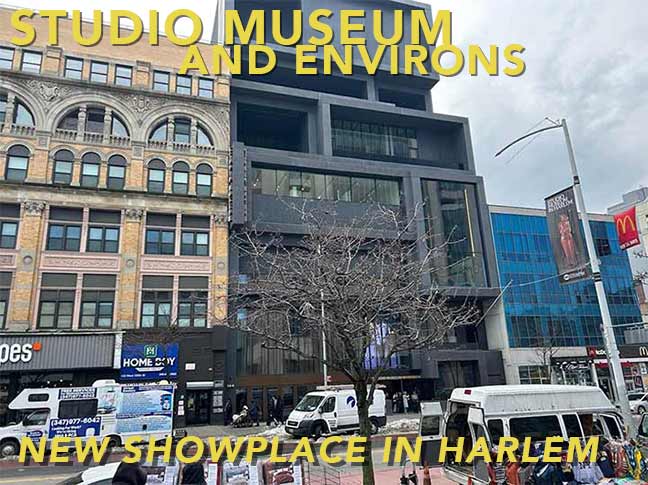


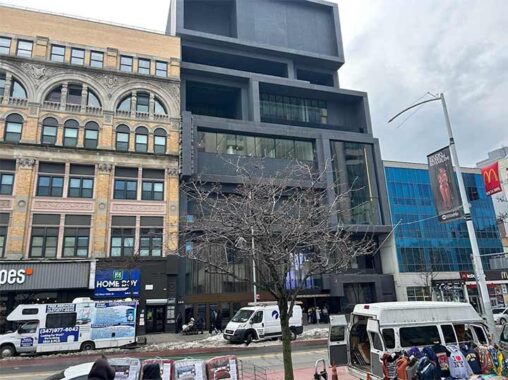
In late 2025, Studio Museum in Harlem, 144 W 125th Street near Adam Clayton Powell Blvd., opened the doors to its new six-story building , the latest chapter for this unique art institution. Designed by Adjaye Associates, the facility offers more space for sculptures, artists in residence, lectures, and the permanent collection. Like the Met and Whitney, the rooftop is open to the public and the glass facade on the ground level invites passersby to look inside.
I haven’t been to this museum since the summer of 2003, when I was a participant in Expanding the Walls, a neighborhood photography program for teens. At the time, I was a senior at LaGuardia High School on my way to CCNY. The museum was the ideal bridge between a school focused on art and a college located in Harlem.
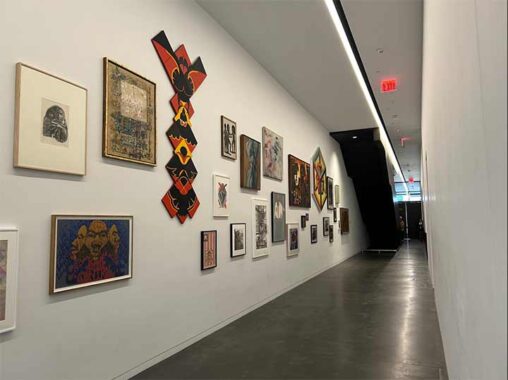
At the time, the museum’s building was a former bank donated to it in 1982. As students, we documented the neighborhood in photographs and artworks. We were guided by Donna Mussenden Van Der Zee, widow of the famous Harlem photographer James Van Der Zee; museum director Dr. Lowery Stokes Sims, and artist Kambui Olujimi.
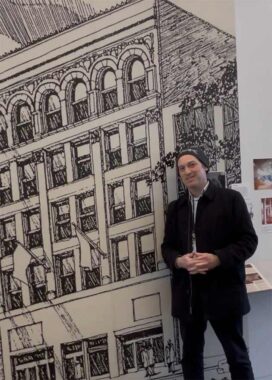
There are two places where one can see images of the previous museum building, making it worthy of a Forgotten-NY Slice. On the sixth floor it appears on a timeline of the museum’s history.
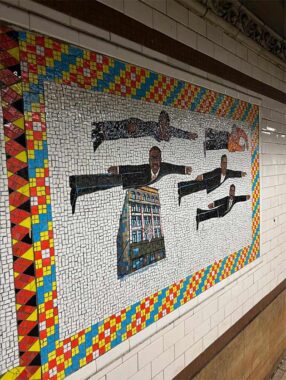
Visible to the larger public is the mosaic in 125th St. – Lenox Avenue subway station on the 2 and 3 lines. The 1996 mosaic installation Flying Home: Harlem Heroes and Heroines by Faith Ringgold includes an image of the previous building with artists Augusta Savage, Jacob Lawrence, Romare Bearden, Norman Lewis, and Aaron Douglas. They were the great masters of the Black experience in 20th century New York. In early 2026, Gov. Kathy Hochul announced plans to extend the Second Avenue Subway crosstown into central Harlem, which would add another level to this station. Expect more artworks, but don’t expect the Q train here for another few decades.

Above the station on the median of Lenox Avenue is a temporary artwork sponsored by the DOT. Installed in 2026 for the duration of a few months is Aunties by local artist Fitgi Saint-Louis. Kevin noted that this avenue had three names in its history, all with the letter X in it: Sixth, then Lenox, and then co-named for Malcolm X. Like the Park Avenue malls, this avenue has medians stretching for 37 blocks and I can imagine sculptures on each one of them.
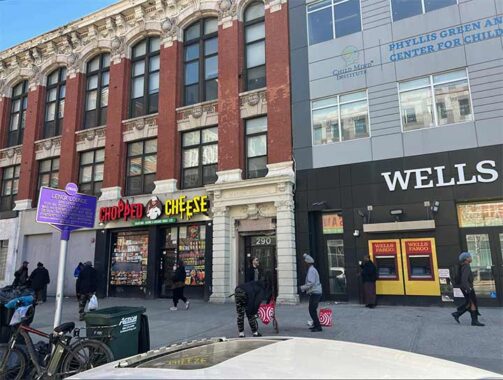
On this block is a historical marker commemorating Lenox Lounge, the popular jazz bar that closed in 2012 after 80 years in business. Perhaps a victim of Harlem’s ongoing gentrification and failure to have it landmarked. The sign was installed by the non-profit organization While We Are Still Here, founded by Harlemite Karen D. Taylor.
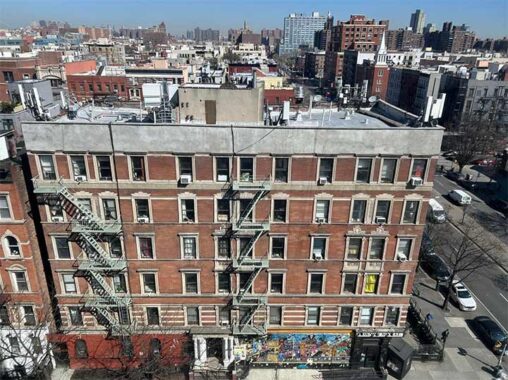
A block to the north on the corner of 126th Street is the Planet Harlem mural of 2012 by Paul Deo, featuring local luminaries in mixed media. I took this photo from an office inside 327 Lenox Avenue.
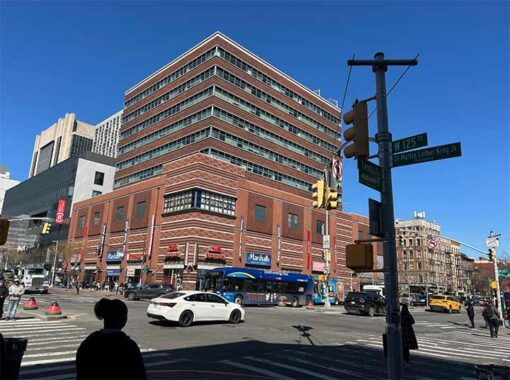
This office building features African-inspired brick patterns and there are more such examples down on 116th Street. Harlem isn’t as Black as it used to be but the architecture preserves the neighborhood’s historic identity regardless of demographic changes.
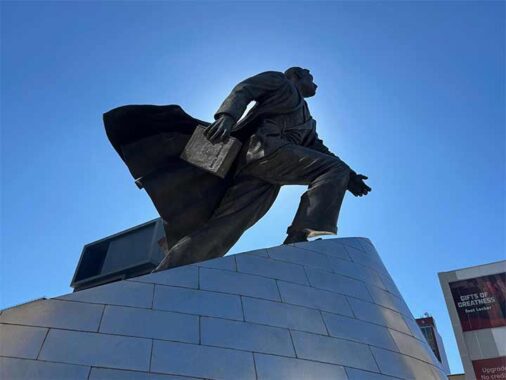
Returning to the Studio Museum, I recalled the late Forgotten-NY contributor Gary Fonville’s 2011 essay on Harlem, in which he noted the massive State Office Building. Named in honor of Rep. Adam Clayton Powell Jr, the office building rises above a plaza that had a statue of the lawmaker installed in 2005. Its designer Branley Cadet has monuments across the nation’s public urban spaces. As details are concerned, one can clearly see the thick tome in Powell’s hand, a copy of the Congressional Record to mark his many legislative achievements.

Perhaps less known is the mural on the wall at this plaza designed by Bryan Collier. Its sponsors include the state, neighboring property developer Forest City Ratner, and Memorial Sloan-Kettering Cancer Center. Its subjects depict the Black experience between the mother continent and Harlem. It was painted in 2003 and is still in good condition in 2026.
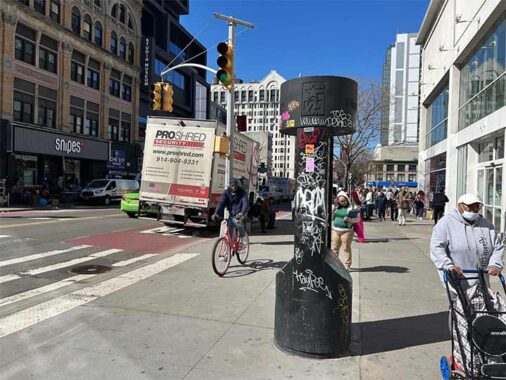
On his 2018 walk on 125th Street, Kevin wrote about stanchions here that were painted with Harlem themes. My guess is that they were installed to carry announcements in the manner of a Morris Column.
The mosaics, sculptures and murals of Harlem show that this museum doesn’t stand alone. Rather, it is the epicenter of a creative community that continues to generate art.
Sergey Kadinsky is the author of Hidden Waters of New York City: A History and Guide to 101 Forgotten Lakes, Ponds, Creeks, and Streams in the Five Boroughs (2016, Countryman Press), adjunct history professor at Touro University and the webmaster of Hidden Waters Blog.
Check out the ForgottenBook, take a look at the gift shop. As always, “comment…as you see fit.” I earn a small payment when you click on any ad on the site.
3/13/26