
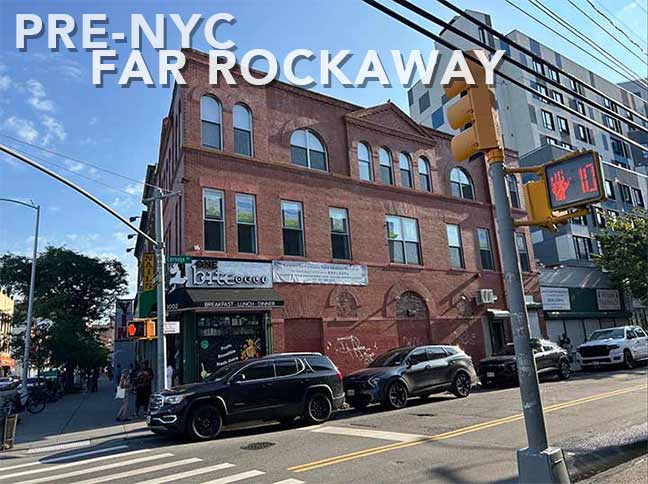

Since Sergey’s office is now in Far Rockaway, he will be offering numerous posts in the neighborhood, which has been underrepresented in Forgotten NY through the years.

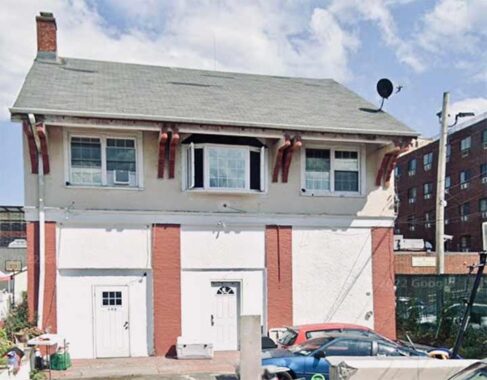
PRIOR to 1898, Far Rockaway was a village within the town of Hempstead. Perhaps because of its geography, the neighborhood offers plenty of hidden history testifying to its pre-municipal past. At 496 Beach 21st Street, a dead-end block in Wavecrest, there is a house with three cemented bays where fire trucks were stored. According to Ed Wilmarth, former chief of the Broad Channel Volunteer Fire Department (BCVFD), this building hosted the Oceanic Hose Company of the Far Rockaway Volunteer Fire Department. FDNY Engine 264 assumed responsibilities for this neighborhood in 1905. This firehouse became a residence after the FDNY built its firehouse at 1615 Central Avenue. You can learn about it in the Rockaway Village essay.
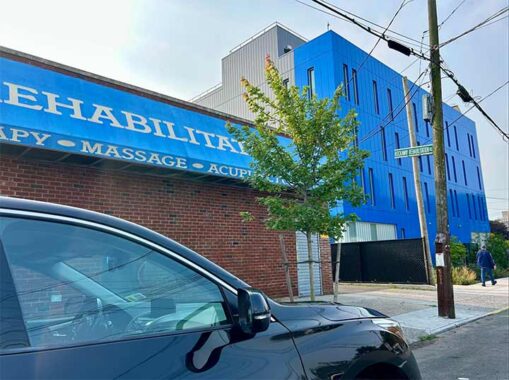
On the block behind this firehouse, Wilmarth identified another former firehouse at 520 Beach 20th Street in the 1940s.nyc photo collection, Mohawk Hose Company. But this one was eventually demolished for a commercial structure, presently rented to Rockaway Rehabilitation, a medical office. Traditionally, fire companies have colorful names relating to either local history or their mission. While FDNY companies have an assigned number, they carry on this tradition in their nicknames. If Far Rockaway does not have enough dead-end alleys with names, the driveway to this business is marked by an imitation DOT street sign, “Rockaway Rehabilition Road.” The font here shows that this sign is a knockoff.
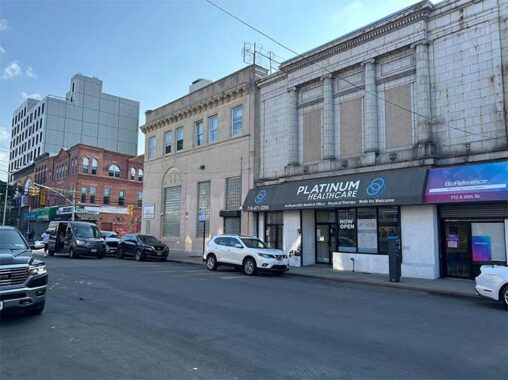
Also on this street is the former RKO Strand Theater. It opened in 1919 as the largest movie theater on the peninsula with 1,730 seats and an organ. It closed in the 1970s, subsequently hosting a warehouse. When Kevin walked by here in 2003, the Strand’s sign was still hanging. The street facing side of RKO Strand presently hosts a medical office with the ionic columns and lions watching over Beach 20th Street. If these lions could talk, they would remember the street’s past as a trolley route that brought passengers directly to Roche’s hotel on the beach.
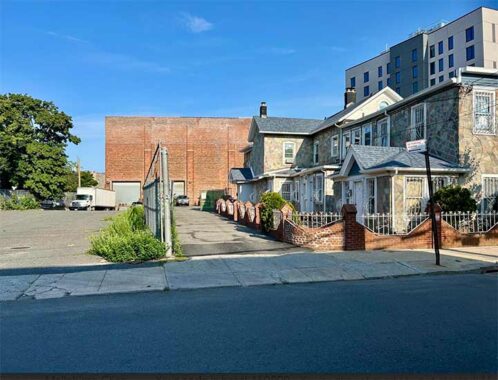
The back of the former theater is still used for storage. On city maps, the private driveway here is marked as Crawford Court. A 6-family dwelling on 711 Beach 19th Street has doors on Crawford Court. A 1966 obituary in The Wave notes that this dead-end had Joseph Andracchi as its resident. Each time we return to Far Rockaway, we keep finding more alleys and dead-ends! Kevin documented some of them in 2003.
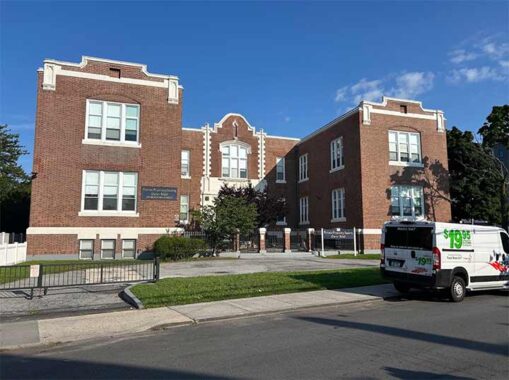
Mr. Andracchi and his wife Mary attended St. Mary Star of the Sea, the Roman Catholic church down the block from their home. The rectory is an old Gothic revival building while the church is a modernist design whose wooden roof beams and multi-hued bricks lend a medieval touch to the sanctuary. Next to the rectory where priests reside is the convent for nuns. Completing the church property is the school building. From 1877 through 2011, this was the neighborhood’s Catholic School. As the Catholic population declined, the school closed in favor of a charter school. This story is playing out across the city as former Catholic schools become secular while retaining most of their architectural features.
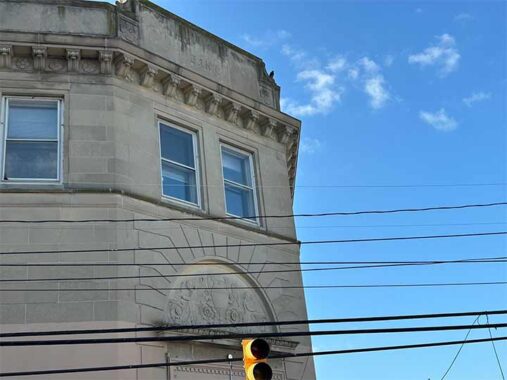
Next to the former theater, at the corner of Beach 20th Street and Cornaga Avenue is New Horizon Counseling Center, but looking up is a single word inscribed, BANK. Prior to offering mental health services, this was Franklin Savings Bank, and its original builder was Bank of the Manhattan Company, known to us these days as Chase. Money doesn’t grow on trees, but the friezes of cherubs watering plants suggests prosperous times.
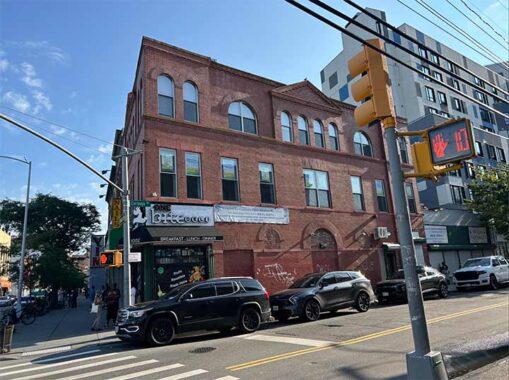
The brick office building across Cornaga Avenue also has a long history, known originally as the Jennings Building. It has a decorative pediment in its center but missing here are its corner towers which had the Dutch stepped roof design. Cornaga Avenue appeared on maps as early as 1873. Its namesake is John Cornaga, who purchased a portion of the colonial Cornell estate in 1808. Alfred Henry Bellot’s 1918 book on the Rockaways notes that he was a former loyalist. Cornaga’s son sold his home to Calvin S. Mott, who in turn sold it to John J. Healy. Their last names also appear on the neighborhood map.

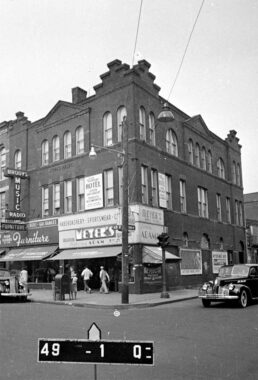
The 1940 tax photo shows plenty of activities in this building: hotel, sportswear, and electronics/appliances sold here. On my visit here, you can get a haircut, have your nails done, and buy snacks at the corner store. Behind this old commercial building is a pair of recent high-rises, Cornaga Commons, which was completed in 2024 as an affordable development with shops on the street level. The Jennings family had a presence in Far Rockaway throughout the 19th century, operating the village’s first post office at this location.
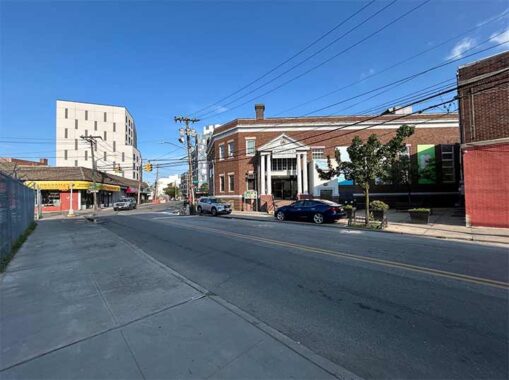
At Cornaga Avenue and Beach 19th Street is the Sorrentino Recreation Center. I can imagine the Andracchis coming here for bingo as it was built in 1921 by the Knights of Columbus, a Catholic fraternal organization. The Parks Department acquired this building in 1974 and named it in 1980 for NYPD officer Robert A. Sorrentino who was killed on duty that year. He worked out of the nearby 101st Precinct. On a rainy day, the rec center serves as an indoor park with its basketball court, gym, summer camp, and afterschool programs. It is best known for the award-winning Pepper Steppers double dutch team.
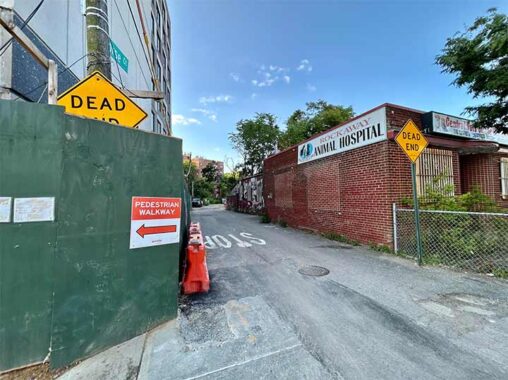
On this block is another alley that Kevin missed in 2003: Morse Court. This dead-end has a couple of properties on it, but no buildings (yet). The most famous Morse in history is the artist and telegraph inventor, so unless there was a local person with this name, I’ll go with my assumption. At the corner of Cornaga and Morse is a veterinary office. Looking back at the 1940 tax photo, a mansion stood here hosting a veterinarian. In a changing streetscape, some businesses have staying power.
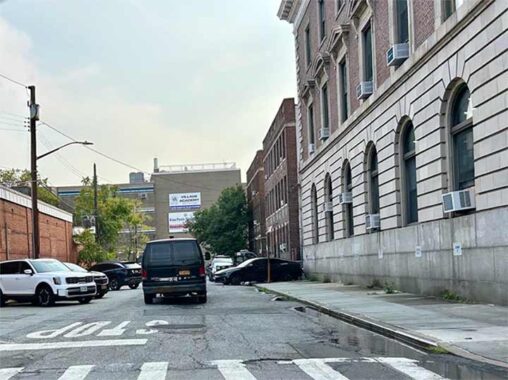
With the architecture of the landmarked 101st Precinct and the neighboring post office on Mott Avenue documented in detail, Far Rockaway has another dead-end street with a story. In 1986, rookie cop Scott A. Gadell was killed on duty while reloading his weapon in pursuit of a gunman. His murder resulted in the NYPD adopting faster loading handguns, and Mott Place (some maps have it as Beach 17th Street) renamed in honor of Gadell as this street runs next to his assigned precinct. For more on this precinct, Mott Avenue and churches on this block, see Kevin’s 2013 essay on Far Rockaway.


Like much of southeast Queens, there are many churches in Far Rockaway. At the intersection of Mott Avenue and Beach 18th Street the streetscape is unchanged in more than a century with the former Masonic Lodge, a Greek Revival design, next to the Christian Science church. Today they are respectively a Church of Christ and a Pentecostal church. For more examples of Queens churches that changed denominations, see my Hollis essay.

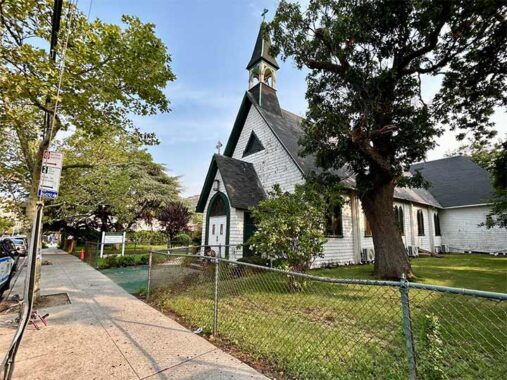
Also at this corner is Beth-el Temple Church of God in Christ, which was designed by 19th century architect Richard Upjohn as the Trinity Chapel, an Episcopalian church. Dating to 1858, it has the same style as Trinity Church in the Financial District, Grace Church in Brooklyn Heights, and the late Saint Saviour’s in Maspeth. It was recognized by the Naitonal Register of Historic Places in 2001.
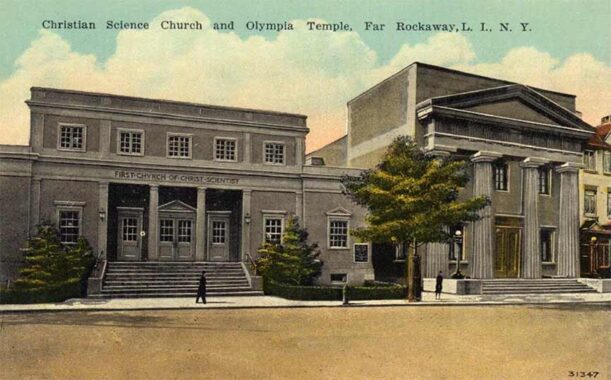
Considering the history and appearance of these three churches, it’s surprising that there are only three landmarked buildings and one landmarked cemetery on the entire Rockaway peninsula in 2026! And that’s why we have Forgotten-NY.
Sergey Kadinsky is the author of Hidden Waters of New York City: A History and Guide to 101 Forgotten Lakes, Ponds, Creeks, and Streams in the Five Boroughs (2016, Countryman Press), adjunct history professor at Touro University and the webmaster of Hidden Waters Blog.
Check out the ForgottenBook. As always, “comment…as you see fit.” I earn a small payment when you click on any ad on the site.
8/15/26
1 comment
The cemetery for the St. Mary Star of the Sea church is located on Rockaway Turnpike in Lawrence.