
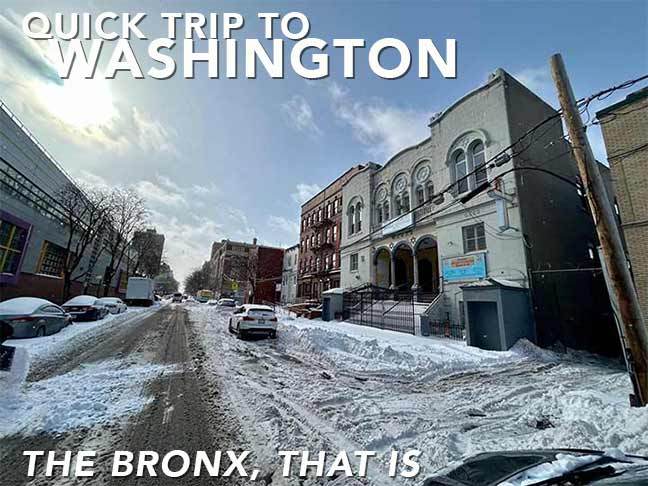


THE first president was famous for his humility, eschewing titles of nobility, retiring after a second term, and initially buried in a modest tomb on his plantation. Posthumously, his name is everywhere on the map, and the list includes Washington Avenue in the Bronx. It runs for three miles from Melrose north to Fordham, offering a variety of architectural oddities.


Washington Avenue’s one-way direction runs north to south starting at the Theodore Roosevelt Educational Campus. Formerly a standalone high school built in 1928, it was subdivided into six smaller schools within its campus. Next to the flagpole on the corner of Washington Avenue and Fordham Road, the class of 1996 installed a memorial displaying the heraldry of the Roosevelt family.
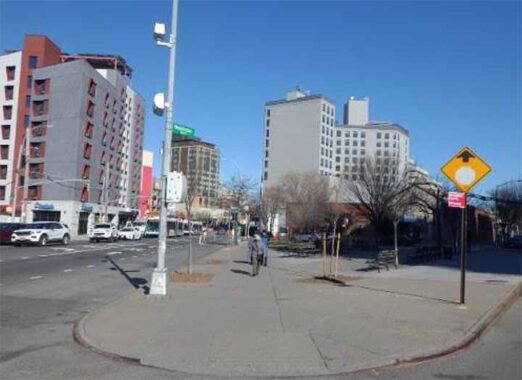
Flood Triangle faces the Fordham Post Office, its name unclear and presumed by the Parks Department as an honor for a local World War One casualty. Its status as a park predates the annexation of western Bronx by the city in 1873.
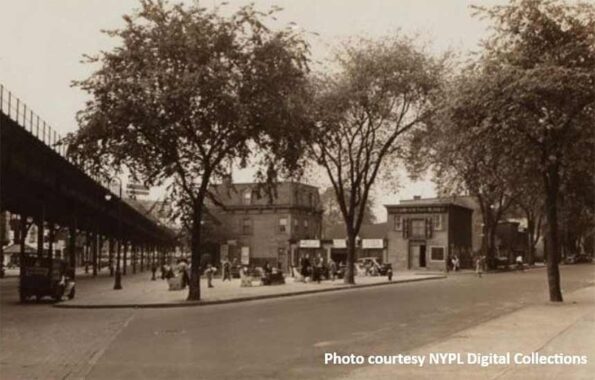
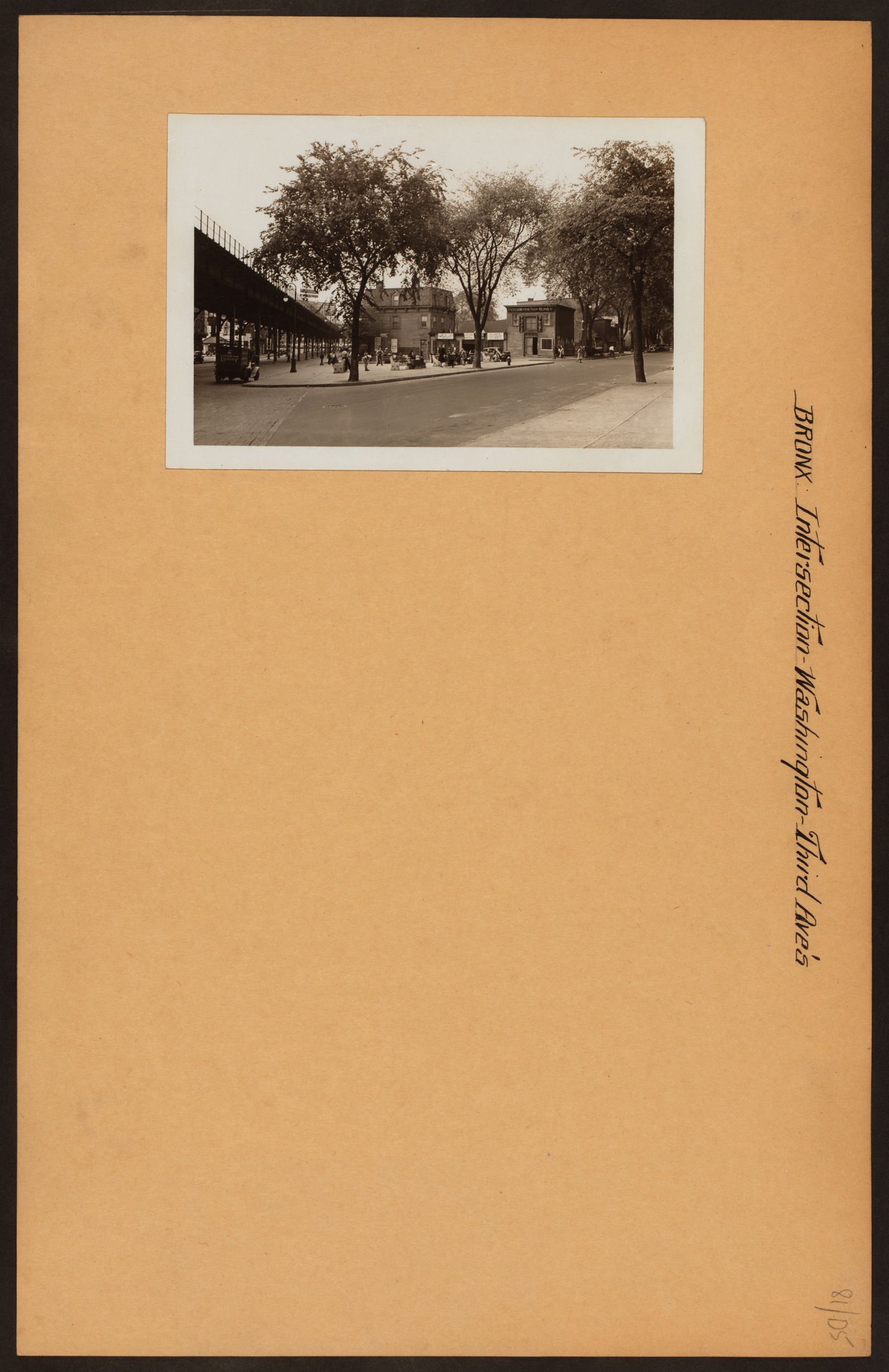
In 1938, city photographer Percy Loomis Sperr documented this park before it was assigned a name. At the time, the Third Avenue El roared above this intersection, providing a one-seat ride from Gun Hill Road to Battery Park. The Manhattan portion of this line was demolished in 1955 followed by the Bronx segment in 1973. At the time, the city could not afford to maintain these tracks as neighborhoods along this line were declining. If only we had this train today, as the population of the Bronx is rebounding.
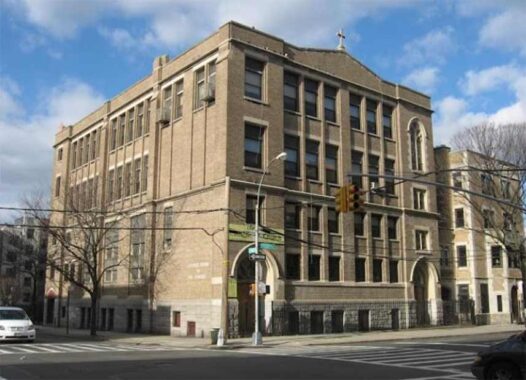
Our Savior Catholic Church was built in 1914, with Gothic revival windows evoking the main city cathedral in Midtown. As parochial enrollment declined, the school attached to the church became public, named in honor of Luis Muñoz Marin, the first democratically elected governor of Puerto Rico.
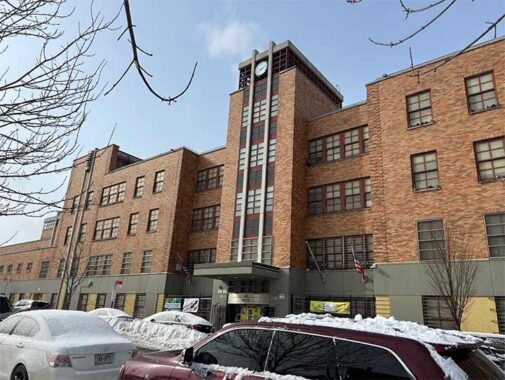
PS 23 The New Children’s School was built in 1992 with a design that revives the borough’s Art Deco style, seen in its vertical stripers and brickwork. I traveled on most of Washington Avenue following a snowy day, perhaps fitting for a namesake born in winter whose Revolutionary War experience includes snow-covered battlefields at Princeton and Valley Forge.
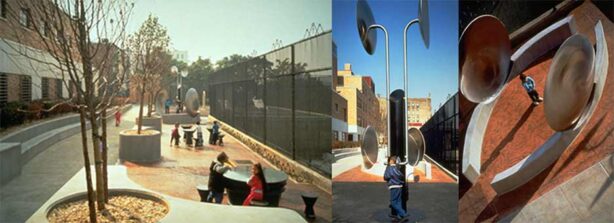
Not visible to the public is the schoolyard of PS 23, which has an art installation titled Sound Playground by Bill and Mary Buchen. It is designed to create sounds, giving children a musical experience during recess. Since 1983 when the Percent for Art law was adopted, any city agency building that is constructed or renovated must reserve a percent of its budget towards art, with paintings, sculptures, and stained glass appearing in numerous schools, firehouses, police stations, and recreation centers, among other places.
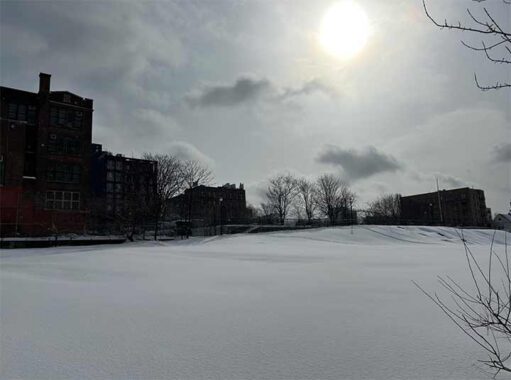
Across the street from this school is a hill containing two community gardens and Bathgate Playground. The name honors the Bathgate family which managed the sizable estate of the Morris family, whose name appears throughout the Bronx. The park was developed in 2005 on an empty lot where homes stood through the 1970s. The park shares its block with PS 59, which was built in the 1920s. On my visit, its slope appeared ideal for sledding but it was empty as Mayor Mamdani insisted on virtual instruction to comply with the 180-day school year.
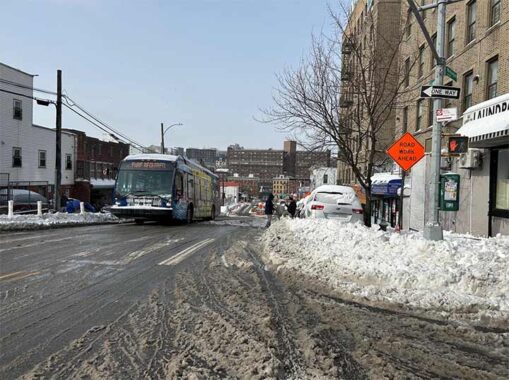
Looking west at 180th Street, there is a dip in the topography with the Metro North railroad running on the bottom of this valley. Prior to urbanization, Mill Brook flowed here. Its course originated in Fordham, running south to the Bronx Kill in Mott Haven. The phantom stream offers clues on the map with Brook Avenue, the dead-end Alden Place, Brook Avenue, Saw Mill Playground, Brook Park, and Millbrook Playground. The ridge on the opposite side of this valley is topped with Echo Park and Claremont Park.
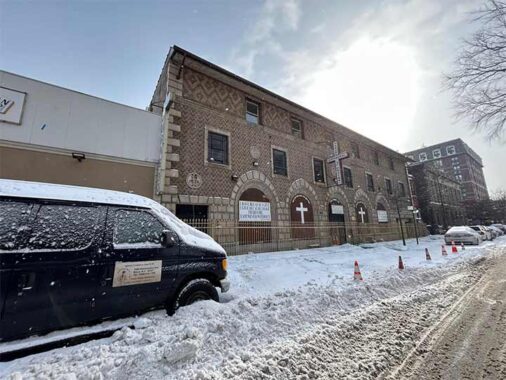
Garden of Prayer C.O.G.I.C takes its name from the original use of this building, the Bronx Winter Garden, a theater whose facade is inspired by the Venetian Renaissance. A quote from St. Matthew appears on a board here: “with God, all things are possible.” The church’s acronym stands for Church of God in Christ, a historically Black Pentecostal denomination founded in 1897.
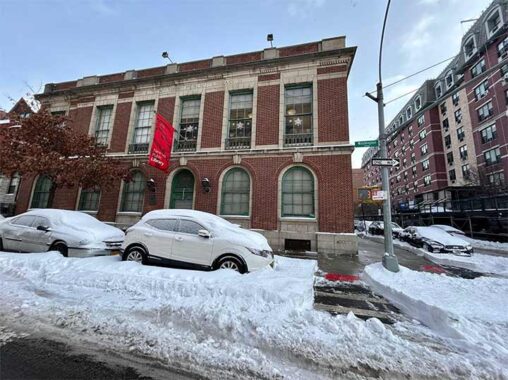
Tremont Library also has a historical design, a gift from Andrew Carnegie designed by Carrere and Hastings in the beaux arts style. It was landmarked in 2024. It is one of 14 Carnegie libraries designed by this firm for the New York Public Library, with three in the Bronx. In its early years, its foreign language collection was heavy on Hebrew and Yiddish. As neighborhood demographics changed, Spanish became the leading foreign language on the shelves here. Tremont was developed as a village in 1856 when Postmaster Hiram Tarbox and other men purchased land in the upper farm of Morrisania from the Morris family. The name is derived from the three hills in the area: Mount Eden, Mount Hope, and Fairmount.
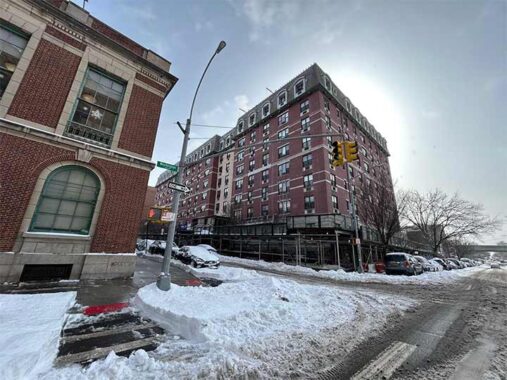
Across 176th Street from the library is Silver Leaf Hall, a residence for low-income and special needs families whose design is informed by history with bricks, masonry, and a mansard roof. How refreshing it is to see a beautiful building in an age when glass and steel boxes predominate the post-millennial architectural scene.
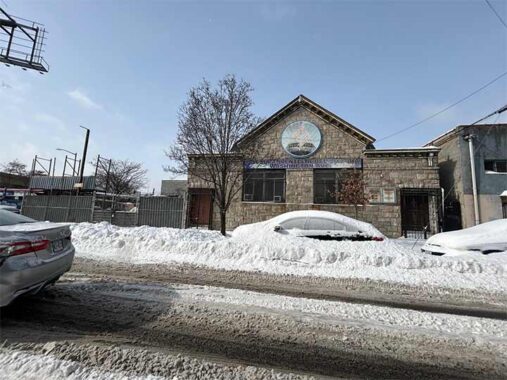
The Spanish-speaking Adventist church at 1815 Washington Avenue is the former Zeire Jacob (Descendants of Jacob) synagogue and there are more such examples as one travels south on this street. In the heyday of the Bronx’s Jewish scene, Rabbi Aharon Rakeffet-Rothkoff was raised on Washington Avenue. He later moved to Israel, settling near Washington Street in Jerusalem, which inspired the title of his memoir. I didn’t have a chance to ask him which synagogue on Washington Avenue he attended. His childhood was the Bronx of “Yoo hoo, Mrs. Goldberg,” a community of urban Jewish families that were a generation after Ellis Island and just before migration to the suburbs.
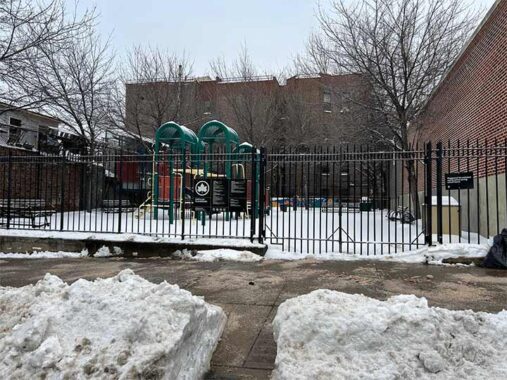
Around the corner at 175th Street is Stop & Go Playground, a punny name poking fun at the traffic congestion on the Cross Bronx Expressway, which passes by this park. Developed in 1992, it was previously named Red Light Playground, but we don’t usually associate a red light district with a children’s park. In my essay on parks along the Cross Bronx Expressway, I noted that among the buildings condemned for this highway was Tremont Hebrew School, which stood on Washington Avenue.
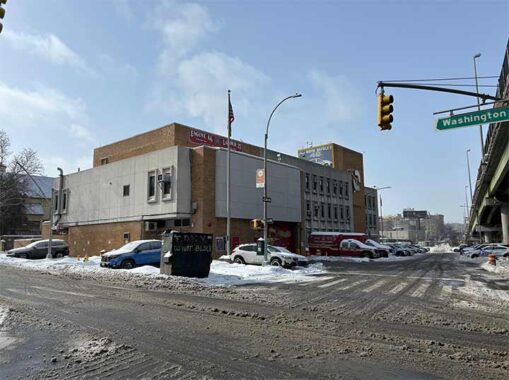
In 1974 the city consolidated the local NYPD precinct and FDNY firehouse into one building. Every firehouse has a nickname and this one is the Cross Bronx Express, inspired by the highway. This modernist building was completed in 1975, the successor to an older Renaissance Revival precinct building at 1925 Bathgate Avenue that is presently used as a church-run preschool. The late, great Gary Fonville has other examples of former precinct houses across the city.
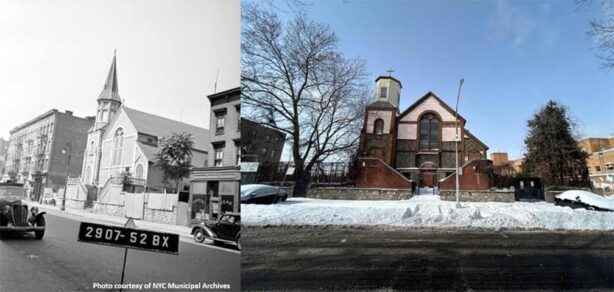
Next to the precinct is a Ukrainian Catholic church, which is as unexpected in the Bronx as a Russian Orthodox church in East New York. It doesn’t appear to have hosted mass in a long time. When one thinks of Ukrainians in New York, East Village and southern Brooklyn usually come to mind.
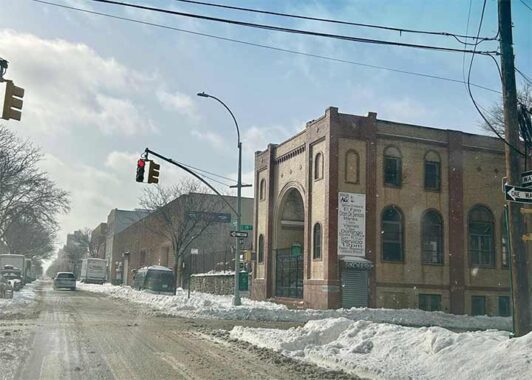
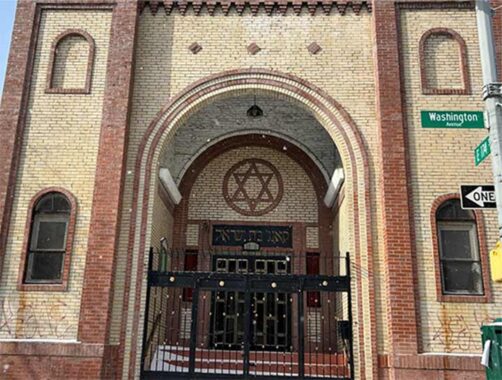
At 174th Street, the Spanish-speaking Assemblies of God church is the former Beth Israel synagogue that was built in 1934. The building was converted in the 1960s when many inner-city Jewish communities were emptying out as a result of white flight and migration to the suburbs. Seymour Perlin’s Bronx Synagogues database lists 17 former shuls on Washington Avenue.
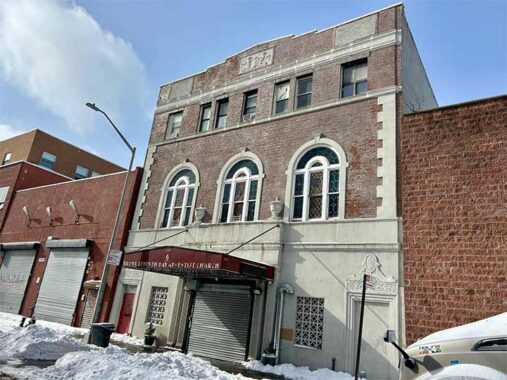
This block also has the Bronx Seventh Day Adventist Church, whose theatrical architecture hints to its original use as the Juliette Palace, a party hall. Prior to that, it hosted a preschool run by the Bronx Educational Alliance, which was founded by Jewish immigrants and open to everyone, on the model of the older Educational Alliance on the Lower East Side.
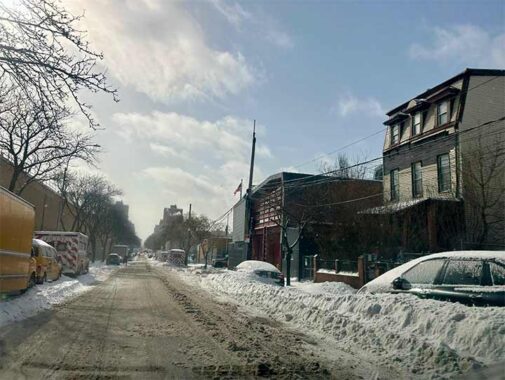
At 1655 Washington Avenue is a post-millennial FDNY building, Rescue Company 3, designed by Ennead Associates in 2006. The facility offers spaces for training, work, and rest between calls. One doesn’t often choose between working in a century-old landmark or a postmodern office, and I’m sure the paramedics here are happy with their workplace.
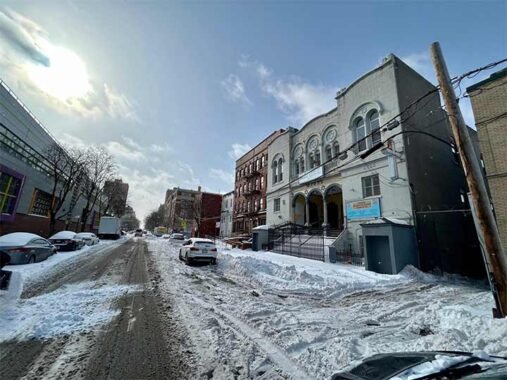
Iglesia Mision Cristiana at 1589 Washington Avenue offers very visible signs of Judaism with ten stars of David facing the street. Previously it was Beth Hamedrash Hagadol, which translates as “great house of study” as the Jewish religion focuses on learning the text and commentaries. The number 5688 on the wall indicates the Hebrew year of its construction, which corresponds to 1927. The synagogue sold this building in 1967.
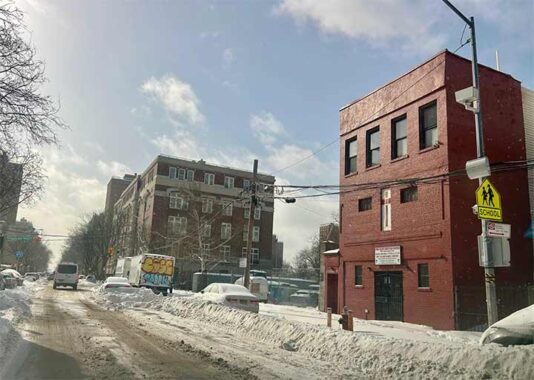
Two buildings down from the former synagogue is Open Door Christian Church, founded by the Rev. A.B. Frost.
A look back to the 1940 tax photo shows it as a crowded hub of Jewish activities: the labor-oriented Workmen’s Circle on the second floor and a religious articles store on the street level next to a kosher butcher. Considering the growing gap between progressive and Orthodox Jews in recent years, seeing them in the same building feels sentimental.
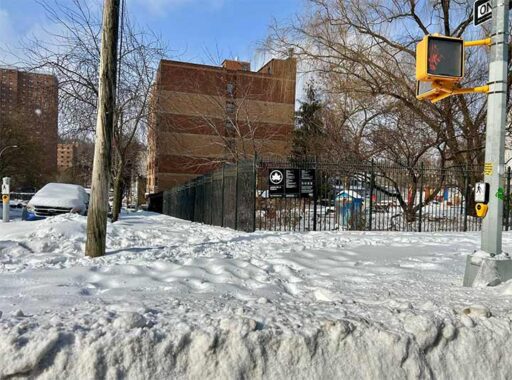
At 171st Street, Jardin de la Familia was grown on a vacant lot under the auspices of the Parks Department’s Greenthumb program. Responding to astronomic housing costs, the city seeks to build denser and taller buildings, but most community gardens are parkland, legally protected from development.
Looking back to 1940, the site of this garden had a respectable looking apartment building which later became a victim to urban decay in the 1970s, when thousands of units were abandoned, burned by arsonists and demolished.
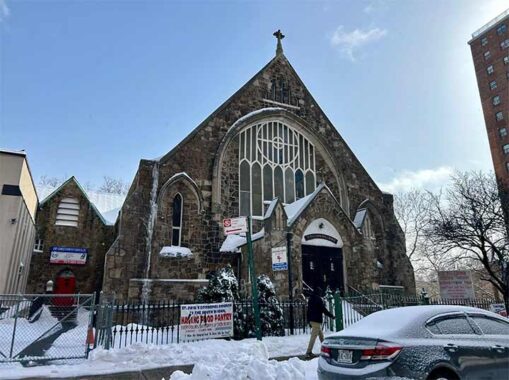
When the city declared Claremont Village an urban renewal area to construct NYCHA Morris Houses, it spared the venerable St Paul’s Episcopal Church that now stands among the projects. Its history goes back to 1853 as an outgrowth of the older St. Ann’s Church in Mott Haven.
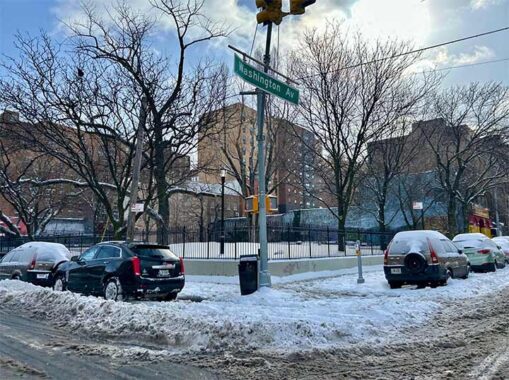
At 168th Street, Rev. Lena Irons Unity Park was also built on a vacant lot. Its namesake was a cofounder of the Evangelical Church of God down the block, whose congregants were instrumental in maintaining this park. Catercorner from this park is PS 132 Garrett A Morgan School, whose building honors inventor Garrett Morgan. The playground behind the school has the same last name, but it honors local 19th century politician Edward Denison Morgan, who is unrelated to Garret Morgan.
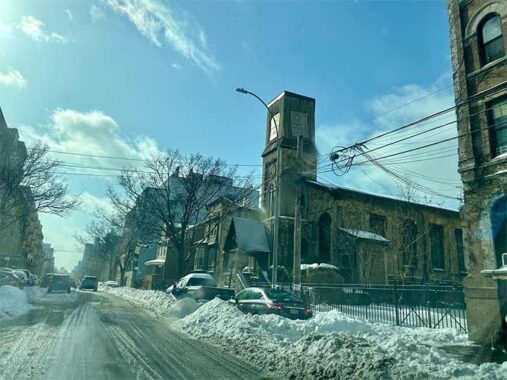
The Evangelical Church of God at 1205 Washington Avenue has seen better days. Its steeple is boarded up and vines grow on its walls. Religious architecture is expensive to maintain and as many congregations lose followers or are unable to afford the upkeep, some have sold their properties to developers, moving into smaller spaces inside the new buildings. Unless this building is landmarked, I doubt that it will stand for long.
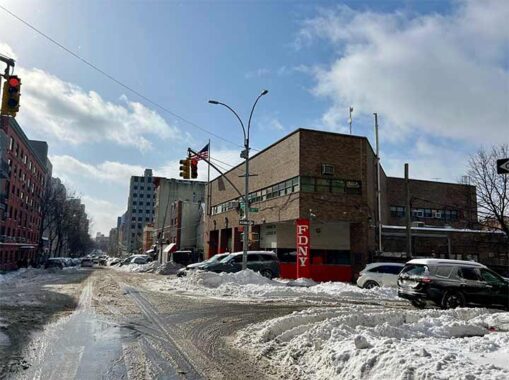
FDNY Engine 50 Ladder 19 at 174th Street was built in 1974. Its design is a product of its time, minimal on decorations, built during the decade of arson and financial crisis. Prior to its present firehouse, Engine 50 was based at 491 E. 166th Street, off Washington Avenue. That former firehouse stands today as an electrician’s business.
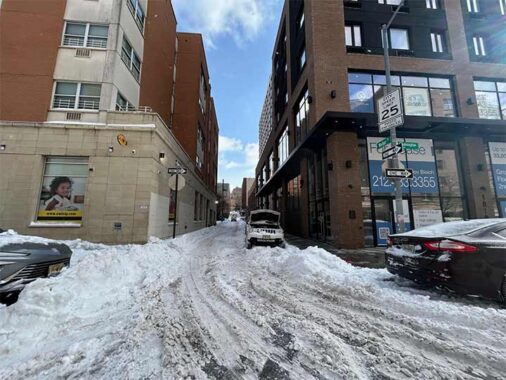
New York is well-known for having few real alleys, in contrast to its depiction in movies. Weiher Place is a rare example, running for one block from Washington Avenue to Third Avenue. I’m not sure whether the name is pronounced “weigher” or “wire.” According to John McNamara the street, and its original homes, was built in 1908 and remembers contractor William Weiher. Kevin visited this street in 2011 for his essay on Morissania. Coincidentally, it was also a snow day.
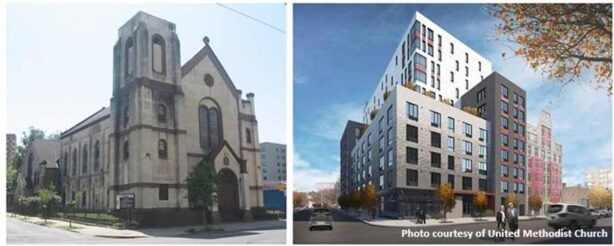
Nearby at 166th Street is another example of a thoughtful post-millennial design: 1070-1076 Washington Avenue, whose many colors make it appear as a cluster of buildings. Built on the property of the Methodist Church of Morrisania, it follows the church’s tradition of service, hosting the Fortune Society, which assists formerly homeless and incarcerated individuals. I did not have an opportunity to photograph this building but it is worth mentioning in the larger story of Washington Avenue’s religious history.
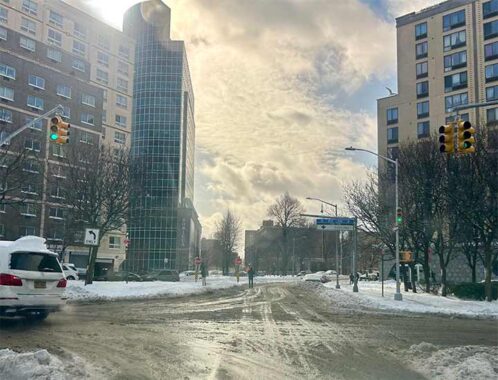
Washington Avenue is interrupted at 163rd Street, where a block was pedestrianized to expand O’Neill Triangle. Its namesake remains unclear. Another curiosity in this park is the spiral paving, a decorative feature built on top of the abandoned Port Morris Branch. Is there still a tunnel beneath this park, or was it filled with earth? The tower facing this park hosts Boricua College, a historically Latino school founded in 1974. It also has campuses in Washington Heights and Williamsburg.
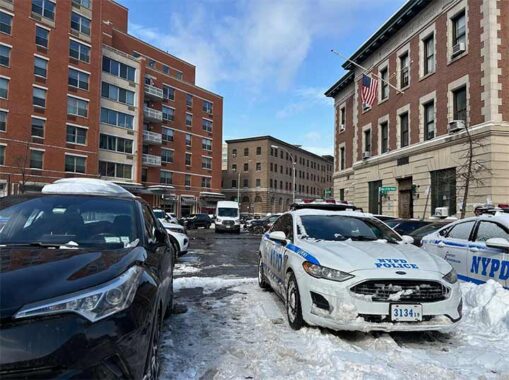
Washington Avenue merges with Third Avenue at 159th Street in front of the historic 42nd precinct. This police station was built on the site of Morrisania Town Hall, a municipality annexed by the city in 1874. Behind the precinct at 884 Washington Avenue is a former YMCA that is presently hosting the Pyramid Community Service Program.
Sergey Kadinsky is the author of Hidden Waters of New York City: A History and Guide to 101 Forgotten Lakes, Ponds, Creeks, and Streams in the Five Boroughs (2016, Countryman Press), adjunct history professor at Touro University and the webmaster of Hidden Waters Blog.
Check out the ForgottenBook, take a look at the gift shop. As always, “comment…as you see fit.” I earn a small payment when you click on any ad on the site.
1/31/26
1 comment
Mystery solved: a student of Rabbi Rakeffet-Rothkoff confirmed that his childhood synagogue on Washington Avenue was Zeire Jacob.