
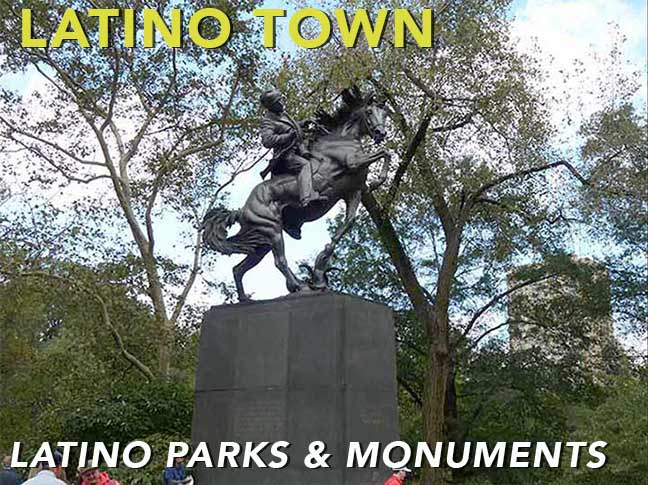


AFTER having the list of city parks named after Irish-Americans deleted on Wikipedia for stupid reasons, I brought it back to life on this website. Following on that example, here is a list of every park in New York City relating to Latin American places and Latino individuals. One again, the listings are not in strict alphabetical order at least in Manhattan. For brevity and time’s sake, this post will be text-heavy as we decided not to prepare an image for each listing. Uncredited photos come from NYC Parks, Street View, or Forgotten NY.
Manhattan
For parks with Spanish names, most of them can be found in the neighborhoods of East Village, East Harlem, and Washington Heights. The efforts of community gardeners can be seen throughout the first two of these, where abandoned lots owned by the city were assigned to the Parks Department’s Greenthumb program. Avenue of the Americas offers a visual lesson on Latin American independence leaders.
Anibal Aviles Playground in the Manhattan Valley neighborhood was built in 1943. Its namesake was a neighborhood resident killed in the Vietnam War, a month shy of his 19th birthday.
|
|
|
|
|
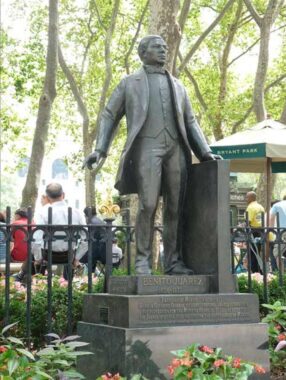
The Benito Juárez statue in Bryant Park honors the first indigenous president of Mexico, who led the effort to expel the French invaders from his country. He is one of seven Latin American leaders honored with a monument on the Avenue of the Americas. Kevin documented this monument on his 2012 visit to Bryant Park.
Campos Community Garden in the East Village honors Puerto Rican nationalist Pedro Albizu Campos. His name also appears on an elementary school in Harlem, and as the co-name of Graham Avenue in Williamsburg, Brooklyn.
Carmen Pabon Garden in the East Village was established in 1984, named after its founder, a neighborhood activist who hosted poetry readings at this garden and organized meal distribution for homeless individuals. Although the garden was bulldozed in 2000 to make way for development, a portion of it was reopened in 2016 as the Carmen Pabón Del Amanecer Community Garden.
Dias y Flores Garden is located at 520 East 13th Street between Avenues A & B in the East Village. Previously a six-story tenement, it was demolished in the 1970s after its abandonment. In 1978, the 13th Street Block Association stepped in and began the painstaking work of cleaning up the land to construct a garden and playground. Its name translates as “days and flowers.”
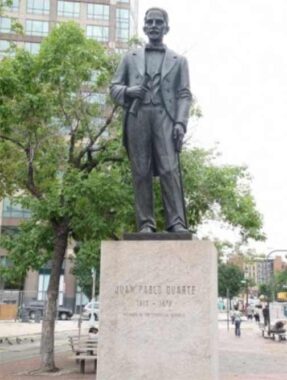
Duarte Square was named in 1945 to coincide with the renaming of Sixth Avenue as Avenue of the Americas. The honoree, Juan Pablo Duarte, participated in the 1844 struggle to regain the independence of the Dominican Republic from Haitian rule, subsequently serving as its president. Kevin visited this park in 2011 to document a demapped portion of Sullivan Street. In uptown Manhattan, St. Nicholas Avenue is co-named for Duarte as it winds through Washington Heights.
El Sol Brillante is one of many community gardens in the East Village created by local Puerto Ricans during the 1970s when abandoned buildings were torn down in many inner-city neighborhoods. This one is on a private lot next to Joseph C. Sauer Playground, and across the street from a much smaller Parks-owned garden aptly named El Sol Brillante Jr. The name translates as “the bright sun.”
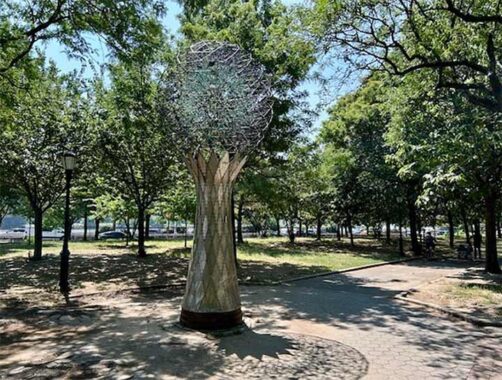
El Arbol de Esperanza sculpture in Thomas Jefferson Park by L. Brower Hatcher is a nod to the Puerto Rican community of East Harlem, as seen in my 2025 essay on this park. Its name translates as “tree of hope.”
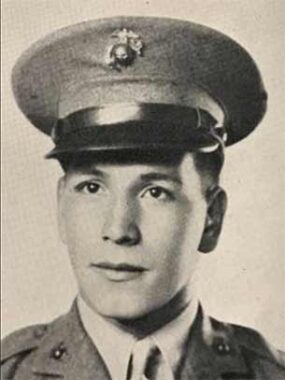
The Emilio Barbosa Memorial in Bennett Park honors a Nicaragua native who lived in Washington Heights. Private First Class Barbosa was killed in the Battle of Okinawa in 1945. Kevin visited this park during his 2021 walk on Fort Washington Avenue. This park has the highest natural point in Manhattan.
|
|
|
|
|
|
|
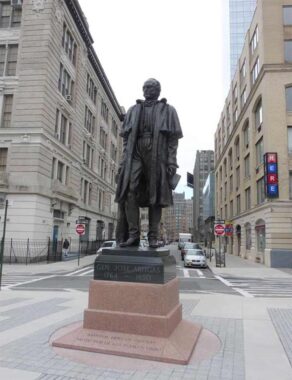
The General Jose Artigas monument in Spring Street Park honors the father of Uruguay. Kevin visited this park during his 2021 walk on Spring Street.
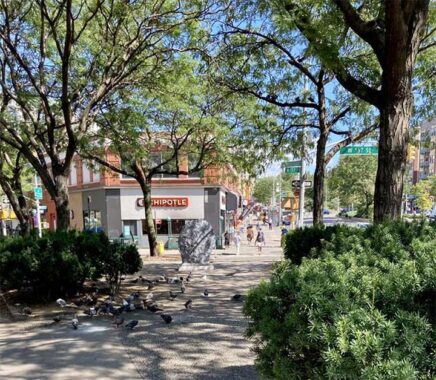
Ilka Tanya Payan Triangle in Washington Heights is bordered by Edward M. Morgan Place, Broadway, and W. 157th Street. Being a block north of the Hispanic Society, the fitting namesake here was an accomplished Dominican soap opera actress turned immigration lawyer turned journalist. Diagnosed with AIDS, she brought attention to this disease at a time when there was much social stigma against people with HIV and AIDS.
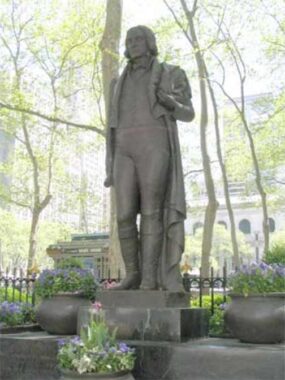
The José Bonifácio de Andrada statue in Bryant Park honors one of the fathers of Brazil. Sculpted by José Otavio Correia Lima, it was installed here in 1955. A short walk north from this park is a block of W. 46th Street historically known as Little Brazil, which Kevin visited in 2012.
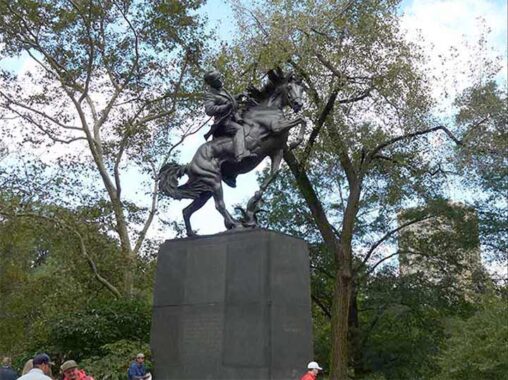
The Jose de San Martin monument at the intersection of Sixth Avenue and Central Park South honors the father of Argentina. It faces monuments honoring Simon Bolivar of Gran Colombia and Jose Marti of Cuba, a fitting placement at the northern end of Avenue of the Americas, which Kevin visited in 2023.
La Plaza Cultural is a community garden in the Alphabet City section of East Village built on empty lots during the urban decay of the 1970s. Prior to gentrification at the turn of the millennium, this neighborhood was very visibly Puerto Rican. The garden has enough activities going on to merit its own page on Wikipedia.
Minerva Bernardino Greenstreet on the border of Manhattan Valley and Morningside Heights was created in 2006, as a traffic calming measure. It marks the intersection of Amsterdam Avenue and 110th Street, where the southbound lane ends as the avenue becomes one-day northbound. The namesake was a famous Dominican Republic diplomat and feminist. In 1948, when the Universal Declaration of Human Rights was adopted, she advocated for inclusive language, using the phrase “free human beings” instead of “free men” in its preamble.
Neighbors of Vega Baja is a small garden on E.109th Street midblock between Second and Third avenues in East Harlem. Its namesake is a town on the north shore of Puerto Rico whose name translates as “low valley.”
Olga’s El Gallo Community Garden is on Lexington Avenue and E. 18th Street in East Harlem. It was named after El Gallo Social Club and Olga Seijo, who planted the first red rose bush here after the devastating blackout of 1977.
Pa’lante Community Garden on Madison Avenue and E. 110th Street in East Harlem takes its name from the slogan and newspaper of the Young Lords, a Puerto Rican advocacy organization in 1970s New York that was modeled on the Black Panther Party. The name is the Spanish slang for “go forward.” The organization was also honored in 2014 when the corner of Lexington Avenue and E. 11th Street was co-named Young Lords Way.
Parque de Tranquilidad at 314 E. 4th Street in East Village is one of three community gardens on this block between Avenues B and C, the others being Los Amigos Garden, and Brisas del Caribe.
Quisqueya Playground in Washington Heights takes its name from the indigenous Taino name for Hispaniola, usually regarded as an alternate name for the Dominican Republic. The francophone portion of this binational island, Haiti, translates as land of mountains. Another Taino name on the city map are the NYCHA Borinquen Plaza apartments in Williamsburg which is the Native name for Puerto Rico; and of course Taino Towers in East Harlem.
Siempre Verde Garden takes up two connected lots on the Lower East Side: 181 Stanton Street – 137 Attorney Street. The Stanton parcel belongs to NYC Parks, preserved from development while the Attorney portion belongs to an LLC and was slated for development in the past. The name translates as “always green.”
Vamos a Sembrar Garden is on the lot of 198 Avenue B in the East Village. The name translates as “let’s sow.” In 2025, Kevin walked the length of Avenue B but he did not document this 2200-square foot garden.
Bronx
The borough with the largest Puerto Rican population outside the enchanted island has the largest number of parks with Spanish names, honoring people and places dear to the communities that built and use these spaces.
Arcilla Playground in Morrisania was given its name in 2000 in recognition of the sizable Spanish-speaking population in this neighborhood. “Arcilla” is the Spanish word for clay. It is a pun on the name Clay Avenue which touches the northeast corner of this park. Its previous names were: Clay Playground, Toscanini Playground, and originally JHS 145 playground, the school that was built in tandem with this park in 1962.
Astin Jacobo Field in Mapes Park honors a Dominican immigrant who fled political persecution, settling in the East Tremont neighborhood in 1970, where he became president of Crotona Community Coalition. Kevin visited this neighborhood in 2017.
Carlos J. Lozada Playground is named for a local resident who was killed in combat in the Vietnam War. When his company was ordered to retreat, he stayed to provide cover, receiving a mortal wound. He was posthumously awarded the Purple Heart and Congressional Medal of Honor.
Captain Rivera Playground honors Melrose resident Captain Manuel Rivera who was the first New Yorker killed in the Persian Gulf War of 1991. His funeral took place at nearby Saint Anselm’s Church which he attended.
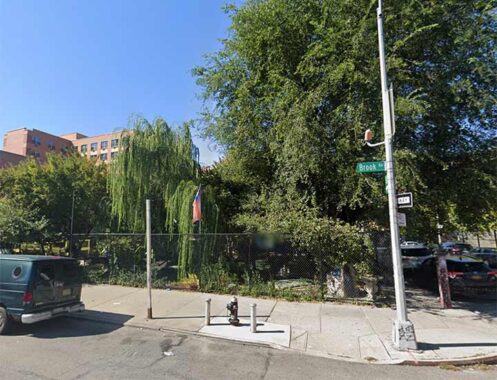
Centro Cultural Rincon Criollo at the corner of Brook aVenue and E. 157th Street in Melrose is regarded as the birthplace of the casita, small wooden shacks inside community gardens that serve as repositories of Puerto Rican culture. Its history began in 1975 when Jose Manuel Soto, also known as “Don Chema,” landlord of a building across the street, built the casita here for concerts and dances. The park’s name translates as Creole Corner.
Damiana Pizarro Community Garden is located on Crotona Park South inside Crotona Park, the sizable greenspace that also has its own pond, pool, and tennis center. Historically it was known as the Crotona Park Victory Garden, perhaps in memory of the gardens grown in city parks and botanical gardens during World War Two.
Demera Santiago Garden is located at the unusually named Avenue St. John in Longwood, a corner property enveloped by Al Quinones Playground. I could not find information online on the garden’s namesake, while the playground next to it honors a neighborhood activist who advocated for this park and its amphitheater.
El Batey Borincano at 815 Eagle Avenue is a garden on three city-owned lots acquired by tax liens and foreclosures between 1978 and 1984, but never developed. The gardeners came and turned into a space for Puerto Rican culture. Batey is a Taino term for a village square that is part of the lexicon among Puerto Ricans, Dominicans, and Cubans. Once situated on a devastated block, the lots bordering this garden received new apartments in 2011.
El Batey de Doña Provi in Tremont is at the corner of Bathgate Avenue and E. 178th Street. Early gardener Gerald Lanausse named it for his grandmother. Along with plants, the garden initially included roosters and chickens for the sounds of Puerto Rico.
El Coqui Community Garden, 924 Melrose Avenue at E. 163rd Street, is sizable as community gardens are concerned, at 12,321 square feet in Melrose. It is named for the beloved native frogs of Puerto Rico.
El Flamboyan Garden at 586 Tinton Avenue borders on Fountain of Youth Playground, which also has a Latino connection. Its palm tree sculptures and name hearken to Juan Ponce de Leon’s exploration of Florida.
El Jardín de Los Amigos de Moore in Mott Haven is on the grounds of NYCHA Moore Houses, a block to the east of St. Mary’s Park. It was given a Spanish name by its founders.
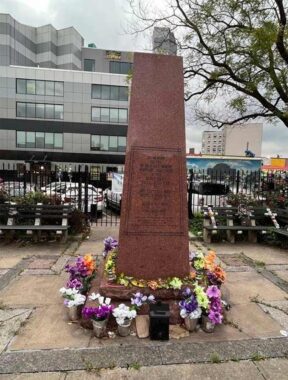
Happy Land Memorial on the Crotona Parkway median at E. Tremont Avenue commemorates the tragic fire in 1990 at the Happy Land nightclub in Hunts Point that killed 87 people, most of them Bronx residents. Kevin walked the length of Tremont Avenue in 2018, but did not notice this monument at the time.
Hispanos Unidos (Daly Avenue Garden) is typical of a Puerto Rican community garden with its casita and flags. Having visited the island, I was surprised that the Puerto Rican flag is more visible in the Bronx than in San Juan. Perhaps it is the diaspora experience that
Isla Verde Garden is a couple of blocks from El Flamboyan, founded in 2022. It is named for the resort district of San Juan.
Jardin de las Rosas is situated on a narrow lot on Buchanan Place between Davidson and Jerome Avenues.
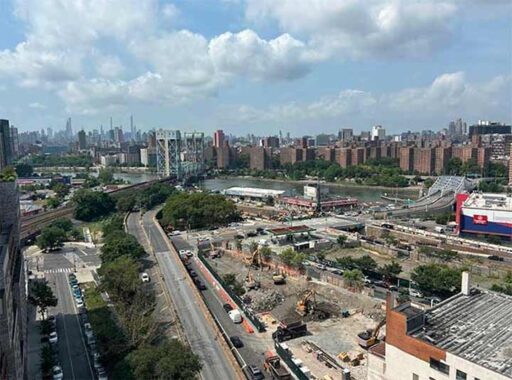
La Finca del Sur marks the southern end of the celebrated Grand Concourse, which is one of the borough’s defining roads. Its name translates as “farm of the south.” It is bound by the Metro North railroad and ramp connecting Grand Concourse to the Major Deegan Expressway. Kevin visited the site of this garden in 2000, before it was created. I’ve seen it in 2024.
La Isla USA at 836 Elton Avenue in Melrose also takes its name from Puerto Rico and should not be confused with La Isla Youth Community Garden at 96 West 163rd Street in Highbridge.
Las Casitas Community Garden at 1130 Woodycrest Avenue in Highbridge takes its name from its signature shacks. This neighborhood is on a ridge that rises between the Harlem River and Jerome Avenue that follows the buried course of Cromwell Creek.
Padre Plaza in Mott Haven honors Father Roger Giglio, founder of St. Benedict the Moor Neighborhood Center. This garden was created in 1982, in cooperation with St. Ann’s church, St. Benedict Center, and AmeriCorps.
Palmas del Caribe (Eagle Avenue Community Garden) in Melrose is managed by the Parks Department’s Greenthumb program and owned by the nonprofit Bronx Land Trust. Its name translates as “Caribbean palms.”
Parque de los Niños in Soundview was built in the 1950s in tandem with the southern extension of the Bronx River Parkway. Its name translates as “children’s park.” In 2023, I visited the block north of this park to document a phantom segment of Soundview Avenue.
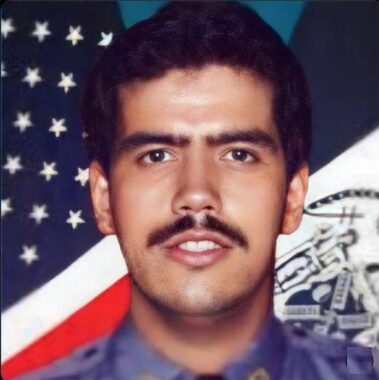
P.O. Serrano Playground in Soundview honors NYPD officer Hilario Serrano, who worked at the 43rd Precinct. He was killed by robbers in the elevator of his mother’s apartment building in 1992.
|
|
|
|
|
|
Puerto Rican Sun sculpture at Fox Park in Longwood was installed in 1979 by Puerto Rican artist Rafael Ferrer. This park also has a second artwork, We Are Family by John Ahearn and Rigoberto Torres on the wall of 737 Southern Boulevard that borders this park.
Roberto Clemente Community Garden at 1276 Shakespeare Avenue in Highbridge was founded in 1984 and named in honor of the great Puerto Rican Born Pittsburgh Pirate. This garden grows on a steep slope that exemplifies the borough’s topography.
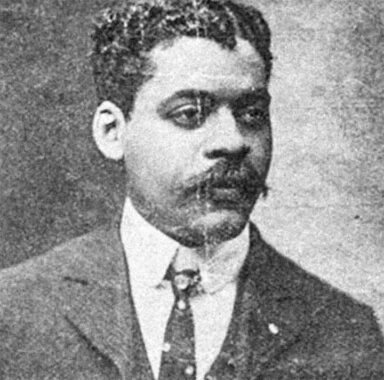
The Schomburg Arts Garden in Melrose honors the famous Puerto Rican historian whose name also appears on the Black history library in Harlem. A Black Puerto Rican with a German last name? Yes, because the island had its own influx of German immigrants in the 19th century, who married into the general population.
|
|
|
|
|
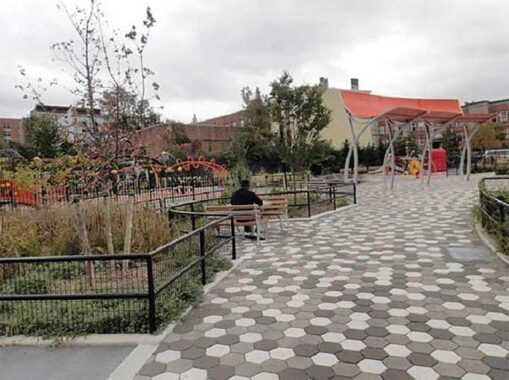
Yolanda Garcia Park opened in 2019, honoring the founder of the advocacy group Nos Quedamos. During the urban devastation of the 1980s when many surrounding blocks looked like a war zone, Garcia organized neighbors to advocate for Melrose. This park borders Jardin la Roca at 438 East 160th Street, which is named for the rocky topography of the Bronx. I documented these two parks during my 2019 visit to Melrose.
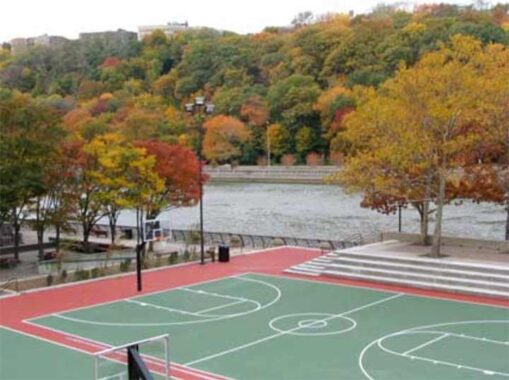
Roberto Clemente State Park opened in 1974 as the first state park within New York City. Kevin visited this park in 2011 and in 2008.
Brooklyn
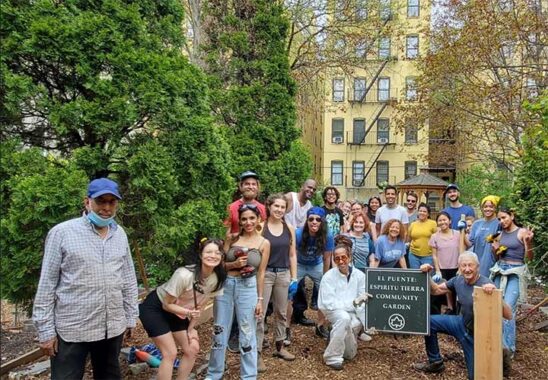
El Puente: Espiritu Tierra Community Garden in Williamsburg was established in 1990 by students of El Puente Academy. The garden’s website offers a long history of this property prior to its restoration as a green space. Prior to the hipster influx at the turn of the millennium, the “south” numbered streets of Williamsburg were dominated by Puerto Ricans.
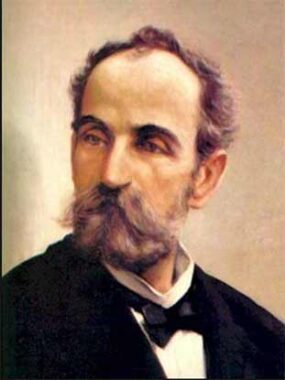
De Hostos Playground in Williamsburg honors the famous Puerto Rican nationalist Eugenio Maria de Hostos whose name also appears on a CUNY college in the south Bronx. This playground was built in tandem with IS 318, which is co-named for Hostos. Lorimer Street passes by this park, which Kevin visited in 2009.
|
|
|
|
|
|
|
La Casita Verde Community Garden is on a triangular corner plot in Williamsburg where Bedford Avenue meets Division Street. It borders on Bedford Playground. This garden was established in 2013 and has a detailed website explaining its activities.
La Finca Community Garden at 1034 Flushing Avenue in Bushwick is managed by the Greenthumb program on a parcel owned by the Brooklyn-Queens Land Trust. Kevin walked the length of Flushing Avenue in 2014, but did not take note of this garden at the time.
Martinez Playground in Williamsburg honors local civic activist Thelma Martinez. This playground was built in 1937 in tandem with NYCHA Williamsburg Houses, which Kevin visited on his 2024 walk on Humboldt Street.
Nos Cuidamos Community Garden grows on a narrow property at 104 Moore Street in Bushwick on the same block as the former Moore Street Retail Market, which Kevin visited in 2024.
Jaime Campiz Playground, Marcy and Metropolitan Avenue in Williamsburg, was built in tandem with the Brooklyn Queens Expressway. It was named for the neighborhood activist who cofounded the La Calsana Social Athletic Club. Back in 2011, local artist Heather Letzkus tried to beautify the toilet seats here with a ladybug theme.
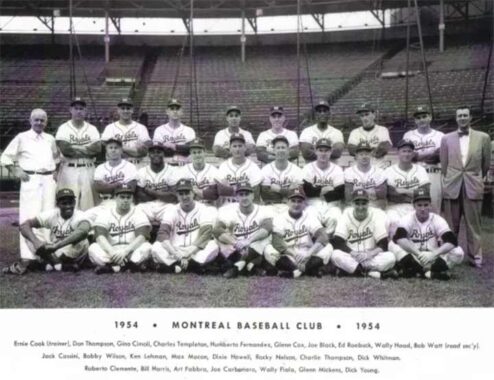
Roberto Clemente Ballfield, Division and Wythe Avenues in Williamsburg, is the third park in this city named for the baseball player who tragically died in a plane crash en route to a humanitarian mission in Nicaragua in 1972. The adjoining housing development is also named for Clemente. His connection to Brooklyn however is thin. In 1953 a scout signed him to the Brooklyn Dodgers’ International League farm team in Montreal. After just one season in the minor leagues, Clemente was selected as the Pittsburgh Pirates’ number one pick.
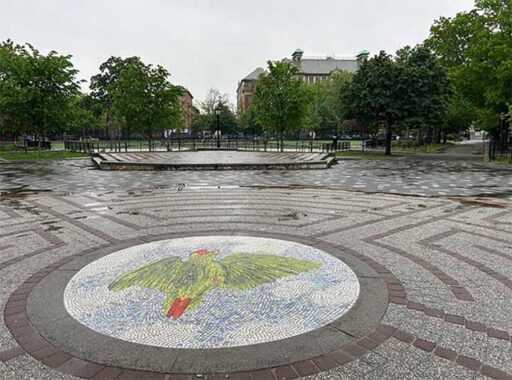
Maria Hernandez Park in Bushwick is sizable enough to merit its own detailed essay, which I wrote in 2025. She was the neighborhood activist who lived across from the park on Starr Street. She tirelessly fought to rid her community of drug dealers, fatally shot in 1989. To honor her work, Bushwick Park was subsequently renamed for her.
P.O. Reinaldo Salgado Playground in Bed-Stuy honors a local NYPD officer who worked at the 81st Precinct. In his short life, he is remembered for promoting youth programs at this playground. Previously known as Patchen Playground for the street that runs past it, this park was renamed for Salgado in 1997.
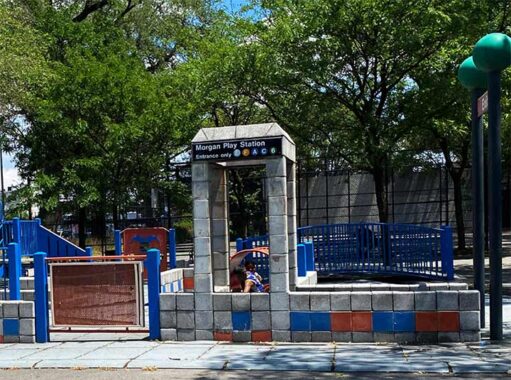
Gilbert Ramirez Park in East Williamsburg honors the Brooklyn Law School alum who became the first Puerto Rican elected to the New York State Assembly and first legally blind person in New York to serve as a judge. He was also an activist who participated in the Brooklyn Society for the Prevention of Cruelty to Children, Guiding Eyes for the Blind, the Board of Directors of the Bedford-Stuyvesant Beautification Association, the Brooklyn Council of Boy Scouts, among other causes. Kevin visited McKibbin Street, which borders this park, in 2021. The play equipment here has a subway theme.
Queens
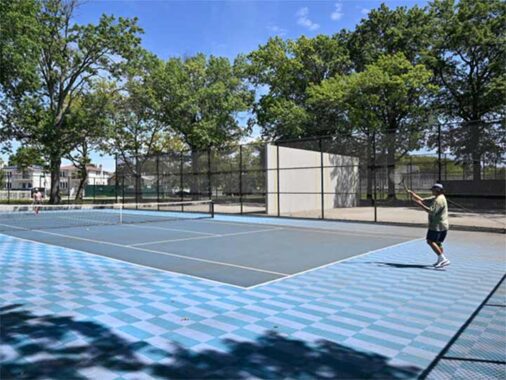
Captain Mario Fajardo Playground in Kissena Corridor Park honors the local Ecuadoran-born marine killed in the first Persian Gulf War in 1991. As a child, I thought that anyone with the title captain was involved with ships as often depicted in cartoons, learning later that it is also a rank assigned in many uniformed professions.
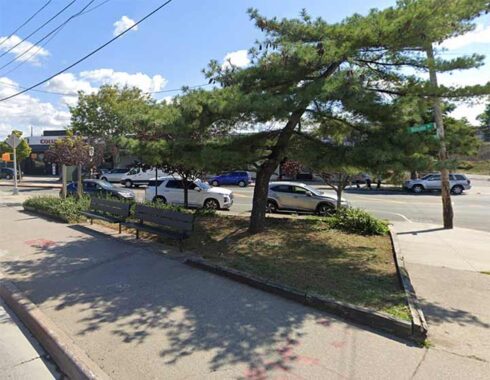
SSG Patbouvier E. “Bobby” Ortiz Triangle in Kew Gardens honors the Queens resident who was killed in a helicopter crash while rescuing a downed pilot during Operation Desert Storm. It is located at the intersection of Hillside and Metropolitan avenues, the latter being documented by Kevin in 2015.
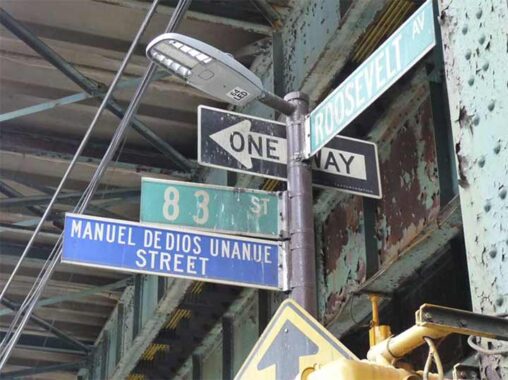
Manuel De Dios Unanue Triangle in Elmhurst honors the Cuban-born journalist who fought against drug dealers and was gunned down by a cartel in 1992. This park was renamed for him in the following year. Kevin visited this location on his 2017 walk on Roosevelt Avenue.
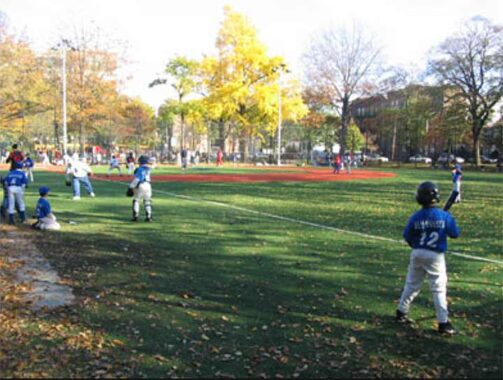
Park of the Americas was a post-millennial renaming for Linden Park, a three-acre green space in the Corona neighborhood that is older than Central Park. This neighborhood has a sizable population of immigrants from seemingly every Latin American country, with Mexicans, Dominicans, and Colombians being the largest groups. Kevin visited this park on his tour of Corona in 2005. I wrote about this park on my blog in 2018.
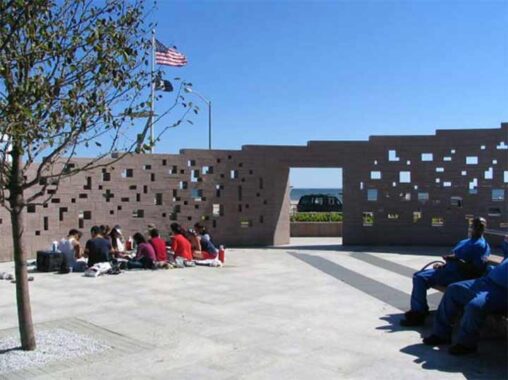
Flight 587 Memorial in Rockaway Park was designed by Freddy Rodriguez in memory of the American Airlines flight en route to Santo Domingo that crashed into the Belle Harbor neighborhood on Nov. 12, 2011, killing 251 passengers, nine crew, and five people on the ground. Kevin visited this park in 2007, on his walk down Beach 116th Street.
Staten Island
Lopez Playground, Targee and Mary Streets in Fox Hills, is the only park on Staten Island with a Latino name, honoring police officer Luis Reynaldo Lopez who was a resident of West Brighton and worked out of the 120th precinct. He was killed during a drug sting operation in the East Village.
Among Parks workers with Latino heritage, the Latino Society also celebrates their heritage with events and contingents in parades. Other sizable city agencies such as the police, fire, corrections, and sanitation also have their own Latino or Hispanic societies. Con mucha gratitud a mi colega Arasely Caraballo por organizar eventos latinos en NYC Parks.
Sergey Kadinsky is the author of Hidden Waters of New York City: A History and Guide to 101 Forgotten Lakes, Ponds, Creeks, and Streams in the Five Boroughs (2016, Countryman Press), adjunct history professor at Touro University and the webmaster of Hidden Waters Blog.
Check out the ForgottenBook, take a look at the gift shop. As always, “comment…as you see fit.” I earn a small payment when you click on any ad on the site.
4/11/26
4 comments
Thank you for these wonderful lists! New York City (and, earlier, New Amsterdam) has been one of the world’s greatest melting pots of cultures, and has never been afraid to proclaim it. How we honor the women and men who have played roles in achieving that greatness needs to be celebrated.
The first non indigenous person to live on Manhattan was a Latino named Johann Rodrigues, kicked off of a Dutch boat he originally came from Hispanola now Haiti/Dominican Republic. This happened before the Dutch settlement in Manhattan
Sorry to refer to a dismal sub-topic here, but the number leapt off the page: the Flight 587 tragedy did not extinguish 581 lives. I can’t recall which aircraft type it was, but no single commercial plane at that time could hold that many souls (Airbus A380 was not yet in production).
Yes the correct number is 251.