
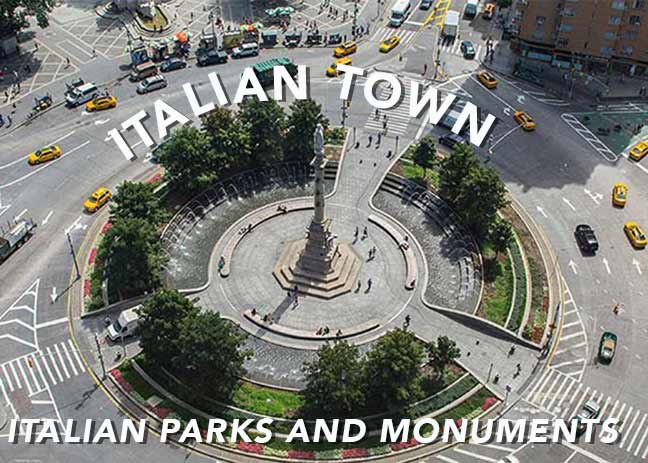


AFTER having the list of city parks named after Irish-Americans deleted on Wikipedia for stupid reasons, I brought it back to life on this website. Following on that example, I made a page on Latino parks across the city. Now, it’s the turn for Italian American New Yorkers and names relating to Italy. These parks are arranged by geography rather than the alphabet.
[Once again, listings are not presented in strict alphabetical order, and for the sake of brevity, not all listings will have a photo. Images courtesy NYC Parks, Google Street View, Christina Wilkinson, Sergey and Kevin; and where noted—Ed.]
Manhattan
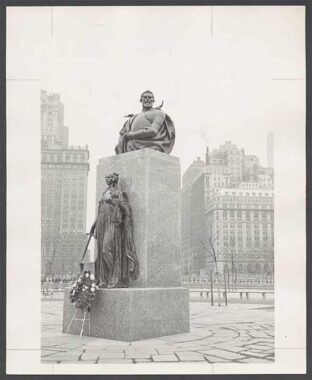
The Giovanni da Verrazzano Monument by sculptor Ettore Ximenes in Battery Park honors the first European who laid eyes on New York Harbor. In 1524, Italy was a collection of small independent states while France was starting to explore the New World, hiring Verrazzano for the task. In his attempt to find the Northwest Passage, Verrazzano mapped indentations on the East Coast: Chesapeake Bay, Delaware Bay, New York Bay, and Narragansett Bay.
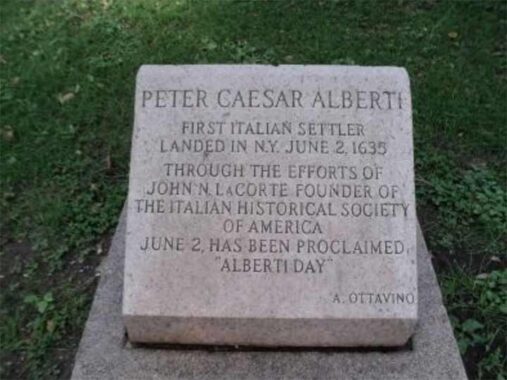
Also in Battery Park, the Peter Caesar Alberti Marker honors the first Italian immigrant to settle in New Amsterdam. This Venetian merchant arrived here in 1635. In a typical Italian immigrant story, he then moved to Brooklyn. Some of his descendants “Dutchified” their last name to Alburtis, the former name of 104th Street at Corona Plaza, a neighborhood that also has a historic Italian community. I visited this park in 2023 but did not note these two monuments at the time.
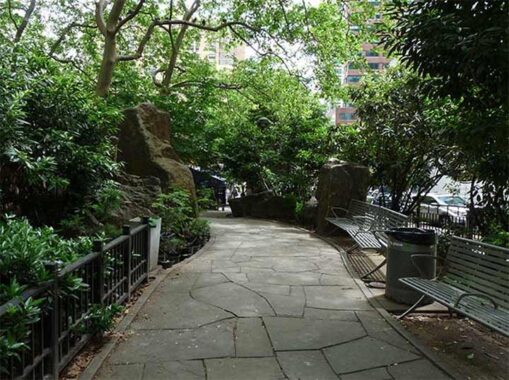
DeLury Square, Gold and Fulton Streets in the Financial District, honors John DeLury Sr., who founded Local 831 of the Uniformed Sanitationmen’s Association in 1956. Kevin visited this park during his 2025 walk on Manhattan’s Fulton Street.

Columbus Park is the buffer between Chinatown and Civic Center built on a demolished block of tenements that were part of the storied Five Points. When it opened in 1897, it was initially known as Mulberry Bend Park. The sizable Italian immigrant community here lobbied to rename the park for the first European to establish a permanent colonial presence in the New World. Kevin visited this park on his 2018 walk up Mulberry Street.
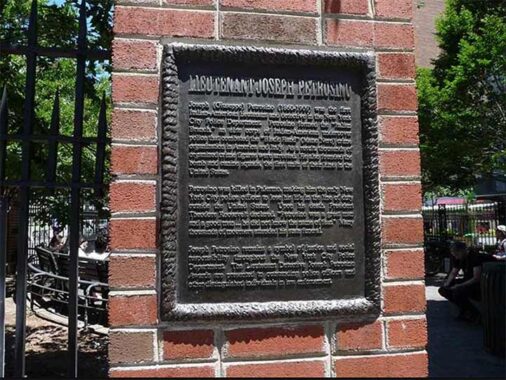
Petrosino Square in NoLIta is formed by the merge of Cleveland Place and Lafayette Street, with Kenmare Street on its southern side. When Joseph Petrosino joined the NYPD, he was its shortest officer at five feet three inches. But his role at the agency was great: in 1895, Police Commissioner Theodore Roosevelt personally promoted him to Sergeant of Detectives, in which he investigated anarchists and organized crime, and founded the bomb and canine squads, the first units of their kind in this country. Lt. Petrosino was killed by the mafia in Sicily while on assignment, becoming the only cop killed on duty while abroad. Kevin documented this park during his 2022 walk on Kenmare Street.

Tony Dapolito Rec Center in Greenwich Village, Varick and Clarkson Streets, honors a local activist who fought against Robert Moses’ planned Lower Manhattan Expressway. Kevin visited this recreation center during his 2021 review of Clarkson Street. Dapolito was the owner of the late Vesuvio Bakery, which Kevin documented in 2013, a mainstay of the neighborhood’s historic Italian community.
The building opened in 1908, as one of at least a dozen public bath houses constructed citywide at a time when many dwellings did not have their own baths or showers. Although landmarked in 2010, the old building was deemed too expensive to repair as the city seeks to have it demolished and replaced.
Vesuvio Playground takes its name from this bakery, which in turn comes from the volcano that destroyed Pompeii and looms over Naples. As with Greenwich Village, the western edge of SoHo also has a historic Italian community. In the heart of astronomically expensive SoHo, this playground offers a free outdoor pool in the summer.
William F. Passannante Ballfield at the corner of Sixth Avenue and Houston Street lies atop the curve in the Sixth Avenue subway line that was constructed here in the 1930s in tandem with the widening of Houston Street. The namesake served as the local State Assemblyman from 1955 through 1990. Quite lengthy as state lawmakers are not subject to term limits. Kevin walked the length of Houston Street in 2005, but did not document this park at the time.
Corporal John A. Seravalli Playground in the West Village honors a son of the neighborhood killed in action in 1967 in South Vietnam. Kevin visited this park on his 2023 tour of the Meatpacking District and his 2019 walk on Horatio Street.
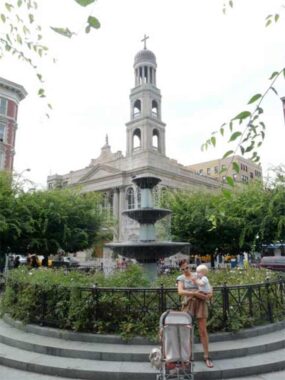
Father Demo Square in Greenwich Village is a triangle formed by Bleecker Street, Carmine Street, and Sixth Avenue. Namesake Father Anthony Demo founded Our Lady of Pompeii, which faces this picturesque park. Its fountain and seating arrangement have the look of a European piazza. Kevin was here in 2009 when he walked Bleecker Street, and in 2011 when he walked lower Sixth Avenue.
DeSalvio Playground in NoLita honors a local political dynasty, Assemblyman Louis DeSalvio and his father, district leader John DeSalvio. The park opened in 1954 and was given its name in the following year. In 2012, Kevin documented a fading wall ad for the reelection of Louis DeSalvio, but the year was unavailable. He was in office from 1941 to 1979.
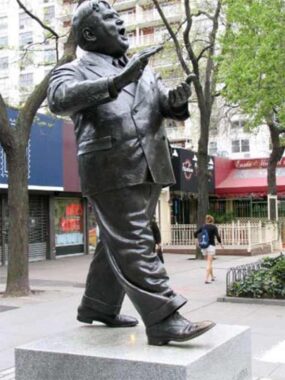
Fiorello La Guardia Park in Greenwich Village is one of many public spaces across the city named for the Little Flower mayor. This one has the honor of his full name, stretching for a block of LaGuardia Place between Bleecker Street and W. 3rd Street. In 2004, a bronze statue of Mayor La Guardia by sculptor Neil Estern was installed in this park. The park was created as a result of urban renewal that built the NYU dorm towers but not the Lower Manhattan Expressway or Fifth Avenue South here.
The name was chosen because Mr. LaGuardia was born nearby at 177 Sullivan Street. He is also honored with a high school on the Upper West Side (my alma mater), community college in Long Island City, the airport in East Elmhurst, playground in Williamsburg, an avenue in Todt Hill, and a street in Tel Aviv which is the only foreign honor given to him.
Vincent F. Albano Jr. Playground in Kips Bay is a parcel slated for the unrealized Mid-Manhattan Expressway (Interstate 495). With the highway cancelled, the site became a park. Its namesake was a local resident who served as the Manhattan Republican Party chairman from 1963 to 1981. He was among the voices who advocated for this park.
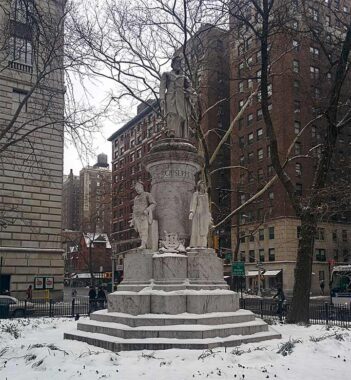
Verdi Square on the Upper West Side is the triangular park bound by Broadway, Amsterdam Avenue, and West 73rd Street. Predating nearby Lincoln Center by a half century, the name is fitting as Giuseppe Verdi was an opera composer. The park has a monument honoring Verdi, created by Sicilian sculptor Pasquale Civiletti in 1906. A champion of Italian unification, Verdi served in the Italian parliament and later its senate. Kevin visited this park in 2013, but he was more interested in its subway station building.
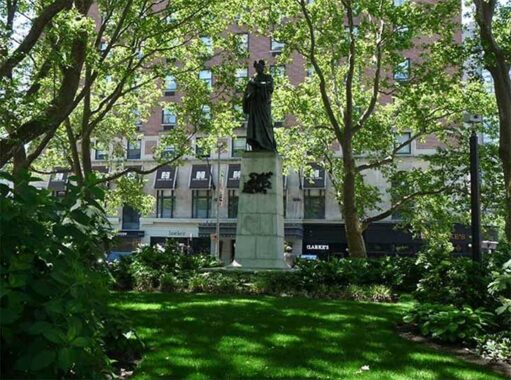
Dante Park on the Upper West Side is across the street from Lincoln Center, given its name in 1921 in honor of Florentine poet Dante Alighieri, regarded as the greatest poet in Italian history. A monument to Dante by sculptor Ettore Ximenes, was dedicated that year, marking the 600th anniversary of Dante’s death. In 1999, a second monument was installed in this park, Time Sculpture by architect Philip Johnson, who also designed Lincoln Center. Kevin visited this park in 2023.
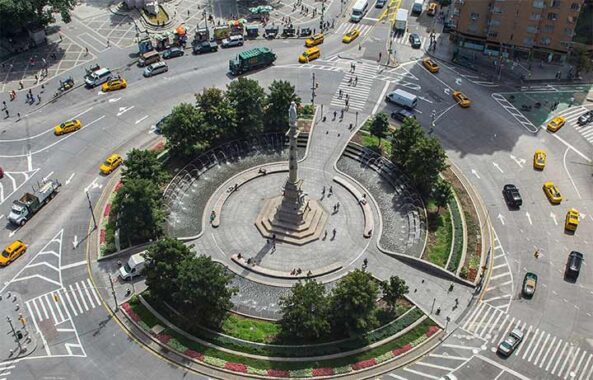
Columbus Circle is one of the city’s great public spaces and the reference point on maps for distances measured between NYC and other points. Kevin has documented many forgotten elements around this traffic circle over the years.
Neighboring Central Park has its own statue of Columbus at The Mall, a walkway featuring monuments to prominent individuals. For a few years starting in 2017, monuments honoring Columbus were under the protection of NYPD against vandalism. It’s easier to knock down a statue of Columbus than to rename the local Ivy League university, the capitals of Ohio and South Carolina, and a South American country. It is a copy of an older Columbus monument in Madrid’s Plaza de Colon designed by Jerónimo Suñol.
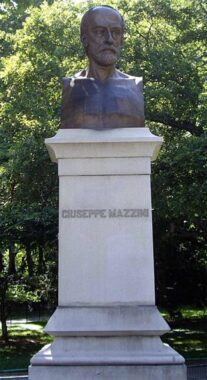
Sculptor Giovanni Turini brought two monuments to NYC Parks relating to heroes of Italian unification, a bronze bust of Giuseppe Mazzini in Central Park in 1878; and Giuseppe Garibaldi in Washington Square Park in 1888.
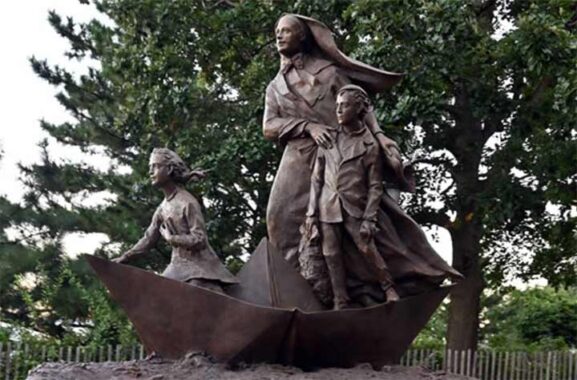
The state-operated Battery Park City Authority commissioned a memorial to Mother Frances Cabrini, the patron saint of immigrants, in 2020 in Battery Park City, facing south towards Ellis and Liberty islands. Her name also appears on a boulevard in Washington Heights that leads to the shrine where her body is kept.
Bronx
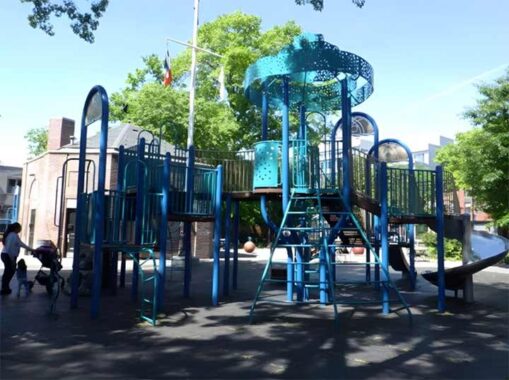
Ciccarone Park is in the heart of the Bronx’s Little Italy. Vincent Ciccarone first served in the Italian army and after immigrating, opened a general store in upstate New York. He served this country in World War One, dying of combat wounds in 1920. The park has an active bocce court, one of 35 active bocce courts throughout NYC Parks. There used to be more bocce courts across the city, but as neighborhood demographics change, so do the amenities.
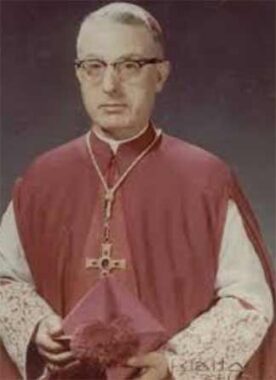
Bishop Pernicone Plaza, Crescent Avenue, Cambreleng Avenue, and East 187th Street in this uptown Little Italy honors Joseph Maria Pernicone, the Bronx-based cleric who served as Auxiliary Bishop of the Roman Catholic Archdiocese of New York. From 1945 until his death in 1985, he served as pastor of Our Lady of Mount Carmel Church on East 187th Street, which faces this park.
|
|
|
|
|
|
|
|
|
|
|
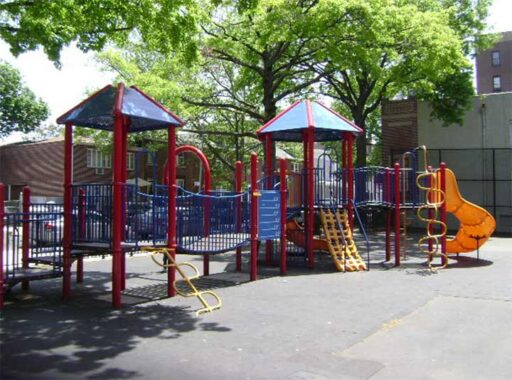
Caserta Playground, St. Raymond Avenue and Purdy Street near Westchester Square, honors Parkchester resident Susan Caserta, who was active in the local Boy Scouts and Girl Scouts, the Parents Association of P.S. 106, and as a coach at Parkchester Little League Girl’s Softball Team. Following her death in 1994, Odell Playground was renamed for her. She was Jewish, born as Boyarsky and married Eugene Caserta. Their last name originates from the city of Caserta, which is near Naples.
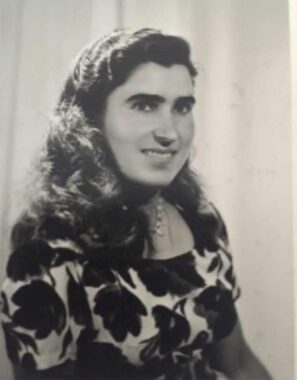
Dolorinda Lisante Community Garden, Courtlandt Avenue between E. 158th & E. 159th Streets in Melrose was named for the woman who owned the adjoining property and participated in this garden. Bornin Italy in 1936, Dolorinda lived most of her life in the Bronx. When the south Bronx suffered devastation, she was among the founders of Nos Quedamos that fought for the restoration of her neighborhood. She died in 2023.
|
|
|
|
|
|
|
|
|
|
Loreto Playground, between Morris Park, Van Nest, Haight and Tomlinson Avenues in Morris Park, honors NYPD officer Alfred Loreto. On the evening of July 21, 1950, he was off-duty and standing near his home on nearby Hering Avenue when he saw two armed men kidnapping a neighbor. Loreto pursued the two escaping gunmen and rescued the victim but was shot during the pursuit. In the following year, this park was named for Loreto.
Bufano Playground, between LaSalle, Waterbury, Bradford and Edison Avenues in Middletown, honors Phyllis Bufano who worked as a teacher at P.S. 71, led the Waterbury-LaSalle Community Organization, and participated in many other neighborhood civic causes. This playground was renamed in 1993, a year after her death. Her last name comes from the Apulia region. Middletown, Schuylerville, and Throgs Neck are the suburban-style neighborhoods of eastern Bronx, historically Italian with a history of Republican politics in contrast to the rest of this borough.
Colucci Playground, Hutchinson River Pkwy East between Wilkinson Ave. and E. 197 St in Pelham Bay, honors neighborhood activist Florence Colucci, who founded the Pelham Bay Taxpayers and Civic Association. She also served as a member of Bronx Community Board 10 and as chair of the Northeast Bronx Committee for Neighborhood Schools. She lobbied for the creation of this playground, which was named for her in 1983. The last name originates in southern Italy.
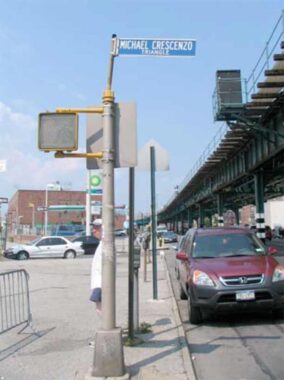
Michael Crescenzo Triangle in Pelham Bay is formed by the merge of Hobart Avenue and Westchester Avenue in Middletown, honoring the founder of the Pelham Bay Taxpayers and Civic Association. Kevin visited this tiny park on his 2009 walk on Westchester Avenue. Since that visit, shrubs were planted on this concrete triangle but by 2025 the Crescenzo street sign had disappeared; but there is a NYC Parks sign on the railing surrounding the greenery.
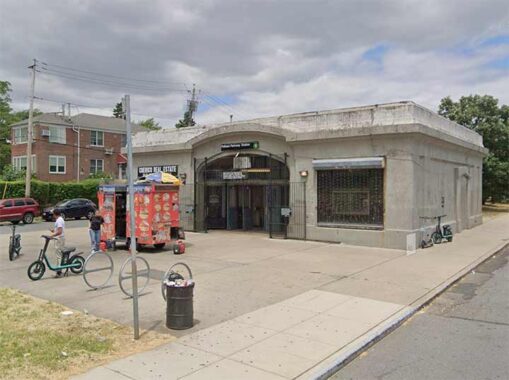
Congressman Alfred E. Santangelo Plaza at Pelham Parkway is a green triangle facing the Pelham Parkway station on the Dyre Avenue line. After two stints in the State Senate, his time in Congress was also short, from 1957 to 1963, but his civic resume otherwise is quite lengthy. He served as President of the Federation of Italian-American Democratic Organizations of the State of New York and of Americans of Italian Descent; as a Lay Trustee of St. Ann’s Church in Manhattan and St. Lucy’s Church in the Bronx; Knights of Columbus, Holy Name Society at St. Lucy Parish, and Columbus Esca Alliance. He was also the political and social editor of “Il Popolo Italiano,” the Grand Trustee of the Grand Council of the Sons of Italy, New York State and a member of the Board of Trustees of Leonard Covello Center in East Harlem. Santangelo was an Italian in every borough, attending high school on Staten Island, representing East Harlem in the State Senate (his wife was a Rao), and Congress, teaching Italian at Fordham Prep, and founding the Enrico Fermi Cultural Center at the NYPL Belmont library branch. He was buried at Calvary Cemetery in Queens.

The Rudy Macina Peace Memorial Plaza, Williamsbridge Road and Pelham Parkway, is also a triangular space, located nearby Santangelo Plaza. In 1977, Macena moved the Bronx Columbus Day Parade to Morris Park Avenue, which increased crowd participation more than ten-fold. He lobbied to make this triangular into a war memorial. Four years after his death, this triangle was named for him. Kevin visited this park in 2010 on his survey of Pelham Parkway.
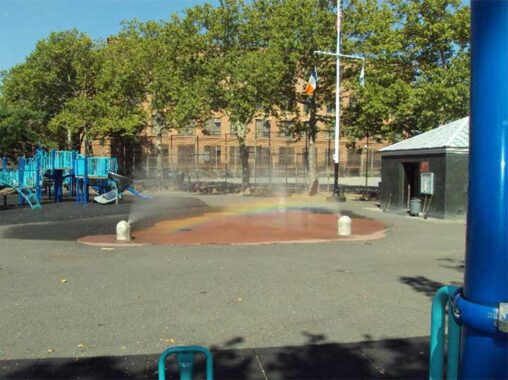
Mazzei Playground near Pelham Parkway honors Philip Mazzei, who initially immigrated to London and after meeting Benjamin Franklin, was inspired to cross the ocean. He established an experimental vineyard in Virginia, where he was neighbors with Thomas Jefferson, taught at the College of William & Mary, participated in the American Revolution, and served as a diplomat for Poland in France. He later returned to his native Tuscany, maintaining ties with his former neighbor.
Angelo Campanaro Playground, Givan Square near Eastchester Road and East Gun Hill Road in Baychester: namesake was a civic activist whose causes included youth director at the Holy Rosary Church, the Holy Name Society and the Youth Guild, Community Board 12, Chester Civic Association. In that role, he led the effort to stop the MTA from building a bus depot on Gun Hill Road. This park was named for Campanaro in 1985, a year after his death. Kevin walked on Gun Hill Road in 2015 but did not take note of this park at the time.
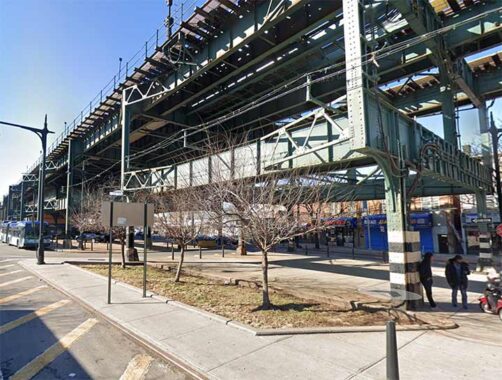
D’Onofrio Square in Olinville honors Sergeant Salvatore F. D’Onofrio, who died on June 24, 1944, while serving in France during World War Two. When his platoon was trapped by enemy fire, he shot back to distract the Nazis, allowing his men to safely withdraw. He was buried at the Normandy American Cemetery, among the nearly 9,400 war dead, and 1,600 missing names memorialized over there.
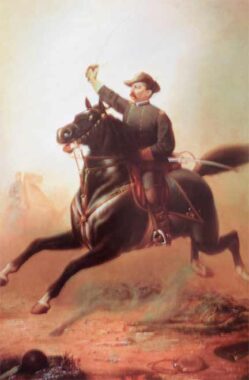
Rienzi Playground, East 225-226th Streets east of White Plains Road in Wakefield, was given its name because the elementary school sharing this block is named for Gen. William T. Sherman. His beloved horse was named Rienzi, as it was raised in the town of Rienzi, located in northeastern Mississippi. The town, in turn, probably took its name from Cola di Rienzo (c.1313-1354), a Roman popular leader whose attempt to establish a democracy in Rome inspired an opera by Richard Wagner. As for the horse, it was later renamed Winchester, taxidermied, and acquired by the Smithsonian Institution.
Magenta Playground in Olinville is on Magenta Street, best known for the name of the reddish color coined by French designers after an 1859 victory in the Italian city of Magenta, where the Italo-Franco alliance defeated the Austrians and helped to bring about a unified Italy. Before 1900, a small colony of French weavers lived in this area of New York City, as did a growing number of Italian immigrants. The street was named Magenta to signify the Italo-Franco unity that once characterized this neighborhood. Kevin visited Magenta Street in 2024.
|
|
|
|
|
|
|
|
|
|
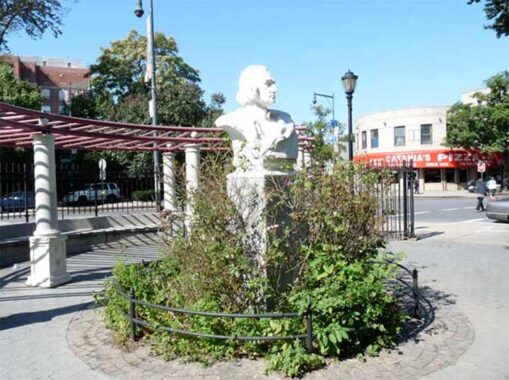
The Columbus Monument by Attillio Piccirilli at D’Auria-Murphy Triangle is this borough’s tribute to the first Italian person to spot the New World. The hyphenated park name here honors John D’Auria and Henry J. Murphy, respectively sons of immigrants from Italy and Ireland, who gave the ultimate sacrifice for this country in World War One. Kevin visited this park in 2011 and on his 2017 visit to Belmont, Bronx.
Queens
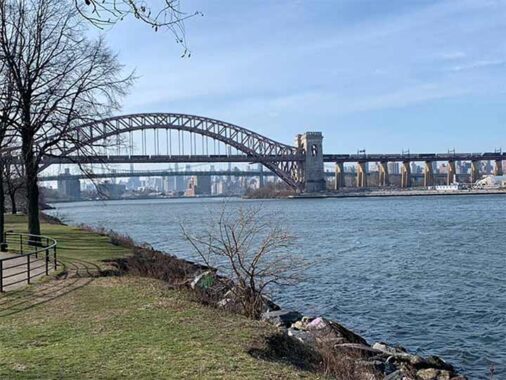
Ralph Demarco Park in Astoria is the slender coastline extension of Astoria Park facing Hell Gate. The namesake was a Deputy Commissioner at the Department of Sanitation, local Democratic district leader and advocate for waterfront parks in Astoria. Kevin visited this park in 2022 and I was also here that year.
Chappetto Square on the north side of Hoyt Avenue in Astoria was created in tandem with the Triborough Bridge in the 1930s. It was named in 1949 for Second Lieutenant Peter Chappetto, an Astoria resident who was killed in action by Japanese forces during the invasion of Palau on September 26, 1944. He was buried at sea. For decades an uninspiring paved space, it was given a $4.5 million green makeover in 2021. After World War II, Palau became an American Trust Territory. It declared independence in 1994.
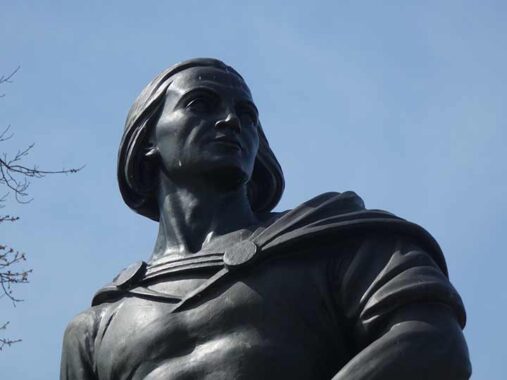
Columbus Square in Astoria has a statue of the explorer on a triangular plot formed by Hoyt Avenue, Astoria Boulevard, and 31st Avenue. It was designed by Angelo Racioppi and dedicated in 1941. Astoria’s Columbus Day Parade route ends here. Standing in the most politically progressive neighborhood in Queens, this Columbus experienced vandalism, protests, and calls for removal, and still it stands here as a testament to Astoria’s historic Italian community. Kevin visited this park in 2011 and the late Columbus Pizza in 2024.
The John DaSilva rink at Dutch Kills Playground, Crescent Street and 36th Avenue, is named for a local notable who cared deeply for other people and willingly shared his strength with them. John DaSilva died in an automobile accident on March 6, 1981, at the age of twenty-two. He was a beloved roller hockey player and criminal justice student at St. John’s University.
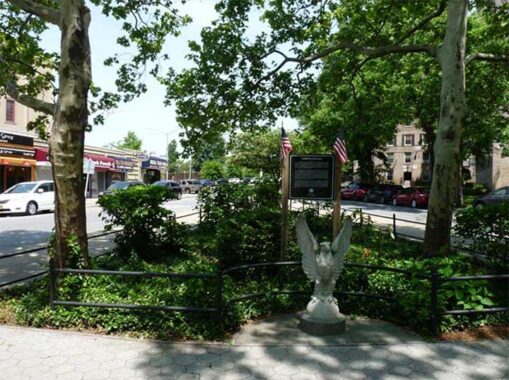
Strippoli Square, 31st Avenue and 54th Street in Woodside, honors Private First Class Joseph Patrick Strippoli, who was killed by a landmine near the Cambodian border in 1968 during the Vietnam War. This triangular park is formed by the collision of two street grids representing the pre-1898 municipalities of Newtown and Long Island City. Their border was known as Bowery Bay Road prior to the borough-wide numerization of most streets. Kevin first visited this park on Forgottentour 42 in 2010. He returned here in 2014 and in 2018.
Josephine Caminiti Playground, Corona Avenue and 102nd Street in Corona, was previously known as Alstyne Playground for the adjoining street whose name origin is unclear. When it was renamed in 2001, the new namesake was better known to neighbors. Josephine Caminiti was a lifelong Corona resident who was active in many neighborhood civic causes such as the Northside Democratic Club, Corona Taxpayers Civic Association, and St. Leo’s Church. She was among the active citizens of Corona Heights, the historically Italian hilltop section of the Corona where 108th Street and Corona Avenue intersect. The park borders Corona Avenue, a winding route dating to the colonial period. Kevin walked its length in 2020, and on 108th Street in 2025.
Simeone Park, Strong Avenue near 110th Street, is another example of the Italian legacy in Corona. Namesake Louis Simeone was a Corona resident who ran an insurance business, volunteered in the local Lions Club and sat on the community board. This park was created in tandem with the senior residence next to it that was sponsored by the TWU.
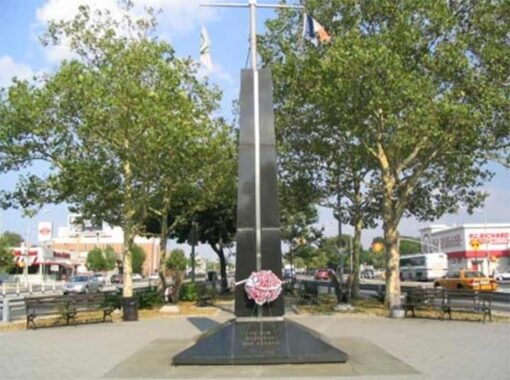
Joe Sabba Park, Queens Boulevard and Roosevelt Avenue in Sunnyside, honors the editor of Woodside Herald, a local weekly newspaper. In 1946, Sabba founded a neighborhood youth organization called the Sunnyside Drum and Bugle Corps. Sabba presided as editor of the Woodside Herald for many years before passing on the position to his son, Buster. For over 25 years until his death in 1999, Sabba also served as the chairman of the Sunnyside Flag Day Parade. The park was renamed for Sabba the following year.
Previously, this median space on Queens Boulevard was known as Sunnyside Veterans Triangle. Kevin visited this park in his 2017 essay on the centennial of the Flushing Line and his 2005 essay on Sunnyside.
Lou Lodati Playground, 41-15 Skillman Avenue in Sunnyside in Torsney Park, honors Lou Lodati, a lifelong neighborhood activist who worked for the Woodside Herald, was a member of the Kiwanis, the Sunnyside Chamber of Commerce as the owner of a liquor shop, and operated Cassel’s Lounge, where the homeless could receive meals. In 1999, three years after his death, this playground was named for him. I visited this park on my 2023 walk in Sunnyside.
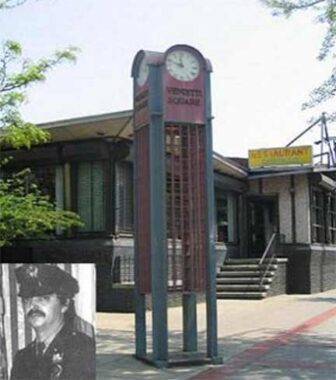
Detective Anthony J. Venditti Square in Ridgewood is the pedestrianized portion of Woodbine Street between St. Nicholas and Myrtle Avenues. The namesake was a 14-year veteran of the NYPD. On January 21, 1986, while he and his partner were on surveillance of members of an organized crime family at this location, Detective Venditti and his partner were confronted by three gunmen, who mortally wounded Venditti. This park was named for him in 1988. Kevin visited this park in his essay on street clocks in 1999, again in 2005 and on his Myrtle Avenue walk in 2020.
“Uncle” Vito F. Maranzano Glendale Playground, Central Avenue bet. 70th and 71st Street in Glendale, honors the decades-long civic activist who served as president of Glendale Property Owners Association, Greater Ridgewood Restoration Corporation and the Ridgewood Local Development Corporation. Glendale Playground was named for Maranzano in 2007. The last name originates from Sicily.
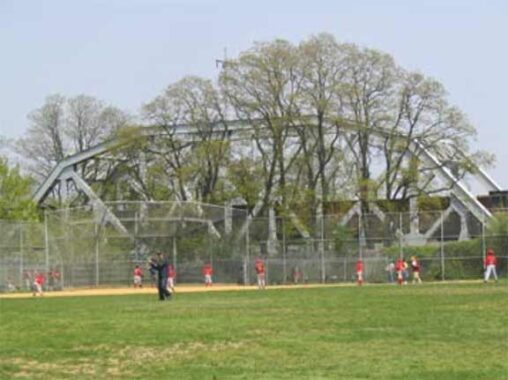
Mafera Park, 68th Avenue at 65th Place in Ridgewood, honors civil servant and neighborhood leader Joseph F. Mafera. He served as the borough superintendent of Queens Parks, then as an Alderman, Queens Deputy Commissioner of the Department of Motor Vehicles, Commissioner of Borough Works, and as interim Queens Borough President in 1951. He was a member of the historic Ridgewood Democratic Club, which I visited in 2025. Christina visited this park for her essay on Ridgewood in 2005.
Frank Principe Park, Maurice and 54th Avenues in Maspeth, honors the civic activist who lobbied for the creation of this park. Originally known as Maurice Park, it was renamed for Principe in 2005 following his death. Don’t feel bad for the original namesake as local 19th century Rep. James Maurice is honored with nearby Maurice Avenue.
Frontera Park, Brown Place and 58th Avenue in Maspeth, honors a father and son who contributed to the civic fabric of Maspeth, volunteer firefighter Frank and his son Alex, who founded the Maspeth Federal Savings Bank. Previously the site of a bus garage, it was developed as a park in tandem with the construction of the Long Island Expressway in the 1950s. Kevin visited this park in 2011 on a tour given by Newtown Historical Society.

Phil “Scooter” Rizzuto Park, 95th Avenue bet. 125th and 127th Streets, honors the Yankees shortstop who grew up in Richmond Hill. Along with this park, he is also honored with plaques at Monument Park in Yankee Stadium and the Baseball Hall of Fame. Prior to the renaming in 2008, this park was known as Smokey Oval for the Morris Park railyard across the street from this park.
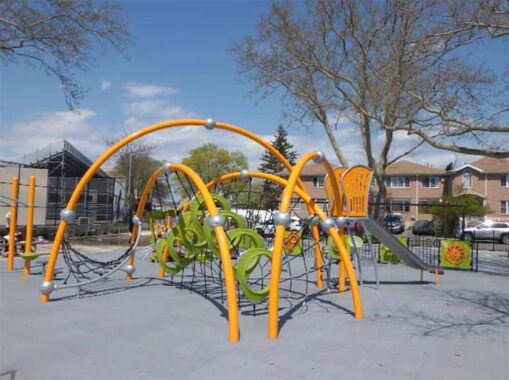
The Al Stabile Playground, Centreville and 103rd Streets in South Ozone Park, honors the former councilman who previously worked at the Sanitation Department and served in the Vietnam War. It was dedicated in 2017. Built in tandem with John Adams High School, it previously shared its namesake with the school.
Salvatore Totino Triangle in Whitestone is located in the largest Italian community in northern Queens. It was dedicated in 2003. This tiny park is formed by 157th Street, 16th Road, and the grid-defiant Francis Lewis Boulevard.
The city’s Honorary Street Names Map is silent on this one, so it’s truly a Forgotten-NY item. Queens Borough Historian Jason Antos found the item via Dominic Totino: “My first cousin. He took over my dad’s landscape contracting company and did the first green space for NYP. He planted tons of trees along 6th Avenue, landscaped bridges, and one of his first big jobs was to do landscaping for the ‘64/‘65 World’s Fair.”
Totino also dug out trees from the original site of the Queens Botanical Garden and replanted them at its Main Street site.
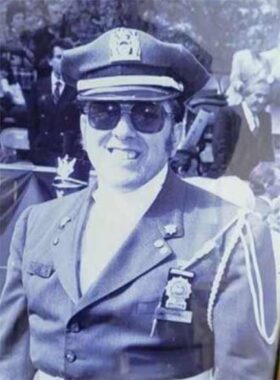
Vito Locascio Field, 149th and North Conduit Avenues in Ozone Park, honors a local resident who worked for NYC Parks, where he led the agency’s Columbia Society. Thanks to his son John, a fellow Parkie for sharing this photo and details about the namesake. Locascio and Graci were documented in my 2025 essay on the parks of Conduit Avenue.
|
|
|
|
|
|
|
|
|
|
|
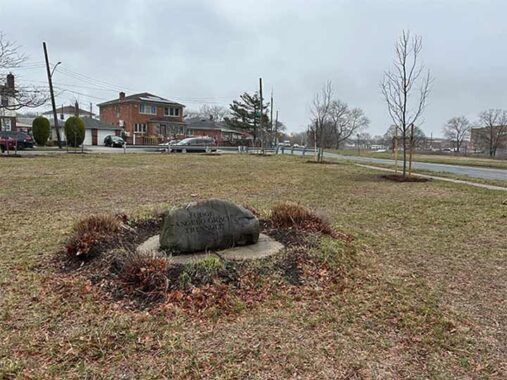
Judge Angelo Graci Triangle, Sutter and North Conduit Avenues, honors a local resident who served as a state assemblyman, judge, and co-founded Our Neighbors Civic Association of Ozone Park. Graci was a Republican representing a part of the city that historically favored this party. Previously, this park was named for 19th century Brooklyn Democratic Party leader Peter D. Sutter, whose name remains on Sutter Avenue that borders this park.
Joseph P Addabbo Memorial Park, between 80th and 83rd Streets, 133rd and North Conduit Avenues, is the co-name for Tudor Park, honoring the 12-term congressman who represented southern Queens. His name also appears on the bridge connecting Howard Beach to Broad Channel, and his son State Sen. Joe Addabbo Jr, who built his career in city and state politics. The senior namesake immigrated in 1912 from Gioia del Colle, in Apulia. This park also appears in my Conduit Avenue essay.
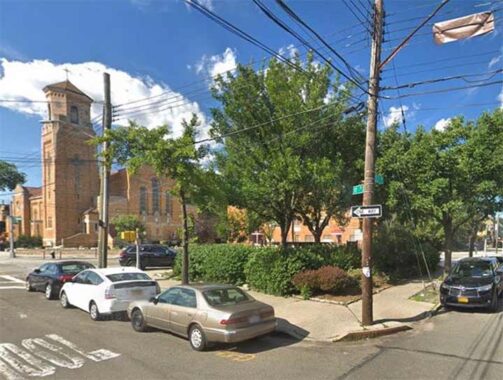
Msgr. Leopold Arcese Triangle, Rockaway Boulevard, 103rd Avenue, and 91st Street in Ozone Park, is across the street from the Nativity of the Blessed Virgin Mary Roman Catholic Church, where the namesake pastor served for 35 years. Monsignor Arcese (1887-1970) led the congregation during a period of church expansion and the building of schools. This triangle was named for him in 1977. This park also appears in my 2019 Rockaway Boulevard essay.
Marconi Park, between 108th and 109th Avenues, 155th and 157th Streets in South Jamaica, honors the inventor of the radio, Guglielmo Marconi. On December 12, 1901, he transmitted the first transatlantic radio signals with a single letter sent from Cornwall to Newfoundland. The Wireless Operators Monument in Battery Park also honors Marconi and other pioneers in wireless communications. This park was developed in 1939 in tandem with P.S. 40 with which it shares this block. Marconi was born in Bologna and his mother Annie Jameson was Irish; she was a physicist. Marconi’s wife was also Irish, so perhaps I should also have included him on this list. In 2022, this park was given a basketball court mural by Malik Roberts.
Mentone Playground, North Conduit and Laurelton Parkway in Laurelton, is an unused playground as it is sandwiched between Belt Parkway and North Conduit Avenue that functions as the highway’s service road. It is presently used for storage by the Parks Department’s Greenthumb program. The name sounds French-Italian and it is, as the namesake French canton of Menton is sandwiched between Italy and Monaco. Nearby Mentone Avenue also honors the far-off border region. Roberta Kossoff’s book on Laurelton has images from the 1950s, when this playground was open to the public. So it’s not Italian but spelled that way here. Out of curiosity, I included it in this essay.
Brooklyn

Ascenzi Square in Williamsburg received its own Wikipedia page in 2015, and to my surprise it’s still there. It honors four local brothers who served this country in World War One: Fred, Charles, Joseph and William Ascenzi . The last two were killed in action. The triangular plaza was dedicated in 1939. It is bound by Roebling Street, North 4th Street, and Grand Street. Kevin walked the length of Grand Street in 2021.
Pvt. Sonsire Triangle is at the north end of Roebling Street, where it meets Union Avenue and North 11th Street across from McCarren Park. Frank Sonsire joined the army at age 29 and was among the last to be killed in combat in World War I on Nov. 9, 1918, three days after Germany formally requested a truce and two days before Armistice. This park was named for Sonsire in 1938, on the 20th anniversary of his death.
Columbus Park is Brooklyn’s civic center, flanked by Borough Hall, county Supreme Court, the main post office, and many law offices on court street. The monument for Columbus in this park has an interesting history. It was created by Emma Stebbins, who is better known for the Angel of the Waters in Central Park. Offered to that park in 1869, this statue was rejected and kept in storage until 1934, when it was unveiled in Manhattan’s Columbus Park. Originally known as Cadman Plaza Park, it was renamed for Columbus in 1971 and this statue was then relocated here. At the time, Sebastian Leone was Brooklyn’s Borough President, the only Italian-American so far to hold that position.
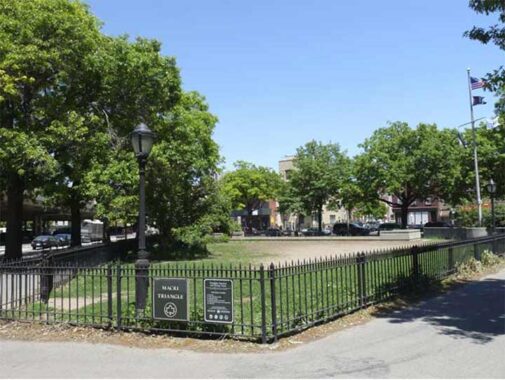
Macri Triangle, Metropolitan and Meeker Avenues, is one of the small parks formed by the grid-defiant Meeker Avenue in Williamsburg. It honors local World War Two veteran Luigi Macri (1909-1962) The property was designated as a park in 1946 during the construction of the Brooklyn-Queens Expressway. This park appeared in my 2018 essay on the parks of Meeker Avenue. Kevin mentioned this park in his 2015 walk on Metropolitan Avenue.
Father Giorgio Triangle, Grand and Lorimer Streets in Williamsburg, honors Father Edward J. Giorgio was a military chaplain who served in peacetime at the nearby Our Lady of Mount Carmel, losing his leg in combat and dying of his wounds in 1946.
Lentol Garden, Bayard and Humboldt Streets, honors Edward S. Lentol (1909-1981) who represented Williamsburg and Greenpoint in the State Senate and later served as a State Supreme Court judge. Edward’s son Joseph Lentol followed in politics as an Assemblyman from 1973 to 2020, when he lost the Democratic primary to socialist Emily Gallagher, representing the changing neighborhood demographics: progressive, younger and less Italian. His name appears on the local post office.
It’s a rare Italian last name that doesn’t end in a vowel. Anyone who can speak about its history can leave a comment below.
Badame Sessa Triangle is formed by Meeker Avenue, Withers and Leonard Streets, was named after two local veterans: Pvt. Michael Sessa Jr, who was killed in the Vietnam War, and Sergeant George G. Badame who served in World War I. This park has a monument with additional names installed by Post 1336 of the American Legion.
Mt. Carmel Triangle, Union and Meeker Avenues and Jackson Street, honors Our Lady of Mount Carmel, the Roman Catholic church in Williamsburg founded by Italian immigrants that hosts the gigli festival every year. The namesakes listed earlier: Macri, Father Giorgio, the Lentols, Badame and Sessa, all attended this church. This park faces its namesake church and contains a statue of Our Lady by Pete Donohue.
Sperandeo Brothers Playground, between Atlantic Avenue, Cleveland St. and Liberty Avenue in East New York, honors Andrew, Matthew, and Joseph who were raised in East New York and served this country during World War II. Matthew was killed in combat at Guadalcanal, Andrew was killed in Loganville, France shortly after D-Day, and Joseph returned home with a bleeding ulcer. Their parents immigrated from Avellino.
Sam Leggio Triangle in Cypress Hills is bound by Force Tube Avenue, Etna Street, and Highland Place. Its namesake was a longtime resident of Highland Place who served as a Boy Scout Leader, a Block Association President, organizer of the local Memorial Day and “We Love Cypress Hills Day” parades. Prior to the renaming in 1985, this triangle honored Cpl. Elmer Elsworth Bennett Jr. who also lived nearby and was killed in action in World War One. He was buried in Cypress Hills Cemetery. Kevin wrote about Force Tube Avenue’s name in his 2008 essay on Highland Park.
Joseph F. DiNapoli Playground in Canarsie Park at Rockaway and Shore Parkways honors the longtime parks worker who lived in Canarsie and worked in this park as supervisor. As a civic activist, he established the 69th Police Precinct community baseball program and served on the Executive Board of the Columbia Society, the Parks Italian heritage group, for fifteen years. He was also an executive board member of Laborers Local 924 and Uniformed Parks Officers Local 1508. This playground was named for him in 1990, a year after his death.
The Carmine Carro Community Center, Fillmore Avenue at Marine Park, honors a neighborhood activist who led the Marine Park Civic Association and was a trustee of the nearby Hendrick I. Lott House. The circular building opened in 2013 at the northern side of this sizable park.
DiMattina Playground, Rapelye, Woodhull, and Hicks Streets in Carroll Gardens, honors Vincent J. DiMattina, an attorney who was actively involved in civic, veterans, and religious affairs.This park has two parcels, split by a trench holding an entrance ramp to the Brooklyn-Queens Expressway. Kevin walked on Rapelye Street in 2008, which borders this park, but at the time did not write about DiMattina Playground.
Mother Cabrini Park, President and Van Brunt Streets in Carroll Gardens, honors the first Roman Catholic saint who lived in America. In 1892, Mother Cabrini established her first school in the northeastern US at this site. Charles E. McDonnell, Bishop of the Brooklyn Diocese, acquired the house that stood at President and Van Brunt Streets and Mother Cabrini named it St. Charles School in his honor. Her name also appears on a church in Bensonhurst.
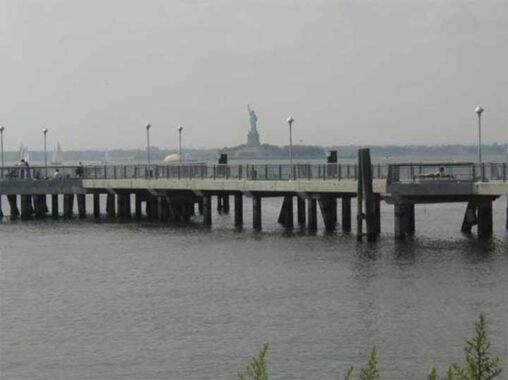
Valentino Pier in Red Hook honors local resident Louis J. Valentino, Jr. who worked as a firefighter and Parks lifeguard. On February 5, 1996, Valentino lost his life while searching for wounded firefighters in a three-alarm blaze in an illegal Flatlands garage. Two centuries earlier, Fort Defiance stood at the site of this pier, in a series of forts in Brooklyn built by the patriots to stop the British invasion of the city. Kevin first visited this pier in 2004.
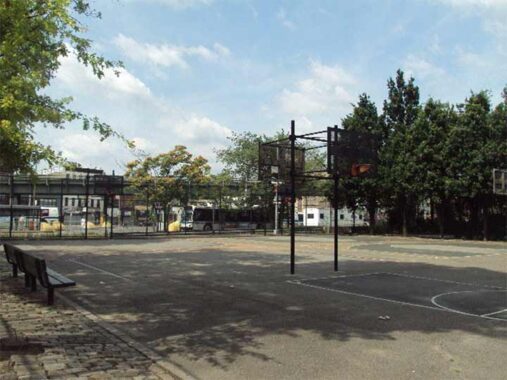
LaGuardia Playground, South 4th and Roebling in Williamsburg, honors the Jewish-Italian mayor whose parents immigrated from Trieste. This park was built in 1937 during an expansion of the approach roads to the Williamsburg Bridge. To date, the city has had four mayors of at least partial Italian descent: LaGuardia, Vincent Impelliterri, Rudy Giuliani, and Bill de Blasio.
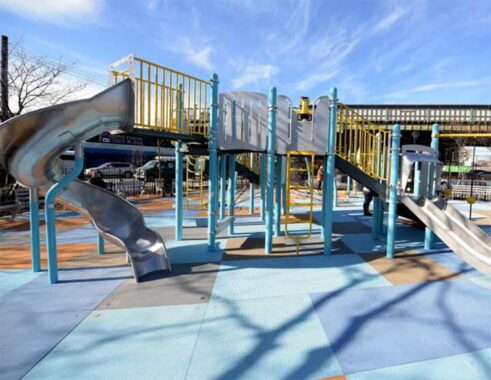
Lt. Joseph Petrosino Park, New Urtecht Avenue and 71st Street in Bensonhurst is the Brooklyn honor given to the first Italian detective in the NYPD. Bensonhurst had a strong Italian presence through the last century, whose sons and daughters gradually migrated to Staten Island, New Jersey, and points further west.
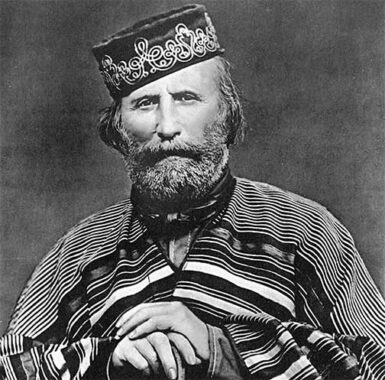
Garibaldi Playground, 18th Avenue between 82nd and 83rd Streets in Bensonhurst honors the unifier of Italy, who also participated in wars in Argentina and Uruguay, and lived for four years on Staten Island. This park is on 18th Avenue, which is co-named Cristoforo Colombo Boulevard, hosting the borough’s Columbus Day Parade. Kevin walked on this street in 2008.
Garibaldi is also honored by a statue in Washington Square and the Garibaldi-Meucci Museum in Rosebank, Staten Island.
|
|
|
|
|
|
|
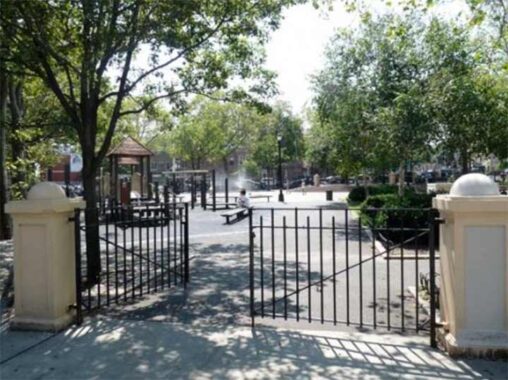
Brizzi Playground, New Utrecht Avenue and 43rd Streets in Borough Park, is in the heart of Hasidic Brooklyn, a neighborhood with few parks. Namesake Nicholas Brizzi was the proprietor of Joseph A. Brizzi and Sons Funeral Home, which his father had founded. He was affiliated with many civic and veterans organizations such as the Veterans of Foreign Wars, Maimonides Hospital, St. Rosa Cancer Care Facility, and St. Catharine of Alexandria Parish. Kevin visited this park in 2011, noting its abandoned bocce court. This park was redesigned in 2014.

Bocchino-Dente Square in Borough Park is a triangular space at Fort Hamilton Parkway, 58th Street, and a pedestrianized section of 10th Avenue. It was named in 1952 in honor of local residents John Bocchino and Alfred Dente, who had been killed in World War II. The renaming was supported by the local post of the American Legion which carried the name Bocchino-Dente Post 1777. Kevin visited this park in 2012.
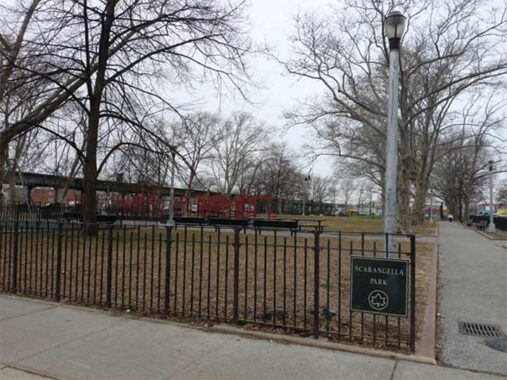
Scarangella Park, Avenue V and West 13th Street in Gravesend, honors NYPD officer John G. Scarangella, who graduated nearby Lafayette High School. On April 16, 1981, while on duty in St. Albans, Queens, Scarangella and his partner, Richard Rainey, were shot thirty times during a traffic stop. Rainey survived, but Scarangella died of his wounds on May 1, 1981. He served in uniform for 12 years at the time of his murder. Kevin visited this park in 2019 on his walk from Gravesend to Bath Beach.
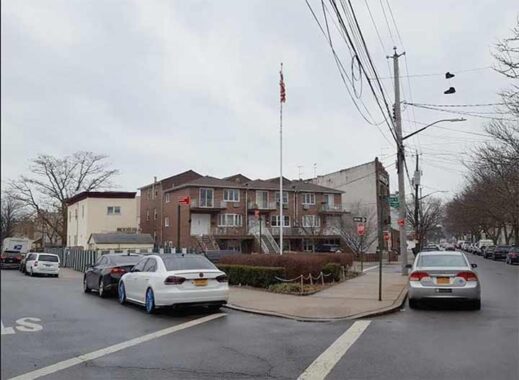
Anthony Catanzaro Square, Bay 50th and West 16th Streets in Bath Beach was documented here in 2017 after Wikipedia rejected a page about this park for not being sufficiently “notable.” The namesake was a local resident killed in action in World War Two. It was the first example of a place rejected by Wikipedia whose online presence lives on Forgotten-NY.

Meucci Triangle, Avenue U and 86th Street in Gravesend, honors an inventor who hosted Garibaldi at his Staten Island home. To proud Italian-Americans, Antonio Meucci is the true inventor of the telephone. It was unfortunate that he was unable to defend his claim to the patent against Alexander Graham Bell, whose surname seems fitting for a communication device. Meucci’s name is of Tuscan origin, diminutive for Bartolomeo. In 2002, Congress issued a resolution recognizing Meucci’s invention of the telephone.
|
|
|
|
|
|
|
|
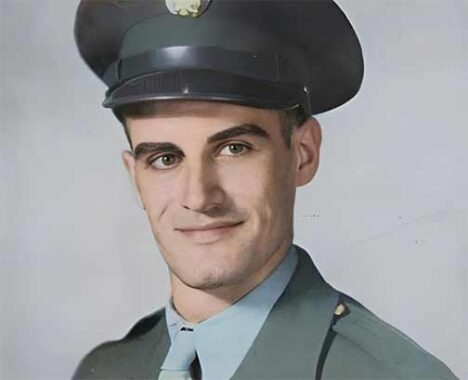
Cutinella Triangle in Gravesend honors Private First Class Armand Cutinella, who died in the Battle of the Bulge. Following his death, Cutinella was buried at the Long Island National Cemetery. His friends and family then formed the Armond Cutinella Memorial Association, which organized an appeal to the City in 1950 to name this triangle. He was among 12 siblings, so plenty of descendants today carry this name. This square at Avenue W touches 86th Street, the longest in the number sequence running between Park Slope and Bay Ridge. Kevin walked its length in 2011.
|
|
|
|
|
|
|
Chiarantano Playground, Farragut Road at East 45th Street in East Flatbush, honors civic activist Anthony Chiarantano, who lobbied to create this park. In 1974, he was murdered by a 19-year-old who dragged him out of his car, stabbed him and robbed him of $7. The park carrying his name opened three years later. This last name is most often found in the Calabria region.
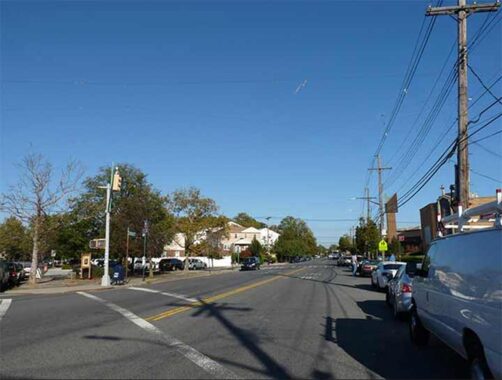
Barone Triangle, Veterans Avenue at Avenue U in Bergen Beach, honors Vietnam War veteran Cosmo Barone, who lost his legs and eye in an ambush in 1966. He lived to 1971, dying at 27 from the wounds he received in the war. He was buried at Long Island National Cemetery. This triangle is used as a site for Veterans Day commemorations. This park marks the eastern end of Veterans Avenue, which Kevin walked in 2011.
Dorothy Turano Plaza in Bergen Beach is the widened sidewalk at the intersection of Bergen Avenue and Avenue K, where Community Board 18 has its office. A teacher, Turano served as District Manager of Community Board 18 for 38 years, among other local civic causes. This corner was named for Turano in 2025.
D’Emic Playground, 3rd Avenue at 34th Street in Sunset Park, honors a local veteran and businessman who donated generously to causes in this neighborhood. It was named for John D’Emic in 1973, a year after his death. His name is an adaptation of the Italian surname D’Amico.
The Ben Vitale Athletic Fields at Dyker Beach Park honors a World War II veteran, lifelong sports coach, and civic activist who created the Banner Civic Association and Brooklyn Amateur Baseball Association. He was a football coach at New Utrecht and later Brooklyn Prep High Schools; chief lifeguard and swimming instructor for the New York Daily Mirror and the Flushing Pool, director of the Police Athletic League, and sports columnist for the Brooklyn Daily Eagle. The fields were named for Vitale in 1983, two years after his death.
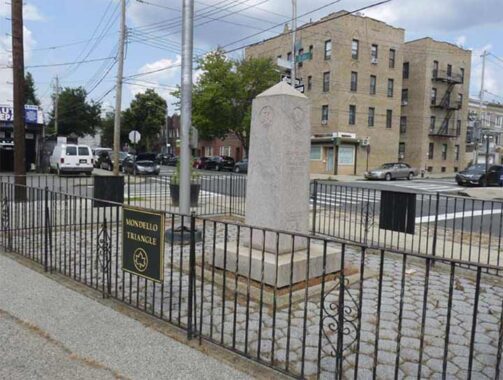
Mondello Triangle in Bay Ridge, where 7th and 8th Avenues meet, honors Private First Class Anthony Mondello, who was killed during World War Two. His bomber plane collided with another bomber plane above India in 1943. Mondello was buried at Long Island National Cemetery. Until his death in 2013, his brother Casper maintained this park in Anthony’s memory. Kevin visited this park in 2018.
The Verrazzano Memorial Flagstaff at John J. Carty Park, Fort Hamilton Parkway at 94th Street, was installed in 1964 when the eponymous bridge next to this park opened. It was designed by Albino Manca using stone from the monument base at the Verrazzano castle in Greve in Chianti, Italy, where the explorer was born. There are additional stones from his Italian castle on the Staten Island side of the bridge, which I documented in 2021.
Staten Island
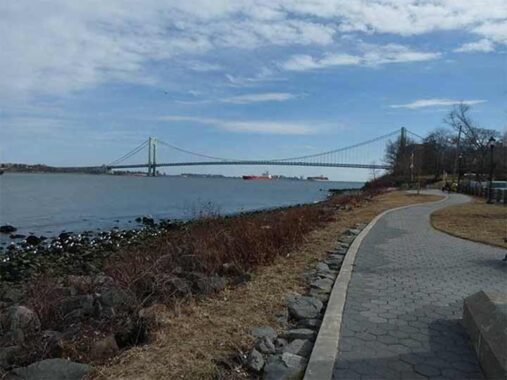
Buono Beach, Hyland Boulevard and Edgewater Street in Rosebank, is not for swimming. It is a waterfront walk bordering the lawn of the Alice Austen House, where Hylan Boulevard begins. Private First Class Matthew Buono was killed in the Vietnam War during the battle for Khe Sanh. Previously known as Penny Beach, this park was renamed for Buono in 1988, on the 20th anniversary of his death. Kevin visited this park in 2022.
De Matti Park, Tompkins Avenue south of Chestnut in Rosebank, honors Private First Class Nicholas DeMatti, a local native killed on the Western Front in World War I. Initially the city had plans for a memorial arch honoring American service members killed in that war. When those plans were canceled, a Memorial Find was then used in 1934 to build parks across the city honoring individuals like De Matti. Next to this park is a privately owned green space containing the Garibaldi Meucci Museum.
Liotti Ikefugi Playground, Winter Ave., between Bismark Ave. and Westervelt Ave, in St. George, honors local soldiers Sergeant Carmine Liotti (1924-1945) and Private First Class Lloyd Ikefugi (1923-1945). The latter was a Japanese-American who demonstrated his patriotism despite wartime discrimination. Liotti was killed in Germany less than a month before the end of World War II in Europe. A German grenade hit the jeep carrying Liotti and a wounded German captive. He was buried at the Netherlands American Cemetery. This park was renamed for these two soldiers in 1961, previously having honored local poet and journalist William Winter. Don’t feel bad for him, as Winter Avenue runs past this park carrying his name.
Lt. Lia Playground, Wall Street and Belmont Place in St. George, honors Lt. Nicholas Lia who was killed in 1968 in the Vietnam War, his second tour of duty over there.
Christopher J. Igneri Playground, Schmidts Lane and Manor Road in Todt Hill, honors a longtime Parks worker who retired in 1995 after 35 years of maintaining parks and coaching in basketball. This park was developed in 1958 when NYCHA Todt Hill Houses were built on this hilly superblock. It was named for Igneri in 2017.
Naples Playground, Naples and Tagree Streets in Dongan Hills, was developed in 1954 in tandem with the elementary school expansion on this block. Around this park there’s a theme: Columbus, Rome, and Venice Streets, designed by a developer to attract Italian buyers. Naples Street used to be the park’s northern border, which was later pedestrianized and absorbed by the park.

Capodanno Memorial in South Beach honors Father Vincent R. Capodanno, a chaplain posted with the Marines in the Vietnam War. He was killed in 1967 during Operation Swift. Also in his honor, Seaside Boulevard was renamed Father Capodanno Boulevard, passing by this monument. There is a movement to have him canonized. Kevin wrote about this street in 2018 and in 2023.
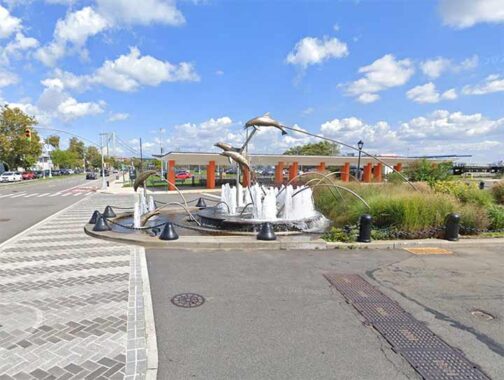
Cespino-Russo Memorial Circle in South Beach is where Father Capodanno Boulevard meets Sand Lane. Named in 2000, it honors two Staten Islanders killed during World War Two. Gentile Cespino was a radar operator. Unfortunately, his military career was cut short when his aircraft crashed on a test flight. Joseph Russo liberated Italy in the Battle of Anzio and then the invasion of southern France, where he was killed in action. The local American Legion Post also carries their names. This circle is best known for the Fountain of the Dolphins.

The state DEC operates Mount Loretto Unique Area, a former Roman Catholic orphanage named after the town of Loreto in the Ancona province of Italy. In 2018, Staten Island Advance reporter Tom Wroblewski explored the heating duct tunnels underneath this preserve. I’m so jealous! Kevin documented rock sculptures here in 2007, walked its shoreline in 2016, and I visited Cunningham Pond at this preserve in 2020.
Among Parks workers with Italian heritage, the Columbia Society celebrated their heritage in years past until they were told to change their name because Columbus offended many people. I proposed that my colleagues honor Garibaldi instead. He unified Italy and lived in New York for a short time. My idea is still open for consideration.
Other sizable city agencies such as the NYPD, FDNY, NYCD, and DSNY have their own Columbia Associations to represent workers of Italian descent.
Sergey Kadinsky is the author of Hidden Waters of New York City: A History and Guide to 101 Forgotten Lakes, Ponds, Creeks, and Streams in the Five Boroughs (2016, Countryman Press), adjunct history professor at Touro University and the webmaster of Hidden Waters Blog.
Check out the ForgottenBook, take a look at the gift shop. As always, “comment…as you see fit.” I earn a small payment when you click on any ad on the site.
5/2/26
3 comments
I remember in the 70s a city worker got wedged up in the Columbus
monument as those columns are sometimes hollow with ladder rungs inside.
What they call a “wedgie”.The fire dept. was called and traffic was rerouted
and using crowbars,chain falls,comealongs,hydraulic pullers,tear gas,etc.
they were finally able to pop him free and of course the Post did a story
about it gloating over the guy’s ordeal because he was an obesity
As a proud Italo-American, I applaud the scope of this wonderful post!
I forgot to include Spargo Park in Woodside, which honors George E. Spargo.